
Your Personalized 30-Day Fitness Baseline Calculator
📝Enter Your Details
Your 30-Day Targets
Enter your details to generate your personalized nutrition and hydration targets.
You don’t need a magic pill or a celebrity trainer to change your body. You just need thirty days of consistency. That’s it. But here is the hard truth: most people fail at this goal because they treat it like a sprint instead of a habit-building exercise. They starve themselves, run until their knees scream, and then quit on day four when the hunger sets in.
Getting fit in 30 days isn't about transforming into an Olympic athlete overnight. It’s about shifting your baseline. It’s about waking up with more energy, feeling stronger in your clothes, and proving to yourself that you can stick to a plan. If you are ready to stop dreaming and start doing, here is exactly how to structure your next month for maximum impact without burning out.
The Mindset Shift: Consistency Over Intensity
Before you lift a single weight or step onto a treadmill, you need to fix your expectations. The biggest mistake beginners make is going from zero to one hundred immediately. They decide to wake up at 5 AM every day and eat only chicken and broccoli. This is a recipe for disaster. Your brain will rebel against the sudden restriction.
Instead, aim for the "80/20 rule." For the next 30 days, try to do the right thing 80% of the time. Leave 20% room for life. Maybe you miss a workout because work ran late? That’s fine. Just get back on track the next day. Perfection is the enemy of progress. When you allow yourself small margins of error, you actually increase your chances of finishing the month strong.
Think of these 30 days as an experiment. You are testing what works for your specific body and schedule. Did you feel better after morning workouts or evening ones? Did you lose weight faster with lower carbs or just fewer calories? Treat the data you collect as valuable information, not judgment.
Nutrition: Fueling Without Starving
To see results in 30 days, focus on three simple pillars:
- Prioritize Protein: Aim for roughly 1.6 to 2.2 grams of protein per kilogram of body weight. Protein keeps you full and helps preserve muscle mass while you lose fat. Include sources like eggs, Greek yogurt, chicken breast, tofu, or lentils in every meal.
- Cut Liquid Calories: This is the easiest win. Swap sugary sodas, fancy coffees, and excessive alcohol for water, black coffee, or unsweetened tea. You could save hundreds of calories a day without feeling hungry.
- Eat Whole Foods: Try to keep 80% of your meals unprocessed. If it comes in a box with a long ingredient list, put it back. Fresh vegetables, fruits, meats, and grains provide the nutrients your body needs to repair itself after workouts.
Don’t worry about weighing your food unless you really want to. Instead, use the "hand portion" method. A palm-sized portion of protein, a fist-sized portion of veggies, a cupped hand of carbs, and a thumb-sized portion of fats. It’s simple, visual, and requires no scales.
Training: The Minimal Effective Dose
You don’t need to spend two hours in the gym. In fact, shorter, higher-intensity sessions are often more effective for beginners trying to jumpstart their metabolism. We will split your training into strength and cardio components.
Strength Training (3 days a week): Muscle is metabolically active tissue, meaning it burns more calories at rest than fat does. Focus on compound movements that use multiple joints and muscle groups. These give you the most bang for your buck.
- Squats (bodyweight or with dumbbells)
- Push-ups (on knees or toes)
- Lunges
- Planks
- Rows (using resistance bands or dumbbells)
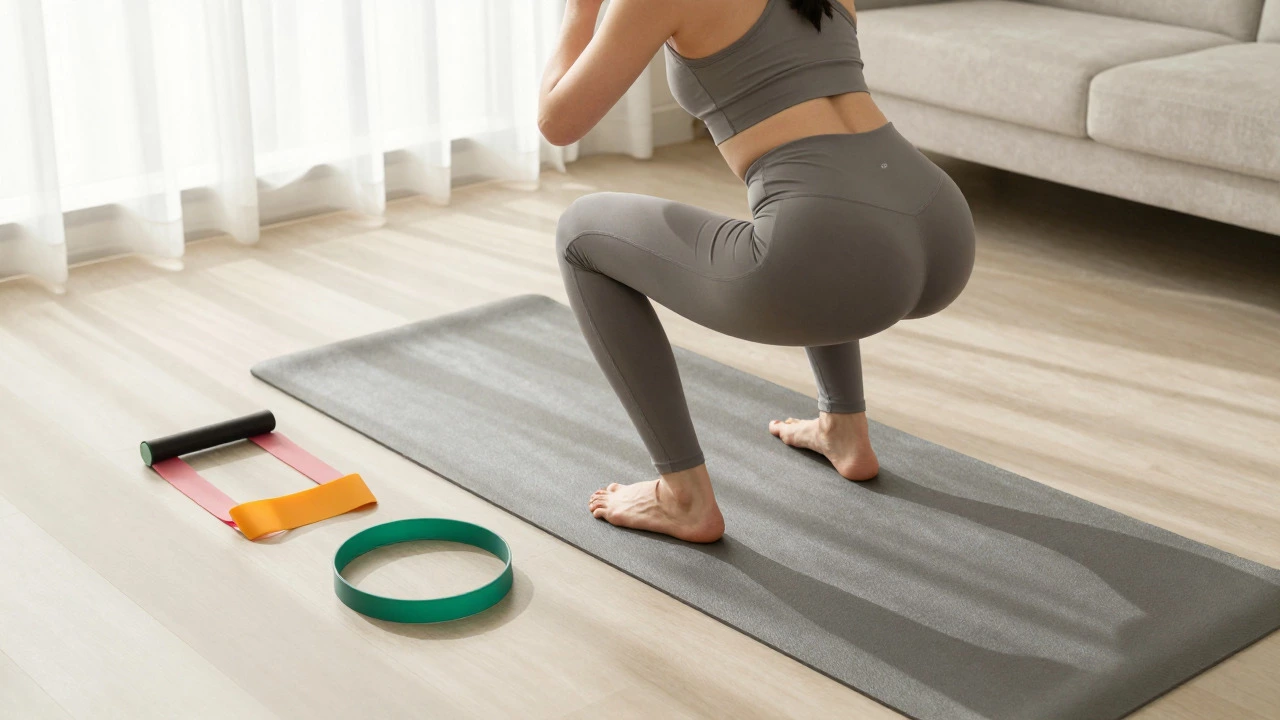
Aim for 3 sets of 10-12 repetitions for each exercise. Rest for 60 seconds between sets. If you have access to a gym, great. If not, you can do all of these at home with minimal equipment. Resistance bands are cheap and incredibly versatile.
Cardio (2-3 days a week): Cardio improves your heart health and burns extra calories. Mix it up. Do one session of steady-state cardio (like a brisk 30-minute walk or jog) and one session of High-Intensity Interval Training (HIIT). For HIIT, try 30 seconds of sprinting followed by 30 seconds of walking, repeated for 15 minutes. It’s brutal, but it’s short.
Recovery: Where the Magic Happens
Many people ignore recovery, thinking it’s lazy. It’s not. Your muscles don’t grow in the gym; they grow while you sleep. If you aren’t sleeping enough, your cortisol levels rise, which can lead to belly fat retention and muscle breakdown.
Aim for 7-9 hours of quality sleep per night. Keep your bedroom cool and dark. Avoid screens for at least an hour before bed. Blue light from phones and laptops tricks your brain into thinking it’s daytime, suppressing melatonin production.
Hydration is another key piece of the puzzle. Dehydration mimics hunger cues. Often, when you think you’re craving a snack, you’re actually just thirsty. Drink at least 2-3 liters of water a day. Add lemon or cucumber if plain water bores you.
Your 4-Week Progression Plan
To avoid plateaus and boredom, we will progressively overload your body. This means gradually increasing the difficulty over the weeks.
| Week | Focus | Workout Intensity | Nutrition Goal |
|---|---|---|---|
| Week 1 | Habit Building | Low-Moderate (Learn form) | Eliminate liquid sugar |
| Week 2 | Consistency | Moderate (Increase reps) | Add protein to every meal |
| Week 3 | Intensity | Moderate-High (Add weight/time) | Reduce processed snacks |
| Week 4 | Peak Performance | High (Challenge limits) | Strict 80/20 adherence |
In Week 1, just show up. Don’t worry about lifting heavy. Focus on nailing your form. By Week 3, you should be adding a little weight or doing a few more reps than last week. This progressive overload signals your body to adapt and get stronger.
Tracking Progress Beyond the Scale
The scale is a liar. It fluctuates based on water retention, salt intake, and digestion. If you only look at the number on the scale, you might get discouraged even if you’re losing fat and gaining muscle.
Use other metrics:
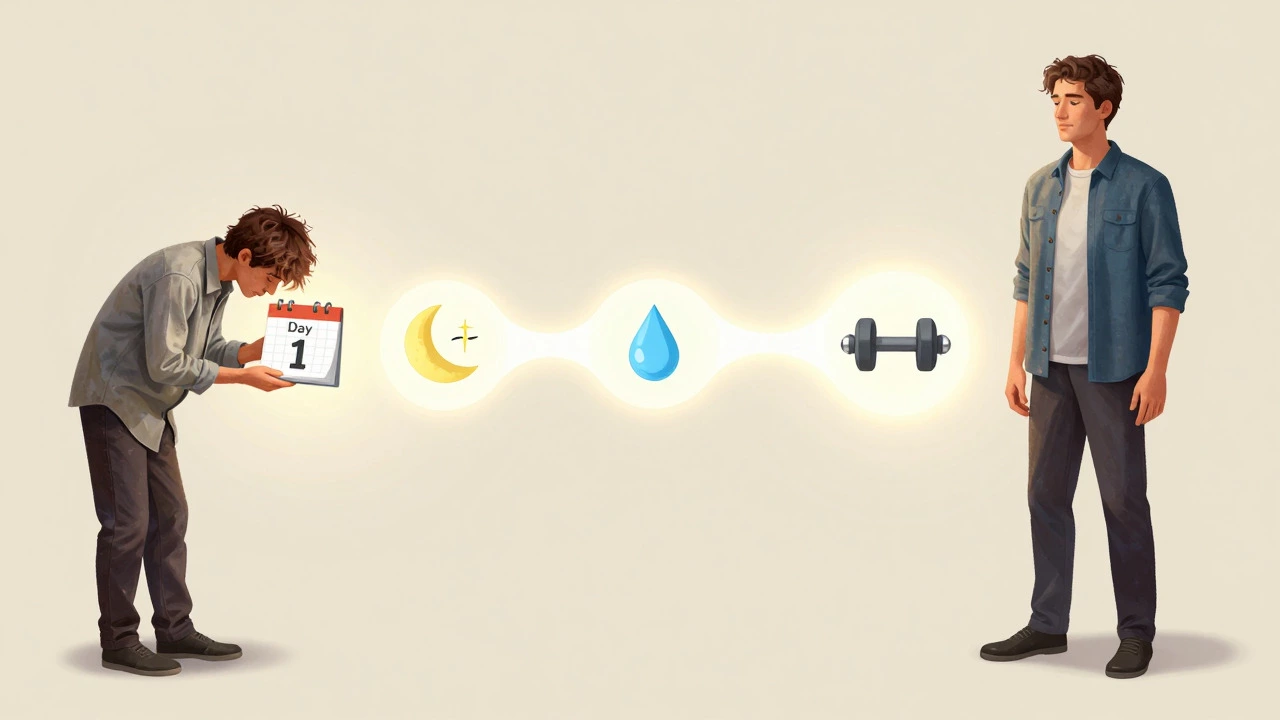
- Photos: Take front, side, and back photos on Day 1 and Day 30. Wear the same clothes. Visual changes are often more noticeable than weight changes.
- Measurements: Use a tape measure to check your waist, hips, chest, and arms. Losing inches is a better indicator of fat loss than losing pounds.
- Clothing Fit: How do your jeans feel? Are they looser around the waist?
- Energy Levels: Do you feel less sluggish during the day? Are you climbing stairs without getting winded?
These non-scale victories are huge. They prove that your body is changing, even if the weight stays the same temporarily.
Common Pitfalls to Avoid
Even with a solid plan, there are traps that can derail you. Watch out for these:
The All-or-Nothing Mentality: If you eat a cookie, don’t throw away the whole box and say, "Well, I’ve ruined my diet." One bad meal doesn’t ruin your progress, just like one good meal doesn’t make you fit. Get back on track with the next meal.
Overtraining: More is not always better. If you’re constantly sore, tired, and irritable, you’re probably overdoing it. Listen to your body. Active recovery (light walking, stretching) is better than forcing a high-intensity workout when you’re exhausted.
Ignoring Social Support: Tell your friends and family about your goal. Ask them to support you, not sabotage you. Having an accountability partner can double your chances of success.
What Comes After Day 30?
Day 30 is not the finish line; it’s the starting line for your new lifestyle. The goal now is to maintain the momentum. You’ve built habits. You know what works. Now, refine it.
Continue the strength training. Maybe add some variety with new exercises. Keep the nutrition principles intact. The key is sustainability. Find activities you enjoy-dancing, hiking, swimming, martial arts-and incorporate them into your routine. Fitness shouldn’t feel like punishment; it should feel like self-care.
Remember, the best fitness plan is the one you can stick to forever. Thirty days is enough to kickstart the process, but a lifetime of consistency is what brings lasting results. Start today. Not tomorrow. Today.
Can I really lose weight in 30 days?
Yes, you can lose weight in 30 days, especially if you combine a calorie deficit with regular exercise. Most people can expect to lose 1-2 pounds per week safely, so aiming for 4-8 pounds in a month is realistic. However, remember that initial weight loss is often water weight, which drops quickly once you reduce carb and sodium intake.
Do I need a gym membership to get fit in 30 days?
No, you do not need a gym membership. Bodyweight exercises like push-ups, squats, lunges, and planks are highly effective for building strength and burning calories. You can also buy inexpensive resistance bands or dumbbells for home use. Consistency matters more than the equipment you use.
How much water should I drink daily?
Aim for at least 2-3 liters (about 8-12 cups) of water per day. Hydration supports metabolism, aids digestion, and helps control appetite. If you exercise intensely or live in a hot climate, you may need more. Listen to your thirst and check the color of your urine; it should be pale yellow.
What should I eat if I’m vegetarian?
Vegetarians can easily meet their protein needs with foods like lentils, chickpeas, tofu, tempeh, edamame, Greek yogurt, eggs, and quinoa. Combine different plant proteins throughout the day to ensure you’re getting all essential amino acids. For example, rice and beans together form a complete protein source.
Is it normal to feel sore during the first week?
Yes, delayed onset muscle soreness (DOMS) is very common when starting a new exercise routine. It usually peaks 24-48 hours after your first workout and subsides within a few days. Gentle movement, stretching, and proper hydration can help alleviate soreness. If the pain is sharp or joint-related, consult a healthcare professional.