
Running Efficiency & Calorie Estimator
Your Metrics
Physiological Analysis
Efficiency Insight:
Enter your data to see how your weight impacts oxygen demand and energy expenditure compared to elite XC standards.
Walk past any high school track team or local cross-country meet in Sydney, and you’ll notice a striking pattern. The athletes standing at the start line look nothing like the powerlifters in the gym next door. They are lean, wiry, and often appear almost fragile until they take off. It’s a common question among newcomers to the sport: why are XC runners so skinny? Is it just genetics, or is there a physiological reason behind that specific build?
If you’re training for a marathon or just trying to understand the mechanics of long-distance running, this body type might seem intimidating. But there’s no magic pill involved. The physique of an elite cross-country runner is the result of intense energy expenditure, specific metabolic adaptations, and evolutionary biology working together. Let’s break down exactly what happens inside their bodies.
The Calorie Deficit Reality
The most straightforward answer is simple math. Cross-country running burns a massive amount of calories. An average-sized person running at a moderate pace can burn between 600 to 800 calories per hour. Elite XC runners often log 50 to 70 miles (80 to 110 kilometers) per week, plus strength work and hill repeats.
To maintain weight, you need to eat as much as you burn. To lose fat, you need to burn more than you eat. Most XC runners exist in a state of controlled caloric deficit. Even when they eat well, their appetite doesn’t always match their output. High-intensity exercise releases hormones like cortisol and epinephrine, which can temporarily suppress hunger. Combine that with the sheer volume of activity, and carrying extra body mass becomes metabolically expensive.
- High Output: Weekly mileage creates a huge energy demand.
- Hormonal Response: Exercise-induced stress hormones reduce immediate hunger cues.
- Dietary Discipline: Many runners consciously avoid "empty" calories to keep digestion light during runs.
The Weight-to-Power Ratio
In sports like rugby or boxing, raw power matters. In cross-country, efficiency is king. Every pound of body weight you carry requires more oxygen and energy to move forward. For a runner, carrying excess fat is like driving a car with a heavy trunk full of bricks while trying to win a fuel-efficiency contest.
This is where the concept of weight-to-power ratio comes into play. You don’t need to be strong in absolute terms; you need to be strong relative to your body weight. A lighter runner experiences less impact force on their joints with every stride. Over a 5-kilometer race or a 32-kilometer marathon, those small reductions in gravitational pull add up to significant time savings.
It’s not about being weak. XC runners have incredibly dense muscles in their calves, shins, and glutes. But they lack the bulky muscle mass seen in sprinters or bodybuilders because slow-twitch muscle fibers-the type dominant in endurance athletes-don’t hypertrophy (grow large) in the same way fast-twitch fibers do.
Genetics and Body Type: The Ectomorph Advantage
Let’s address the elephant in the room: genetics. Not everyone can become an elite XC runner, regardless of how hard they train. This is largely due to somatotypes, or body types. There are three main categories: endomorphs (tendency to store fat), mesomorphs (muscular build), and ectomorphs (lean, linear build).
Cross-country favors ectomorphs. These individuals naturally have:
- Fewer taste buds, meaning they may crave less sugar and rich foods.
- A faster metabolism that resists fat storage.
- Narrower shoulders and hips, which reduces rotational drag while running.
While anyone can improve their fitness, the genetic ceiling for becoming an ultra-lean XC runner is high. Studies from institutions like the Baldwin University Running Research Lab have shown that elite distance runners share similar anthropometric traits: low body fat percentages (often below 10% for men and 15% for women) and higher ratios of slow-twitch muscle fibers.
Thermoregulation: Staying Cool Under Pressure
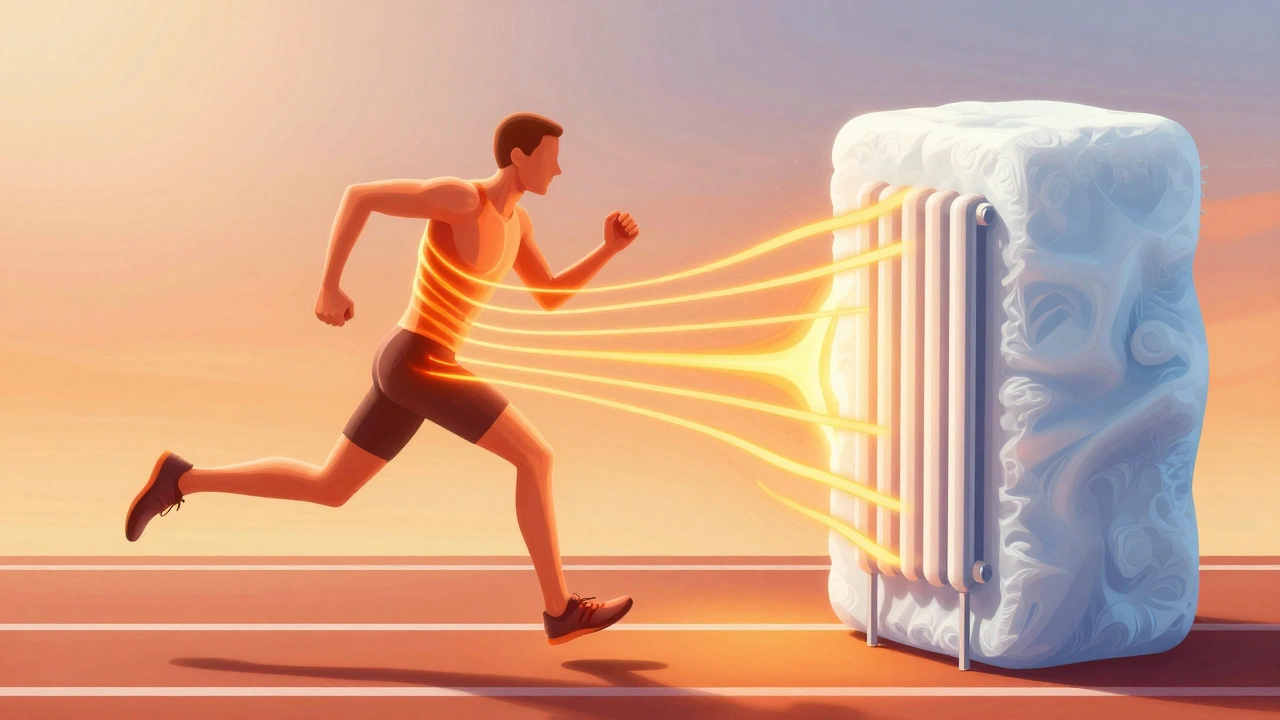
Running generates heat. A lot of it. Your core temperature rises significantly during sustained aerobic activity. If your body can’t dissipate that heat, your performance plummets, and you risk heatstroke.
Body fat acts as an insulator. It keeps you warm in winter but traps heat in summer. XC runners need to shed heat quickly. A leaner body has a higher surface-area-to-volume ratio, allowing heat to escape through sweat and radiation more efficiently. Think of it like a radiator: a thin, spread-out design cools down faster than a thick, insulated block.
This is why you see XC runners looking even skinnier in the summer months. Their bodies adapt to the thermal load by minimizing insulation. In contrast, winter sports athletes might retain slightly more mass for warmth, though still lean compared to other sports.
Slow-Twitch Muscle Fibers vs. Bulk
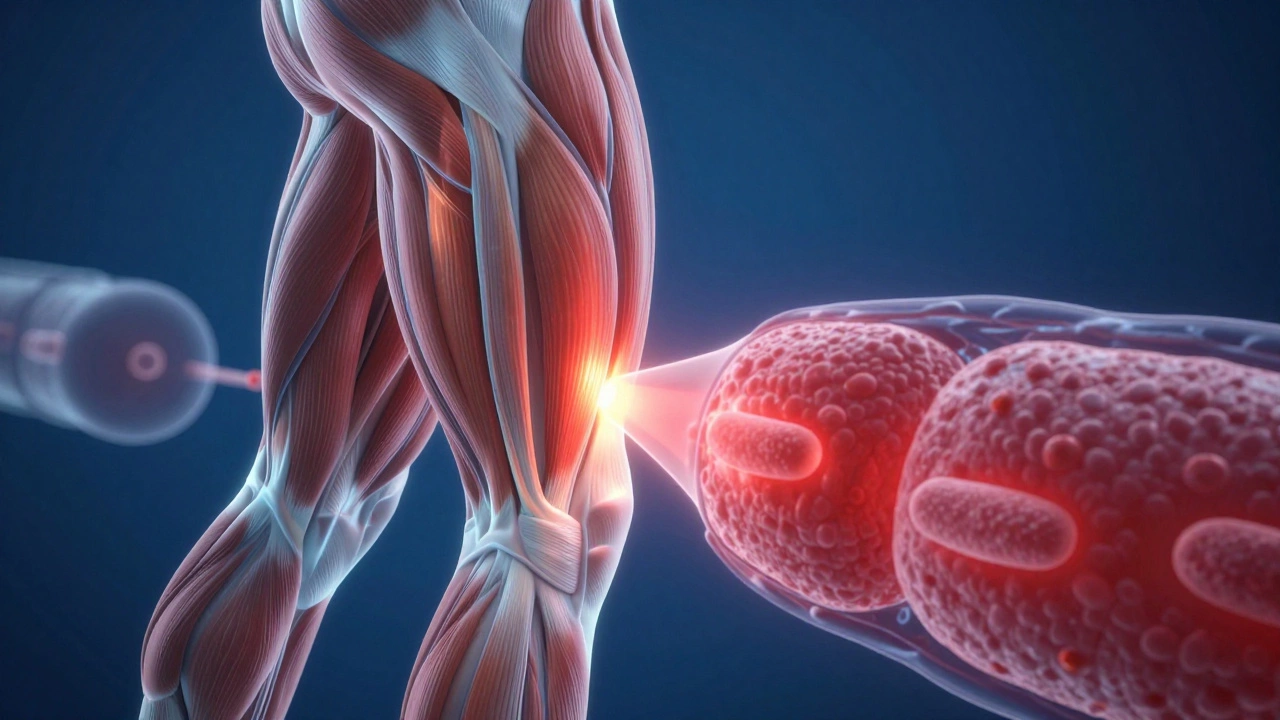
Your muscles are made of different types of fibers. Fast-twitch fibers are responsible for explosive movements like jumping or sprinting. They grow large and bulky when trained. Slow-twitch fibers, however, are designed for endurance. They are resistant to fatigue and efficient at using oxygen to generate fuel.
Cross-country running primarily recruits slow-twitch muscle fibers. Training these fibers increases their density and mitochondrial capacity (the power plants of your cells), but it doesn’t increase their size significantly. This is why XC runners don’t get "buff." Their muscles become denser and more efficient, but they remain slender.
If you want to build bulk, you lift heavy weights with low reps. If you want to build endurance, you run long distances with low resistance. The stimulus determines the adaptation. XC training provides a stimulus for leanness, not hypertrophy.
| Feature | Fast-Twitch (Sprinters/Weightlifters) | Slow-Twitch (XC/Marathon Runners) |
|---|---|---|
| Primary Function | Explosive Power | Sustained Endurance |
| Muscle Size Potential | High Hypertrophy (Bulk) | Low Hypertrophy (Lean) |
| Fatigue Resistance | Low | High |
| Oxygen Efficiency | Poor | Excellent |
Marathon Training and Body Composition
You mentioned marathon training in your query. The principles here overlap heavily with cross-country. Both are aerobic disciplines. However, marathoners might carry slightly more glycogen stores (carbohydrates stored in muscles) than XC racers who compete over shorter courses. Glycogen binds with water, so marathoners might look slightly "fuller" in the legs before a race.
But the overall trend remains the same. Marathon training involves high weekly mileage, often exceeding 40-50 miles. This chronic cardio stimulus prevents significant fat gain and limits muscle bulk. If you’re transitioning from XC to marathons, you won’t suddenly gain weight. You might actually lose more if you increase your long-run volume without adjusting your calorie intake.
Is Being Skinny Healthy for Runners?
This is the critical question. While the lean look is iconic in XC, it’s not always healthy. There’s a fine line between "lean" and "underweight." Female Athlete Triad (or Relative Energy Deficiency in Sport, RED-S) is a serious condition where low energy availability leads to hormonal disruptions, bone density loss, and menstrual irregularities.
Being too skinny can mean:
- Insufficient fuel for recovery, leading to injury.
- Weakened immune system.
- Loss of protective fat around organs and nerves.
Healthy XC runners aren’t just skin and bones. They have defined muscle tone, good posture, and high energy levels. If you’re chasing the XC look, prioritize health metrics like resting heart rate, sleep quality, and consistent performance over the number on the scale.
Can You Change Your Body Type?
If you’re naturally stockier, can you become an XC runner? Yes. While you might not achieve the sub-10% body fat of a genetic ectomorph, you can drastically improve your running economy. Many successful distance runners started as heavier individuals. Consistent aerobic training will strip away excess fat and reveal the underlying muscle structure.
The key is patience. Your cardiovascular system adapts faster than your body composition. Don’t expect to look like an Olympian after six weeks. Give yourself six months of consistent running, proper nutrition, and recovery. Your body will find its natural equilibrium for the sport.
Do XC runners eat less than other athletes?
Not necessarily less in total calories, but they focus on nutrient-dense, easily digestible foods. Because their stomachs are sensitive during long runs, they avoid heavy, fatty, or highly processed meals that sit poorly. They prioritize complex carbohydrates for fuel and lean proteins for repair.
Will running make me skinny if I’m overweight?
Yes, running is an effective tool for weight loss due to its high calorie burn. However, combining it with strength training helps preserve muscle mass so you lose fat rather than just shrinking overall. Always consult a doctor before starting a new exercise regimen if you have joint issues.
Why do XC runners have such small calves?
XC runners use a mix of forefoot and midfoot striking, which engages the calf muscles differently than walking or heel-striking. While their calves are strong, they are composed of slow-twitch fibers which do not bulge. Additionally, the repetitive, low-resistance nature of running promotes endurance rather than size.
Is it harder for muscular people to run cross-country?
It can be initially challenging due to the higher weight-to-power ratio. Muscles require oxygen and energy to function. Carrying extra muscle mass that isn't directly contributing to forward propulsion can be inefficient. However, with consistent aerobic training, muscular individuals can shed unnecessary bulk and improve their running economy significantly.
What is the ideal body fat percentage for XC runners?
Elite male XC runners typically range from 6% to 10% body fat, while females range from 12% to 16%. However, these numbers are for elite competitors. For recreational runners, a healthy range is 14-17% for men and 20-24% for women. Prioritizing performance and health over extreme leanness is crucial for longevity in the sport.