Boxing History Timeline Explorer
Click on each era to reveal key details about how boxing evolved from a deadly brawl to a regulated sport.
Legend & Summary
You might think boxing is a modern invention, born in the smoky gyms of Victorian London or the glitzy arenas of Las Vegas. But if you dig into the archives, you’ll find that the first recorded bout happened over 3,000 years ago, long before anyone heard of Muhammad Ali or Mike Tyson. The question isn't just "who started it," but "where did the rules come from?" because those are two very different answers.
Most people assume Greece gets the credit because we see boxers on pottery vases. And sure, they made it famous. But the actual birthplace of organized fighting? It’s likely somewhere in the Middle East, specifically Sumer or Egypt. Let’s untangle this knot of history, myth, and regulation to figure out exactly which country can claim the title of "inventor."
The Real Birthplace: It Wasn’t Greece
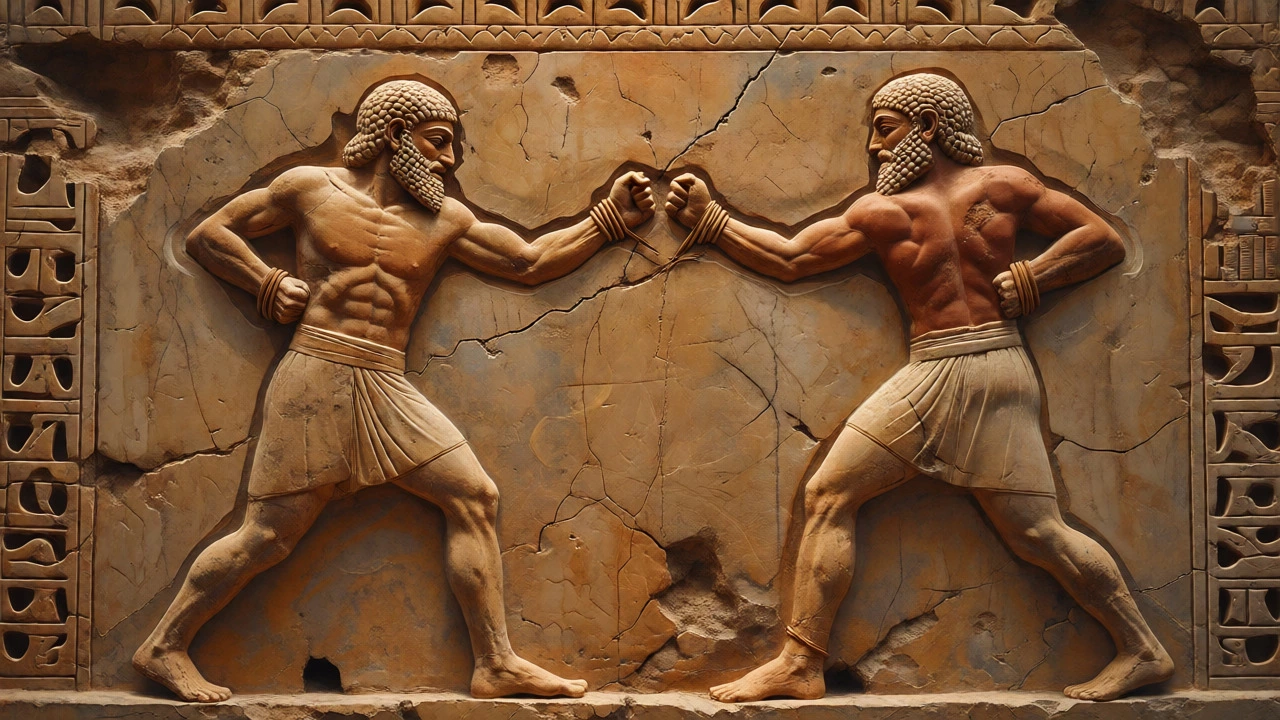
If you ask a historian where boxing began, they won’t point to Athens. They’ll point to Mesopotamia. Archaeological evidence suggests that fist-fighting competitions were happening in Sumer (modern-day Iraq) as early as 3000 BCE. There are carvings and reliefs depicting men fighting with bare fists, sometimes wearing protective gear around their wrists. This wasn’t just barroom brawling; it was structured enough to be considered a proto-sport.
Egypt also has a strong claim. Tomb paintings from Beni Hasan, dating back to around 2000 BCE, show detailed sequences of wrestling and boxing matches. These aren’t vague sketches; they’re instructional diagrams. You can see fighters adopting stances, throwing jabs, and grappling. This level of detail implies a codified system existed. So, while Greece popularized it, the Middle East invented it.
| Region | Approximate Date | Evidence Type | Key Characteristics |
|---|---|---|---|
| Sumer (Iraq) | 3000 BCE | Relief carvings | Bare-knuckle fights, wrist protection, ritualistic context |
| Ancient Egypt | 2000 BCE | Tomb paintings (Beni Hasan) | Instructional poses, mixed grappling/striking, no gloves |
| Ancient Greece | 688 BCE (Olympics) | Literature & Pottery | Head-only strikes, leather straps (himantes), professional athletes |
Greece Made It Famous, Not First
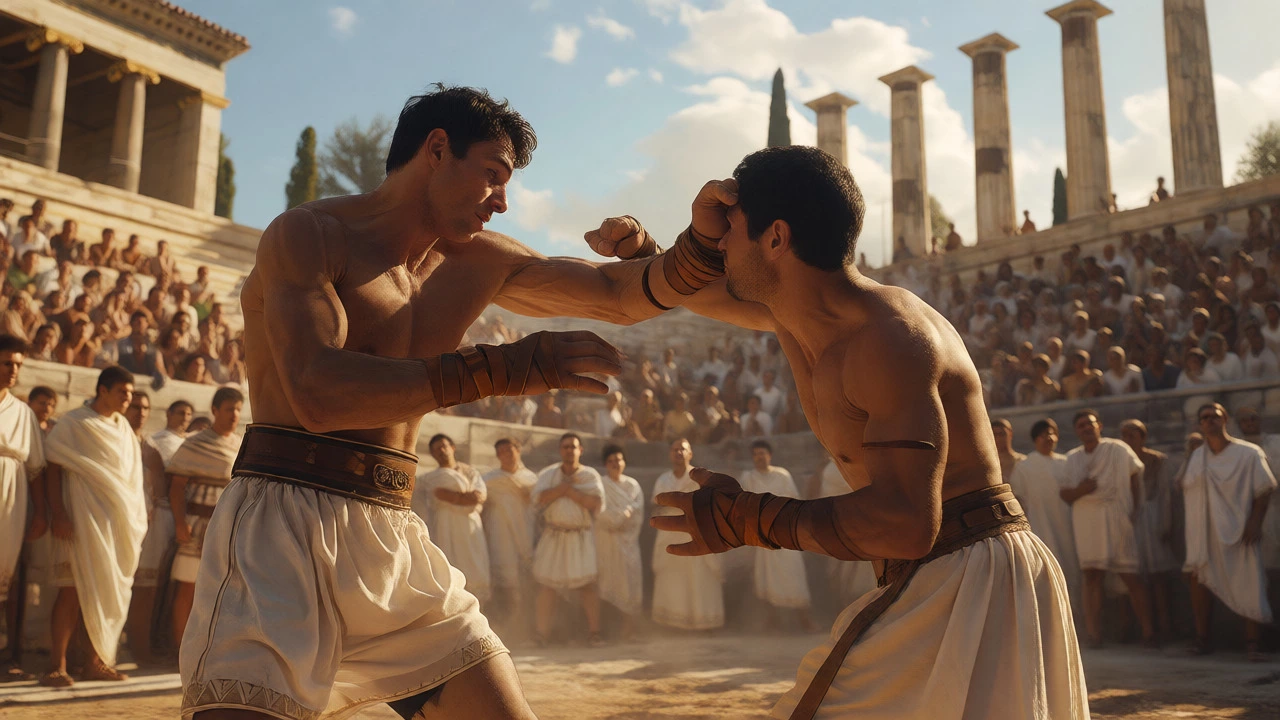
Why does everyone think Greece invented it? Because they wrote about it. Homer described boxing in the *Iliad*, and when the ancient Olympic Games introduced boxing (*pygme*) in 688 BCE, it became a spectacle for the Mediterranean world. Greek boxers didn’t wear gloves like we do today. They wrapped their hands in leather straps called *himantes*. Later, they upgraded to *caestus*, which had metal studs embedded in the leather. Imagine getting hit by that-it was brutal.
In these games, there were no weight classes and no rounds. A match ended when one fighter surrendered or could no longer continue. Often, this meant death or severe injury. The Greeks elevated boxing from a regional brawl to a prestigious athletic contest, but they didn’t create the fundamental act of hitting someone with your fist in competition.
England Codified the Sport We Know Today
Fast forward a few thousand years. If you’re watching a modern boxing match, you’re watching a British invention. While the ancients fought until someone died, England turned boxing into a regulated sport. This shift happened in the 17th and 18th centuries, driven by prizefighting culture.
James Figg, an English fencer and boxer, is often credited as the father of modern boxing. He opened a training academy in London around 1719. Before him, fights were chaotic street affairs. Figg introduced the idea of training, footwork, and defense. He even used a cudgel (stick) to demonstrate technique, blending fencing principles with punching.
But the real game-changer was Jack Broughton. In 1743, he published the London Prize Ring Rules. Why? Because his opponent died in a fight. Broughton wanted to reduce fatalities. His rules included:
- No hitting below the belt.
- No kicking or headbutting.
- A 30-second count if a fighter fell.
- The use of "mufflers" (early padded gloves) for practice, though not always for bouts.
These rules transformed boxing from a deadly brawl into a contest of skill. Without England, you wouldn’t have the three-minute rounds, the referee counts, or the concept of disqualification.
The Marquess of Queensberry Rules: The Global Standard
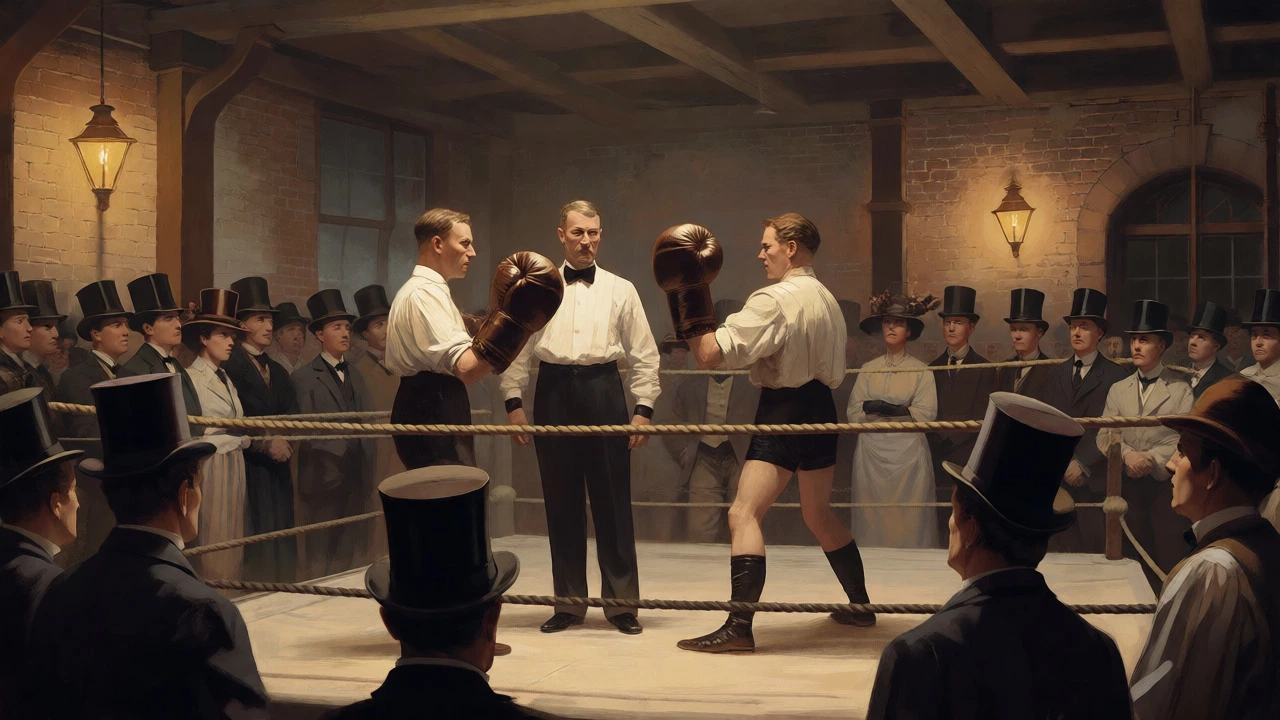
Even after Broughton, boxing remained messy. Fighters still went down without a count, and rounds weren’t standardized. Enter John Sholto Douglas, the 9th Marquess of Queensberry. In 1867, he sponsored a set of rules written by John Graham Chambers. These are the rules that essentially define modern boxing worldwide.
The Marquess of Queensberry Rules mandated:
- Gloves: Boxers must wear padded gloves to protect both themselves and their opponents.
- Rounds: Matches consist of three-minute rounds with one-minute rests.
- Weight Classes: Fighters compete against others of similar size.
- Referee Authority: The referee has the final say on fouls and stoppages.
This document spread from Britain to America and then globally. When you watch a heavyweight championship in New York or a lightweight title fight in Sydney, you’re following British guidelines. So, while the Middle East invented the action, England invented the structure.
Why Do People Argue About This?
People argue because "invention" is ambiguous. Are we talking about the physical act of fighting with fists? Or the organized sport with referees and scorecards? If you mean the former, look to Iraq or Egypt. If you mean the latter, look to England.
There’s also a cultural bias at play. Western sports history tends to overlook non-European contributions unless they’re tied to the Olympics. Since the modern Olympics revived boxing in 1904 using British-style rules, the narrative skewed heavily toward Europe. But archaeological finds in Iran and Turkey continue to push the timeline back further, proving that competitive fist-fighting is a universal human instinct, not a European luxury.
How Boxing Spread Across the World
Once England codified the rules, boxing traveled fast. Sailors brought it to ports worldwide. In Australia, boxing took root in the gold rush towns of the 1850s. Miners needed entertainment and a way to settle disputes without guns. By the late 19th century, Australian fighters were challenging British champions, creating a fierce rivalry that exists to this day.
In the United States, boxing exploded in popularity during the early 20th century. Figures like Jack Dempsey turned it into mass entertainment. But even in America, the rulebook remained British. The International Boxing Association (AIBA) later standardized amateur boxing for the Olympics, again leaning on British-influenced frameworks.
Today, every major boxing commission-from Nevada to Victoria-follows variations of the Queensberry model. The core mechanics haven’t changed much since 1867. That consistency is why a fan in Tokyo can understand a fight in London without needing a translator.
Common Misconceptions About Boxing History
Let’s clear up some myths. First, many believe ancient boxers wore soft boxing gloves. They didn’t. Greek and Roman fighters used hard leather, sometimes weighted with lead or iron. Their goal was damage, not points. Modern scoring rewards clean punches; ancient combat rewarded survival and dominance.
Second, people think women never boxed until recently. Wrong. Evidence suggests women participated in ancient festivals, and Victorian-era England saw female prizefighters like Mary Ann Linney competing in public. The ban on women’s boxing in many places was a social choice, not a historical norm.
Third, some claim Brazil or Africa invented martial arts that influenced boxing. While kickboxing and capoeira have distinct roots, traditional stand-up fist fighting evolved independently across cultures. However, cross-pollination happened through trade routes. Silk Road exchanges likely shared techniques between Asia and the Middle East, refining striking methods long before they reached Europe.
What This Means for Modern Fans
Understanding the origins changes how you watch a match. When you see a boxer slipping a jab, remember that defensive footwork was pioneered by James Figg in 18th-century London. When you hear the bell ring for round one, thank the Marquess of Queensberry for standardizing time limits. And when you marvel at the raw power of a knockout, recall its roots in Sumerian rituals where strength was divine.
Boxing is a global language spoken with a British grammar book and an ancient Middle Eastern vocabulary. No single country owns it, but each contributed a critical piece. Next time you watch a title fight, appreciate the layers of history behind every punch.
Did the ancient Greeks wear boxing gloves?
No, ancient Greeks did not wear padded gloves like modern boxers. They used leather straps called himantes, which protected the knuckles and wrists but offered little cushioning. Later, they used caestus, which had metal studs, making punches more damaging rather than safer.
Who wrote the modern rules of boxing?
John Graham Chambers wrote the Marquess of Queensberry Rules in 1867, sponsored by John Sholto Douglas. These rules established the use of gloves, three-minute rounds, and weight classes, forming the basis of modern boxing regulations.
Is boxing older than the Olympics?
Yes, evidence of organized fist-fighting predates the first recorded ancient Olympic Games (776 BCE). Archaeological findings in Sumer and Egypt suggest boxing-like contests occurred as early as 3000 BCE, thousands of years before the Olympics began.
Why is England credited with inventing modern boxing?
England is credited because it codified the rules that turned chaotic brawls into a regulated sport. Key figures like Jack Broughton and the Marquess of Queensberry introduced safety measures, rounds, and judging standards that are still used globally today.
Did ancient boxing have weight classes?
No, ancient boxing did not have weight classes. Fighters competed regardless of size, which often led to mismatches. Weight divisions were introduced in the 19th century as part of the move toward fairer, more technical competition.