Basketball League Hierarchy Explorer
Click on a league level below to learn about its role in the basketball ecosystem, how players move between levels, and key characteristics.
National Basketball Association (NBA)
Overview: The premier men's professional basketball league in North America. It features 30 teams and is known for the highest level of athletic talent globally.
Key Characteristics:
- No Promotion/Relegation: Teams do not drop down or move up based on performance. The franchise structure is static.
- Roster Limits: Standard rosters are limited to 15 players, creating scarcity for roster spots.
- Economic Power: Franchises are valued in billions, driven by TV deals and global merchandise.
NBA G-League
Overview: The sole official minor league partner of the NBA. Formerly the D-League, it focuses entirely on player development and evaluation for NBA franchises.
How Movement Works:
- Affiliation: Every NBA team owns or has an affiliate relationship with a G-League team.
- Two-Way Contracts: Players can split time between NBA and G-League (capped at 50 NBA games).
- Call-Ups: NBA teams can call up players instantly for injuries or trades.
International Leagues
Overview: Elite leagues in Europe (EuroLeague, ACB), Australia (NBL), and Asia. Often considered higher tactical competition than the G-League.
Why Players Choose This Path:
- Tactical Discipline: Emphasis on team spacing and fundamentals vs. individual isolation.
- Development: Stars like Luka Dončić and Nikola Jokić developed here before joining the NBA.
- Scouting: A respected gateway for international talent entering the NBA.
Independent Circuits
Overview: Fragmented professional leagues (CBA, regional summer leagues) and entertainment-focused leagues (Big3). No direct contractual link to the NBA.
Characteristics:
- Free Agency: Players are true free agents with lower pay and varying facilities.
- Veterans & Tryouts: Older players staying fit or young players hoping for scout attention.
- Big3: A 3-on-3 league for former NBA stars, focused on entertainment rather than development.
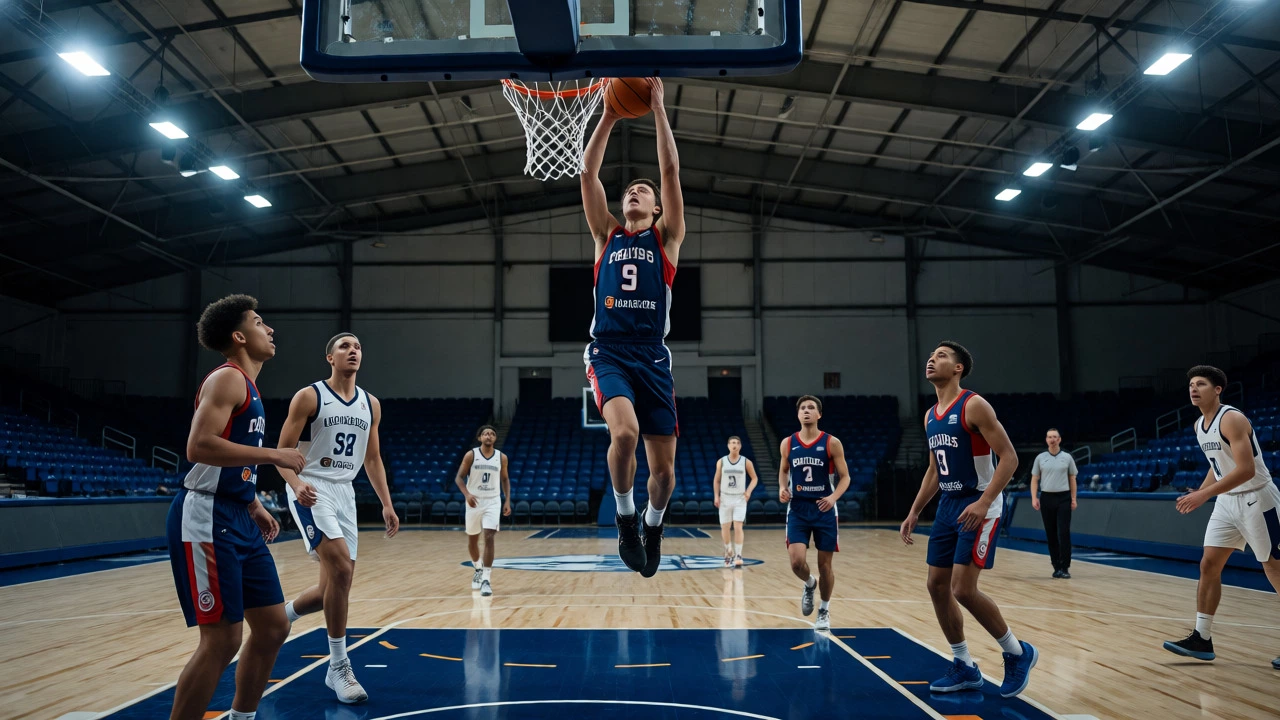
You’ve probably seen highlights of a player dunking in a nearly empty arena, wearing a jersey that looks suspiciously like an NBA team’s kit but with different sponsors. You might be wondering: what league is below the NBA?
The short answer is the NBA G-League, which is the official minor league basketball organization for the National Basketball Association (NBA). But the landscape of professional basketball outside the top tier is more nuanced than just one single ladder. Unlike soccer, where you can get relegated from the Premier League to the Championship, American sports leagues don’t typically have promotion and relegation. Instead, they use a system of affiliates, developmental squads, and independent circuits.
If you’re trying to figure out where players go when they aren’t quite ready for the big time-or if you’re tracking a star who was recently waived-understanding the hierarchy is key. It’s not just about skill; it’s about contracts, roster limits, and the specific goals of each organization. Let’s break down exactly what sits beneath the NBA, how players move between these levels, and why this structure exists.
The Direct Affiliate: The NBA G-League
The NBA G-League is a developmental basketball league owned and operated by the NBA. Formerly known as the D-League (Developmental League), it rebranded in 2017 after signing a naming rights deal with Gatorade. This isn’t some random pickup game circuit; it is the sole official minor league partner of the NBA.
Every single NBA franchise has a dedicated G-League affiliate team. For example, the Los Angeles Lakers own the South Bay Lakers, and the Boston Celtics are linked with the Maine Celtics. These teams play in arenas across the United States and Canada. The primary purpose here is player development. Teams use the G-League to test young rookies, rehabilitate injured veterans, or evaluate undrafted prospects who showed promise in college or overseas.
How does movement work? It’s fluid. An NBA team can call up a player from their G-League affiliate at any time. Conversely, if an NBA roster gets too crowded due to injuries or trades, they can send a player down to the G-League to get playing time. There is no salary cap issue moving players between these two levels because the contracts are often structured to accommodate this flexibility. If you see a player dominating in the G-League, there’s a very real chance they’ll be on an NBA court within days.
The Contractual Bridge: Two-Way Contracts
You might hear commentators talk about "two-way" players. This isn’t a separate league, but rather a contractual status that blurs the line between the NBA and the G-League. Introduced in 2017, Two-Way Contracts allow players to split time between an NBA team and its G-League affiliate.
Here’s the logic: An NBA roster is limited to 15 standard contracts. That leaves little room for experimentation. Two-way contracts allow teams to carry three additional players who spend most of their time in the G-League but can be called up to the NBA for a limited number of games (currently capped at 50 games per season). This system benefits both sides. The player gets exposure to NBA coaching staffs and facilities, while the team gets a low-risk way to evaluate talent without committing full NBA salaries.
For fans, this means the gap between "pro" and "superstar" is smaller than ever. A two-way player is technically an NBA employee, but their daily grind happens in the minor leagues. When you ask "what league is below the NBA," the G-League is the physical location, but the two-way contract is the legal mechanism that keeps those worlds connected.
The International Pathway: Overseas Leagues
Not every talented basketball player ends up in the G-League. In fact, many elite international prospects bypass American minor leagues entirely. They head straight to Europe, Asia, or Australia. Why? Sometimes it’s about money, sometimes it’s about playing style, and sometimes it’s about visa issues.
EuroLeague and national leagues like Spain’s ACB or Turkey’s BSL are often considered higher-level competition than the G-League. While the G-League focuses on individual athleticism and NBA-style isolation plays, European leagues emphasize tactical discipline, team spacing, and fundamental skills. Players like Luka Dončić and Nikola Jokić developed their games in these systems before coming to the NBA.
| League/Level | Primary Goal | NBA Connection | Typical Player Profile |
|---|---|---|---|
| NBA G-League | Player Development & Evaluation | Direct Affiliate System | Rookies, Undrafted Pros, Rehabbing Stars |
| EuroLeague / ACB | Competitive Excellence | Scouting Grounds | International Veterans, High-IQ Prospects |
| NBL (Australia) | Regional Professionalism | Gateway for APAC Talent | Australian Prospects, Journeyman Americans |
| TBL / CBA | Exhibition & Summer Prep | Pre-Season Scrimmage | Rookies, Free Agents seeking auditions |
Since I live in Sydney, I keep a close eye on the National Basketball League (NBL) in Australia. It’s become a significant pipeline for players aiming for the NBA. The NBL provides high-quality professional experience that is respected by NBA scouts. Many players use the NBL as a springboard, especially if they struggle to find a spot in the crowded G-League market.

The Independent Circuit: Where the Grind Never Stops
Below the G-League and major international leagues lies a fragmented world of independent professional basketball. These are leagues like the Continental Basketball Association (CBA) or various regional summer leagues. These aren’t officially affiliated with the NBA. Players here are true free agents.
The stakes are lower, the pay is significantly less, and the facilities vary wildly. You might play in a high school gymnasium one night and a mid-sized auditorium the next. Why do players stay here? Some are older veterans keeping fit. Others are younger players hoping to catch the eye of a scout at an open tryout. It’s the bottom rung of the professional ladder, but it’s still professional. The level of play can be surprisingly competitive, though the consistency lacks compared to the G-League.
There’s also the Big3, a 3-on-3 basketball league founded by Ice Cube. While not a direct feeder to the NBA, it offers former NBA players a platform to earn money and stay relevant. It’s entertainment-focused, but it demonstrates how diverse the post-NBA career path can be.
Why Doesn’t the NBA Have Promotion and Relegation?
This is a common question for soccer fans transitioning to basketball. In England, if Manchester City finishes last in the Premier League, they drop to the Championship. In the NBA, the worst team stays in the NBA. Why?
First, economics. NBA franchises are worth billions. Dropping a team to a minor league would destroy its revenue streams (TV deals, ticket sales, merchandise). Second, parity. The NBA draft allows bad teams to pick the best college players, helping them rebuild without leaving the league. Third, logistics. Travel costs in North America are huge. Maintaining a closed shop simplifies scheduling and reduces financial risk for owners.
So, instead of teams moving up and down, players move up and down. The league structure remains static, but the human capital flows freely between the NBA and its affiliates. This makes the "league below" a training ground rather than a competitor for survival.

How to Follow the Action
If you want to watch the level below the NBA, you have several options. The NBA G-League has expanded its media coverage significantly. Games are broadcast on ESPN, CBS Sports Network, and NBA TV. Many games are also streamed via YouTube or local sports networks.
Watching G-League games is great for fantasy basketball managers. Since NBA minutes are precious, finding a G-League standout who is likely to get a 10-day contract can give you a cheap waiver wire pickup with upside. Keep an eye on players averaging over 20 points and 8 rebounds in the G-League-they are prime candidates for call-ups.
Also, consider following international leagues if you enjoy different styles. Watching EuroLeague basketball teaches you a lot about team defense and off-ball movement, concepts that NBA teams increasingly value. It’s a broader education in the sport.
Frequently Asked Questions
Is the NBA G-League the only minor league for the NBA?
Yes, the NBA G-League is the only official minor league directly owned and operated by the NBA. Other leagues may have informal ties or serve as scouting grounds, but they do not have the direct contractual links that the G-League possesses.
Can a player jump from the G-League straight to the NBA?
Absolutely. Players are frequently called up from the G-League to sign standard NBA contracts. If a player performs well enough, they can secure a permanent spot on an NBA roster, effectively skipping any other intermediate steps.
Do G-League players get paid well?
Salaries have increased significantly in recent years. Top G-League players can earn over $100,000 USD per season, plus bonuses. However, this is still far below the average NBA salary, which exceeds $9 million annually.
What is the difference between the G-League and the Big3?
The G-League is a developmental league focused on preparing players for the NBA, featuring 5-on-5 full-court basketball. The Big3 is a recreational/professional 3-on-3 league primarily for retired NBA stars, focusing on entertainment and legacy rather than player development.
Are there women's leagues below the WNBA?
Currently, there is no official minor league for the WNBA comparable to the G-League. Most professional women's basketball players compete in international leagues during the WNBA offseason, such as those in China, Turkey, or Australia.
Next Steps for Fans and Analysts
If you’re new to this ecosystem, start by picking an NBA team you like and watching their G-League affiliate. Notice how the same coaches and systems are used. Then, track a specific player who moves between the two levels. You’ll see how quickly an NBA coach can impact a player’s efficiency.
For deeper analysis, look into the Two-Way Contract rules. Understanding the 50-game limit helps explain why some players sit out certain NBA games even when the roster seems thin. It’s all part of the intricate machinery that keeps the NBA supplied with fresh talent while maintaining the exclusivity of the top-tier product.