
3-3-3 Grounding Exercise Guide
Use this tool to reset your focus before or during a workout.
1. See
Name 3 things you see.
2. Hear
Name 3 sounds you hear.
3. Move
Move 3 body parts.
You’re standing in the middle of a busy gym, surrounded by clanking weights and loud music. Your heart rate is up, not from the deadlifts, but because your mind is racing. You feel scattered, anxious, or just disconnected from your body. This is where the 3-3-3 exercise comes in handy. It’s not a heavy lift you do for gains; it’s a mental reset button that helps you reconnect with the present moment.
While many people associate fitness solely with physical exertion, true performance relies heavily on mental clarity. The 3-3-3 method is a simple, three-step grounding technique designed to pull you out of spiraling thoughts and back into your immediate environment. Whether you are dealing with pre-workout jitters, post-run panic, or general daily stress, this tool requires no equipment, no subscription, and zero prior experience.
| Feature | Details |
|---|---|
| Purpose | To reduce anxiety and improve focus using sensory awareness. |
| Time Required | Less than one minute. |
| Equipment | None. |
| Best For | Gym-goers with performance anxiety, runners feeling overwhelmed, anyone needing a quick mental reset. |
| Core Mechanism | Engaging sight, sound, and touch to interrupt fight-or-flight responses. |
Breaking Down the Three Steps
The name tells you everything you need to know: you will notice three things in three different categories. But how exactly does looking at three objects stop a panic attack? It works by shifting your brain’s processing power. When you are anxious, your amygdala (the brain’s alarm system) is firing off danger signals. By forcing your prefrontal cortex (the logic center) to identify and name specific details, you dampen that emotional noise.
Here is the exact sequence you follow:
- Name three things you see. Look around your current environment. Pick three distinct objects. Don’t just glance; really look. If you are in the gym, maybe you see a red kettlebell, a water bottle, and a mirror. Say them out loud if possible, or clearly in your head.
- Name three sounds you hear. Close your eyes if it helps. Listen past the obvious noise. Can you hear the hum of the air conditioner? The thud of someone dropping a weight? Your own breathing? Identify three specific auditory inputs.
- Move three parts of your body. Finally, engage your proprioception. Wiggle your toes, rotate your wrists, or shrug your shoulders. Move three separate body parts deliberately. This brings your attention to physical sensation, anchoring you in your body rather than your head.
Why Athletes Use Grounding Techniques
You might wonder why a strength coach would care about mental tricks. The answer lies in injury prevention and performance consistency. When your mind wanders during a squat set, your form breaks down. When a runner dissociates during a long trail run, they miss footing. The 3-3-3 exercise acts as a cognitive anchor.
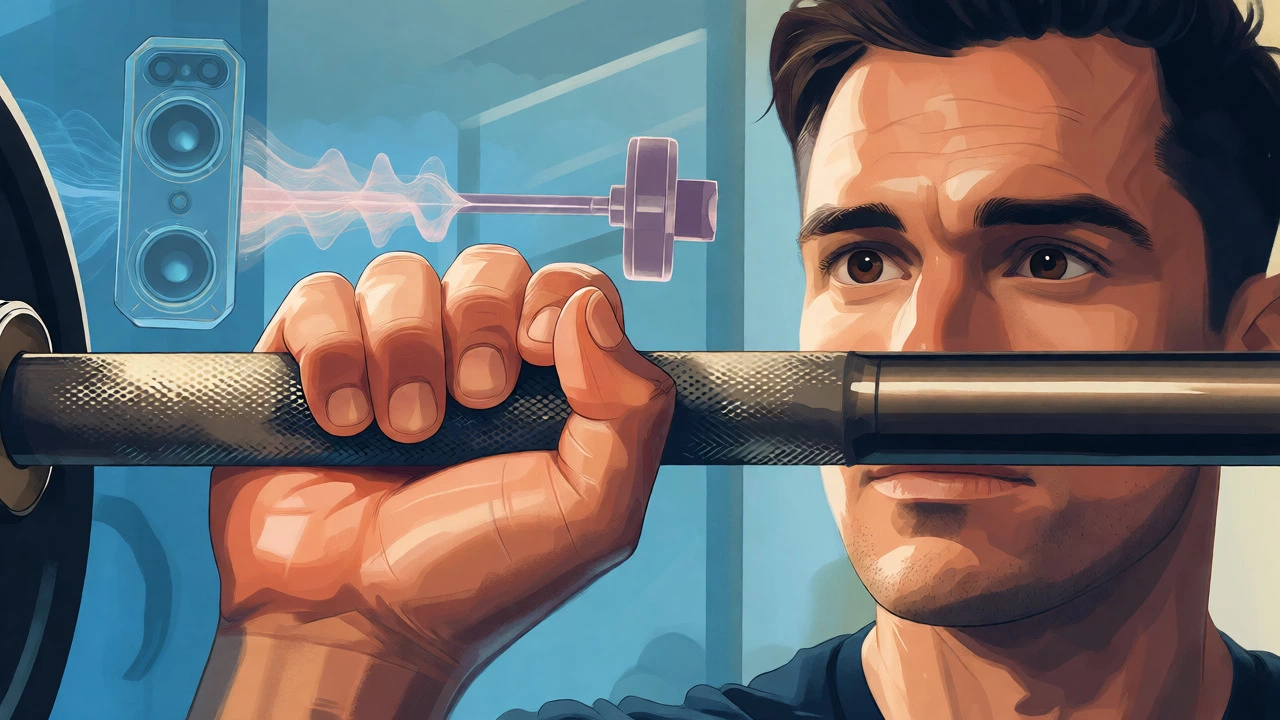
Consider a powerlifter preparing for a max attempt. The adrenaline spike can cause tunnel vision and shaky hands. Instead of trying to "calm down" through sheer willpower, which often fails, the athlete uses the 3-3-3 method. By focusing on the texture of the barbell, the sound of their spotter, and the tension in their grip, they narrow their focus to controllable variables. This isn't just relaxation; it's precision tuning.
Research in sports psychology suggests that mindfulness practices can lower cortisol levels and improve motor control. While the 3-3-3 technique hasn't been the subject of massive clinical trials like meditation apps, its roots in Cognitive Behavioral Therapy (CBT) and Dialectical Behavior Therapy (DBT) are well-documented. Therapists use similar grounding scripts to help patients manage PTSD and acute anxiety episodes. Applying this to fitness is a logical extension of those principles.
When to Use It During Your Workout
You don’t need to do this before every single rep. That would be tedious. Instead, treat it as a tactical pause. Here are three scenarios where I’ve seen clients benefit most from this micro-break.
- Pre-Workout Jitters: If you arrive at the gym feeling frazzled from work, spend two minutes doing the 3-3-3 exercise while setting up your gear. It creates a boundary between your professional stress and your training session.
- Between Heavy Sets: After a grueling set of bench press, your heart is pounding and your breathing is erratic. Instead of checking your phone, use the time to ground yourself. It helps regulate your nervous system faster than passive rest alone.
- Post-Run Cool Down: Endurance athletes often experience a "runner's high" crash or sudden fatigue-induced anxiety. Sitting on a bench after a 10k run and practicing the steps can ease the transition from high-intensity effort to rest.
Common Mistakes People Make
It seems too simple to fail, right? Yet, people often mess it up by rushing. If you rattle off three objects in two seconds, you aren’t engaging your senses; you’re just reciting words. The goal is slow, deliberate observation.
Another mistake is judgment. If you see a messy locker room and think, "Ugh, this place is dirty," you’ve added an emotional layer. Stick to neutral observations. "I see a blue towel." Not "I hate that towel." Neutral observation keeps the nervous system calm. Emotional labeling triggers more thought loops.
Also, don’t skip the movement step. Many people forget to move their body parts. Touch and proprioception are powerful anchors because they provide immediate feedback from your muscles and joints. Ignoring this leaves half the potential benefit on the table.
Adapting the Technique for Different Environments
The beauty of this method is its versatility. You can adapt it to any setting, though the examples change.
| Setting | Visual Cues | Auditory Cues | Kinesthetic Cues |
|---|---|---|---|
| Gym Floor | Dumbbells, floor mats, ceiling lights | Grunt of lifting, music beat, shoes squeaking | Fist clench, shoulder roll, toe wiggle |
| Outdoor Run | Trees, birds, pavement cracks | Wind, footsteps, distant traffic | Leg swing, arm pump, neck stretch |
| Office Desk | Monitor, keyboard, plant | Keyboard typing, AC hum, colleague talking | Wrist rotation, ankle circles, jaw release |
In a noisy gym, finding three unique sounds can be tricky. Focus on isolating layers. First, the broad background noise. Then, a specific rhythmic sound. Finally, a sharp, intermittent noise. This hierarchy helps train your ear to filter information, a skill that translates directly to better listening skills in team sports like rugby or basketball.

Beyond Anxiety: Enhancing Mind-Muscle Connection
Let’s pivot slightly. While the 3-3-3 exercise is primarily known for anxiety reduction, bodybuilders have long used similar sensory checks to enhance the mind-muscle connection. Before performing a bicep curl, some coaches instruct athletes to visualize the muscle contracting. The 3-3-3 method externalizes this. By noticing the coolness of the dumbbell handle (touch), the reflection in the mirror (sight), and the sound of the plates clicking (sound), you heighten your overall sensory awareness.
This heightened state makes it easier to detect subtle imbalances. Did your left shoulder rise higher than your right? You’ll notice it faster if you are already scanning your environment and body intentionally. It turns a rote mechanical action into a mindful practice.
Integrating It Into Your Routine
Don’t try to overhaul your entire mental health strategy overnight. Start small. Commit to doing the 3-3-3 exercise once per workout session. Pick a consistent trigger, such as the moment you walk through the gym doors or immediately after finishing your warm-up.
Track how you feel afterward. Do you feel more focused? Less distracted? Keep a simple note in your training log. Over time, you’ll build a neural pathway that associates this quick ritual with readiness. Eventually, you won’t even need to go through the full verbal steps; just the intention to ground yourself will suffice.
Remember, fitness isn't just about building muscle mass or burning calories. It's about building resilience. Your ability to stay present under pressure-whether that pressure is a heavy barbell or a stressful email-is a trainable skill. The 3-3-3 exercise is one of the cheapest, fastest tools to sharpen that skill.
Does the 3-3-3 exercise actually cure anxiety?
No, it doesn't cure anxiety permanently. It is a coping mechanism designed to manage acute symptoms. Think of it like taking an aspirin for a headache-it addresses the immediate discomfort but doesn't fix the underlying cause. For chronic anxiety, combine this technique with therapy, medication, or lifestyle changes recommended by a healthcare professional.
Can I do the 3-3-3 exercise while running?
Yes, but modify it for safety. While moving, you can still name three things you see and three sounds you hear. For the third step, instead of stopping to move body parts, focus on three specific sensations in your stride, such as the impact of your heel, the swing of your arms, and the rhythm of your breath. This keeps you grounded without breaking your pace dangerously.
Is this different from meditation?
They share goals but differ in execution. Meditation usually involves sitting still and observing thoughts without judgment, often for longer periods. The 3-3-3 exercise is active, fast, and directive. You are actively searching for stimuli rather than waiting for them. It is more accessible for people who find sitting still difficult or who need immediate relief in public spaces.
How long should I spend on each step?
There is no strict timer, but aim for about 5-10 seconds per category. Rushing defeats the purpose. Spend enough time to truly register the object, sound, or sensation. If you finish all three steps in ten seconds total, you likely didn't engage deeply enough. Slow down and breathe naturally throughout the process.
What if I can't find three sounds in a quiet room?
Quiet rooms are deceptive. Listen closer. You can hear your heartbeat, the rustle of your clothes, the hum of electronics, or even the silence itself as a distinct audio texture. If you truly hear nothing, shift to naming three textures you can feel, such as the fabric of your shirt, the chair beneath you, and the floor under your feet. Flexibility is key.