Fight Slang Decoder & Selector
Select the scenario that best matches your situation to find the most appropriate slang term.
Why this word?
Slang Glossary Explorer
You hear it in movies, you read it in crime novels, and you definitely catch it when watching old-school boxing commentary or reading about the sport's history. Someone is looking for a "scrap," a "rumpus," or a "tussle." But what exactly do these words mean, and why are there so many different ways to say two people are going to hit each other? The answer isn't just about variety; it's about context. Whether you're talking about a regulated match under lights or a chaotic brawl in a back alley, the language changes completely.
If you've ever wondered what slang for fight is used by boxers versus regular folks on the street, you're asking the right question. This guide breaks down the most common terms, where they come from, and how to use them without sounding like you walked out of a 1940s noir film. We'll look at everything from polite euphemisms to gritty street terms, helping you understand the subtle differences that native speakers pick up on instinctively.
The Core Vocabulary: Common Synonyms for Physical Conflict
Before we get into the niche jargon, let's look at the heavy hitters. These are the words you'll encounter most often in everyday conversation, news reports, and casual storytelling. They aren't always violent; sometimes, they imply a minor disagreement that escalated slightly.
| Term | Intensity Level | Typical Context |
|---|---|---|
| Tussle | Low to Medium | A playful scuffle or a brief, messy physical struggle between children or friends. |
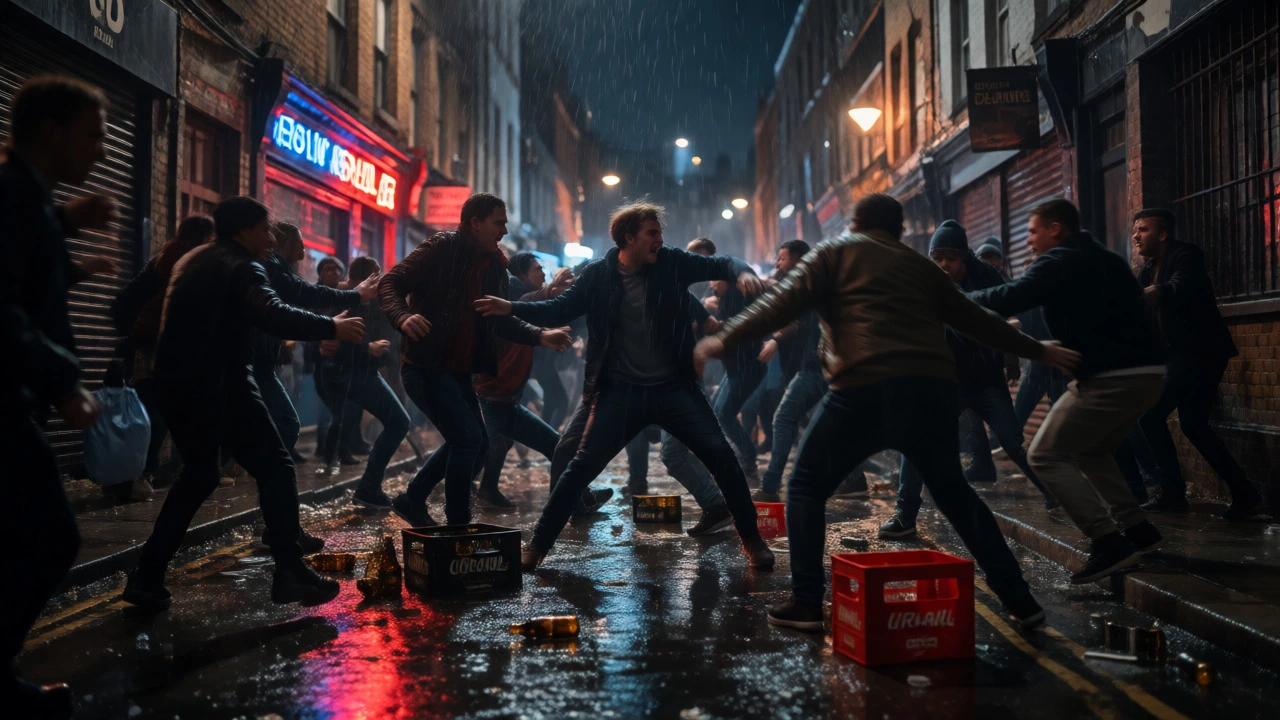
| Brawl | High | A chaotic, multi-person fight with no rules, often involving alcohol or crowds. |
| Scrap | Medium | A short, sharp argument that turns physical; implies toughness but brevity. |
| Rumble | Medium to High | Often used in media ("rumble in the jungle"); suggests a planned or anticipated confrontation. |
| Fight | Variable | The standard term; can apply to anything from a verbal dispute to a deathmatch. |
Notice the pattern here? Words like "tussle" soften the blow. If you tell someone you had a "tussle" with your brother over the remote control, nobody expects blood. But if you mention a "brawl," people assume broken furniture and police involvement. Understanding this intensity scale is key to using slang correctly.
Boxing Specific Jargon: Inside the Ring
When we talk about boxing as a professional sport, the language shifts dramatically. Boxers and promoters don't usually call a match a "fight" in casual conversation among insiders. They use terms that highlight the structure, the stakes, or the nature of the contest.
One of the most enduring terms is pugilism the art or practice of boxing. While rarely used in casual chat today, you'll see it in historical contexts or formal descriptions. It comes from the Latin "pugil," meaning boxer. More commonly, fans refer to a bout as a "war." A "war" isn't just any fight; it describes a high-intensity exchange where both fighters take significant damage. Think of the Thrilla in Manila between Ali and Frazier. That wasn't just a match; it was a war.
Another common term is "skirmish." In military terms, a skirmish is a minor battle. In boxing commentary, commentators might describe early rounds as a "skirmish" if the fighters are feeling each other out, testing range and timing before committing to heavy exchanges. It’s a way to describe the tactical phase of the fight without implying immediate brutality.
Then there's the "smoker." Historically, a smoker was an exhibition match, often held in informal settings like bars or gyms, where the outcome didn't count toward official records. Today, you might hear it used metaphorically to describe a warm-up fight against lesser opposition. If a heavyweight champ fights a journeyman before his title defense, that preliminary bout is a smoker.
Street and Urban Slang: The Gritty Reality
Outside the ring, the vocabulary gets rougher and more regional. American English, particularly African American Vernacular English (AAVE) and urban dialects, has contributed significantly to the lexicon of conflict. These terms often carry connotations of spontaneity and lack of regulation.
The word "beef" is ubiquitous. Originally referring to a grievance or complaint, it now signifies an ongoing feud or rivalry that may or may not involve physical violence. When rappers have a "beef," it might involve diss tracks, social media insults, or actual altercations. Saying "they had beef" explains the motivation behind the fight better than saying "they fought."
In many parts of the UK and Australia, you'll hear "barney" or "do." "They got into a barney" sounds distinctly British. It implies a noisy, public disturbance. Similarly, "a do" is neutral but implies a significant event. "There was a bit of a do at the pub last night" paints a picture of spilled beer and shouting matches.
American street slang often uses "throwdown" or "beatdown." A "throwdown" emphasizes the act of engaging physically, while a "beatdown" focuses on the result-one side getting thoroughly beaten. These terms are visceral. They don't care about points or judges; they care about who walks away standing.

Historical and Archaic Terms: From Noir to Westerns
If you enjoy classic literature or old movies, you've likely encountered terms that sound quaint today but were once standard. Words like "fracas," "row," and "scuffle" belong to this category. A "fracas" is French-derived and suggests a noisy quarrel or disorderly conduct. It’s less violent than a brawl but messier than a debate.
The term "row" (pronounced to rhyme with "cow") is common in older British texts. "The boys had a row" means they argued loudly, possibly shoving each other. It’s understated. Compare that to "fisticuffs," an archaic term for bare-knuckle boxing. While technically accurate for pre-glove boxing, using "fisticuffs" today is almost always ironic or humorous. No one says, "I'm going to engage in fisticuffs with my neighbor," unless they're being deliberately funny.
Western movies popularized "shootout" or "gunplay," but for hand-to-hand combat, they often used "mix-up" or "scrap." The idea was to avoid the crude directness of "fight" in polite company, even among cowboys. This trend of euphemism continues today. People often say they "had words" or "exchanged pleasantries" sarcastically after a heated argument.
How to Choose the Right Word
Selecting the correct slang depends entirely on three factors: the severity of the conflict, the setting, and the relationship between the participants. Misusing these terms can make you sound either too dramatic or too dismissive.
- Use "Tussle" or "Squabble": For minor disagreements, sibling rivalries, or playful wrestling. These minimize the seriousness.
- Use "Brawl" or "Melee": For chaotic, unstructured group fights. Think college parties or football hooliganism.
- Use "Duel" or "Match": For structured, one-on-one contests with rules. This applies to sports, chess, or formal challenges.
- Use "Beef" or "Feud": For long-standing animosity that simmers below the surface. The fight is just a symptom.
- Use "Beatdown" or "Whooping": When emphasizing the dominance of one side over the other.
Consider the audience. If you're writing a report for work, "incident" or "altercation" is safer. If you're telling a story to friends, "scrap" or "run-in" adds color. In the world of mixed martial arts (MMA) which blends various combat sports techniques, fans often use "grind" to describe a tough, grinding victory, or "finish" to describe a knockout or submission. The specificity matters because MMA culture values technical precision alongside aggression.
Regional Variations: Global Perspectives on Fighting
English is global, and so is its slang. What works in New York might confuse someone in London or Sydney. In Australian English, "stoush" is a common term for a fight or riot. It’s colorful and distinctly Aussie. You might also hear "goon show," which refers to a drunken brawl or chaotic situation.
In Canada, influenced by both US and UK English, you'll hear a mix of "scrap" and "scuffle." However, Indigenous communities and specific regions may have unique local idioms. In the Caribbean, patois influences create terms like "ting" or "argument," though physical fights might be described with vivid metaphors involving weather or animals.
Irish English contributes terms like "wax" (to beat someone up) or "lark" (though lark usually means fun, "having a lark" can imply reckless behavior leading to trouble). Recognizing these regional markers helps you decode dialogue in international films or books. It also prevents embarrassment-calling a minor disagreement a "bloodbath" in Ireland might raise eyebrows, whereas in a Hollywood action movie, it fits perfectly.
Why Do We Need So Many Words?
Linguists suggest that having multiple synonyms allows for nuance. English is rich in vocabulary partly because it absorbed words from French, German, Norse, and Latin over centuries. "Fight" is Germanic. "Combat" is French/Latin. "Skirmish" is French. "Brawl" is Dutch-origin. Each word carries a cultural baggage that shades its meaning.
Moreover, slang evolves rapidly. Younger generations invent new terms to distance themselves from older ones. Today, you might hear "clapback" for a verbal retort, or "dragged" for being publicly criticized, which can lead to online "flame wars." While not physical fights, these digital conflicts borrow the same linguistic structures. The core human experience of conflict remains constant, but our labels for it change with every generation.
So, next time you hear someone ask, "What happened? Was there a fight?" you can answer with precision. Was it a quiet squabble? A drunken brawl? A professional bout? Or a simmering beef? Choosing the right word tells the whole story.
What is the most common slang for a fight?
The most universally understood slang terms are "scrap," "tussle," and "brawl." "Scrap" implies a short, tough fight; "tussle" suggests a messy, less serious struggle; and "brawl" indicates a chaotic, often large-scale physical altercation.
Is "fisticuffs" still used in modern English?
Rarely in serious conversation. "Fisticuffs" is considered archaic and is mostly used humorously or ironically to describe bare-knuckle boxing or a childish punch-up. Modern boxers prefer terms like "bout," "match," or simply "fight."
What does "beef" mean in the context of fighting?
"Beef" refers to a grudge, grievance, or ongoing feud between individuals or groups. While it can lead to a physical fight, the term itself describes the underlying animosity rather than the physical act of hitting. It is widely used in hip-hop culture and general urban slang.
Are there specific slang terms for boxing matches?
Yes. Insiders often use "bout," "contest," or "war" (for a particularly intense match). Historical terms include "smoker" (an exhibition match) and "pugilistic encounter." Fans might also use "thriller" or "classic" to describe memorable fights.
What is the difference between a brawl and a duel?
A "brawl" is typically chaotic, involves multiple people, and lacks strict rules. A "duel" is a formal, one-on-one contest with agreed-upon rules and conditions. Brawls are spontaneous and messy; duels are structured and ceremonial.