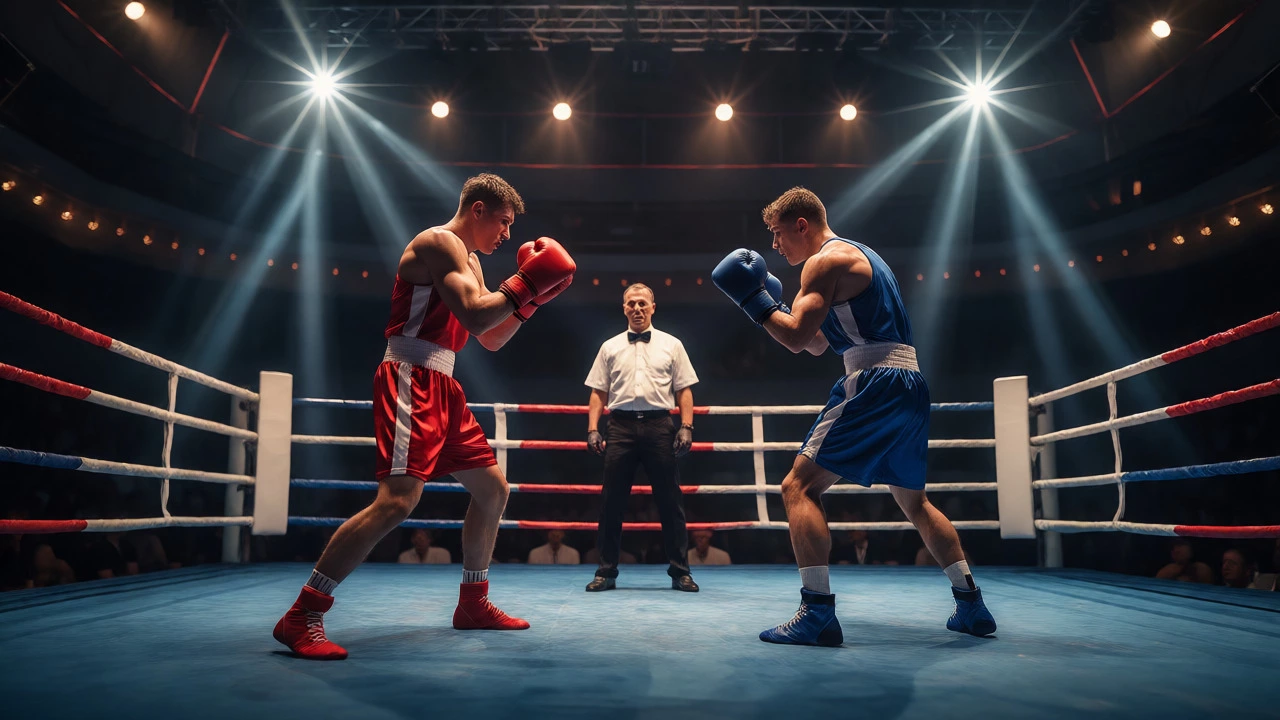
Boxing Match Outcome Simulator
This interactive tool simulates a standard 12-round professional title fight. It demonstrates how judges score rounds using the 10-Point Must System and how different scenarios lead to various outcomes like Knockouts, Technical Knockouts, or Decisions.
Red Corner Fighter A
Blue Corner Fighter B
| Round | Judge 1 | Judge 2 | Judge 3 | Event |
|---|
You walk into an arena or tune in on TV, two fighters enter the ring, and a bell rings. But what exactly is called a boxing match? It isn't just two people hitting each other until one falls down. A boxing match is a structured combat sport governed by strict rules, specific time limits, and clear criteria for winning. Whether you are watching the Olympics or a heavyweight title fight in Las Vegas, understanding the framework of the bout changes how you see every punch.
Many newcomers get confused by the terminology. They mix up sparring with actual competition, or they don't understand why a fight stops after three minutes. This guide breaks down the anatomy of a boxing match, from the pre-fight weigh-ins to the final decision. We will look at the differences between amateur and professional bouts, the scoring systems that determine winners, and the rare but dramatic ways a fight can end. By the end, you will know exactly what you are looking at when those gloves touch.
The Basic Structure: Rounds and Rest Periods
At its core, a boxing match is a contest between two opponents who exchange punches while wearing protective gloves within a roped-off square ring. The primary unit of measurement in this sport is the round. Unlike soccer or basketball, where play flows continuously, boxing is segmented into fixed periods of action separated by rest intervals.
In professional boxing, the standard length of a round is three minutes. Between each round, fighters have one minute of rest. This structure allows boxers to recover their breath and receive tactical advice from their corner team. The number of rounds varies significantly depending on the level of the competition:
- Amateur/Olympic Boxing: Typically consists of three rounds of three minutes each. The focus here is often on speed and point accumulation rather than knockouts.
- Professional Non-Title Fights: Usually scheduled for four, six, or eight rounds. These are common for developing prospects.
- Major Title Fights: Championship bouts for world titles are almost exclusively scheduled for twelve rounds. This tests not just skill, but extreme endurance.
If a fighter cannot continue due to injury, the referee may stop the fight early. If the scheduled number of rounds ends without a knockout, the judges score the entire bout to declare a winner. This rigid time structure ensures fairness and protects athlete safety, preventing endless brawls that could lead to severe trauma.
Amateur vs. Professional: Key Differences
When asking "what is called a boxing match," it is crucial to distinguish between amateur and professional formats. While the fundamental act of punching remains the same, the objectives and rules differ sharply. Amateur boxing, often seen in the Olympics, prioritizes clean, accurate strikes. Professional boxing emphasizes power, damage, and entertainment value.
| Feature | Amateur Boxing (e.g., Olympics) | Professional Boxing |
|---|---|---|
| Round Duration | 3 rounds x 3 minutes | Up to 12 rounds x 3 minutes |
| Gloves | 10 oz (often red/blue colored) | 8 oz or 10 oz (brand sponsored) |
| Headgear | Often required for beginners; removed in elite Olympic men's bouts since 2016 | Never worn |
| Scoring System | Point-per-punch system (clean hits count) | 10-point must system (judges rank rounds) |
| Knockout Focus | Lower emphasis; points win most fights | High emphasis; KOs are highly valued |
| Compensation | Generally unpaid (amateurs) | Paid per bout (pros) |
In amateur matches, electronic scoring devices were previously used to register hits, ensuring objectivity. Now, human judges still oversee, but the philosophy remains: land the punch cleanly, move away, do not clinch. In professional matches, the goal is often to hurt the opponent enough to stop them. A professional boxer might lose a round on pure volume but win the fight if they landed the harder, more damaging shots that influenced the judges' perception of dominance.
How Winners Are Determined: Decisions and Knockouts
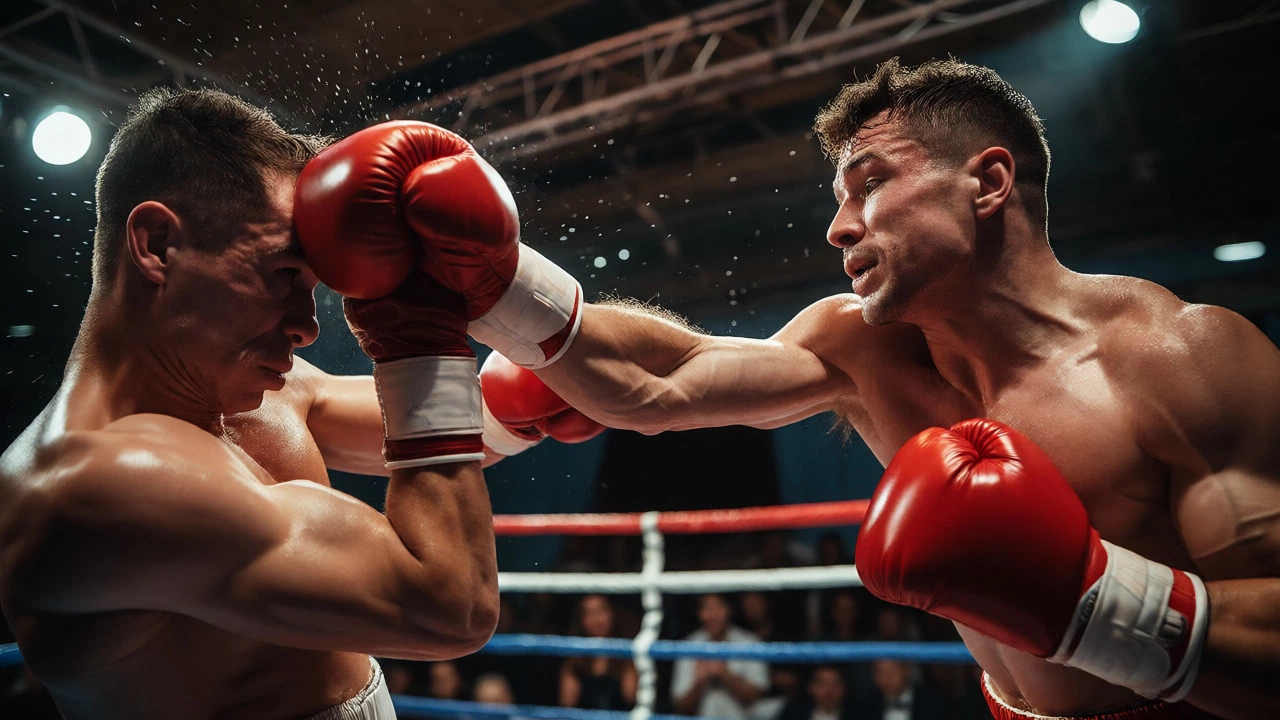
A boxing match does not always end with a fighter lying unconscious on the canvas. In fact, many high-level bouts go the distance. When the final bell rings, the outcome depends on how the judges scored the action. There are several distinct ways a boxing match concludes, each with specific implications for the fighters' records.
The most definitive way to win is by Knockout (KO). This occurs when a fighter is knocked down and fails to rise before the referee counts to ten. If a fighter is knocked down but gets up before the count of ten, yet the referee decides they cannot safely continue, it is a Technical Knockout (TKO). TKOs can also happen if a fighter takes too much punishment, if their corner throws in the towel, or if a doctor deems them unfit to continue.
If no knockout occurs, the fight goes to the scorecards. Most major commissions use the 10-Point Must System. Here is how it works:
- Each round, three judges score the performance of both fighters.
- The winner of the round receives 10 points. The loser typically receives 9 points.
- If a fighter is knocked down, they automatically lose at least one point for that round (e.g., 10-8).
- If both fighters are knocked down, or if the round was exceptionally close, scores might be 10-9 or even 10-10.
- After all rounds, the judges' total points are added up.
The fighter with the highest total score wins by Decision. However, decisions come in flavors:
- Unanimous Decision (UD): All three judges agree on the winner.
- Split Decision (SD): Two judges favor one fighter, while the third favors the other.
- Majority Decision (MD): Two judges favor one fighter, while the third scores it a draw.
- Draw: If the scores are tied, the fight is declared a draw. This can be unanimous, split, or majority.
Controversial decisions are a staple of boxing history. Because scoring involves subjective judgment-such as whether a punch was "effective" versus merely "landed"-fans and experts often debate the result long after the final bell.
The Role of Officials and Safety Measures
A boxing match is heavily regulated to protect the athletes. You will see several key figures inside and outside the ring. The Referee is the official inside the ring responsible for enforcing rules, counting knockdowns, and ensuring fighter safety. The referee has the authority to deduct points for fouling, such as hitting below the belt or holding excessively. More importantly, the referee can stop a fight instantly if they believe a fighter is taking unnecessary damage.
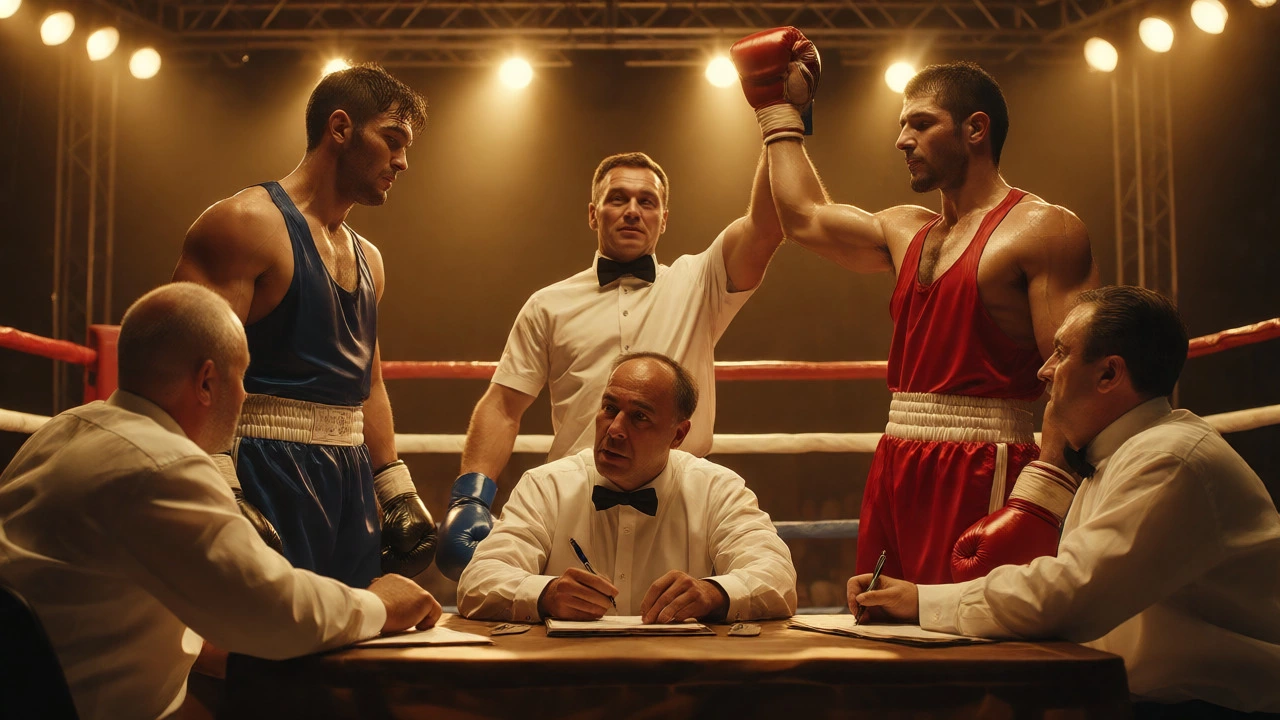
Outside the ring sit the Judges. Typically, there are three judges positioned around the ring. They do not interfere with the action; they only observe and score. Their independence is vital for fair outcomes. Additionally, a Ringside Doctor monitors the health of the boxers. Before the fight begins, doctors examine the fighters for cuts, swelling, or signs of concussion. During the bout, they can intervene if a cut is too severe or if a fighter shows neurological distress.
Fouls in boxing include:
- Hitting below the waistline.
- Hitting with the head, shoulder, forearm, or elbow.
- Holding the ropes to avoid a punch.
- Biting or spitting.
- Hitting a downed opponent.
If a foul causes a knockout, the fight is usually ruled a "No Contest" if it happens early, or a technical decision based on completed rounds if it happens later. These safeguards ensure that a boxing match remains a test of skill and conditioning, not just brute force or dirty tactics.
Pre-Fight Rituals and Weight Classes
Before the first punch is thrown, a boxing match involves significant preparation and regulation. One of the most critical aspects is the weight class. Boxers compete against opponents of similar size to ensure fairness. There are seventeen recognized weight classes in professional boxing, ranging from Minimumweight (105 lbs) to Heavyweight (unlimited).
Fighters must pass a weigh-in, typically held the day before the fight. They step onto a scale nude or in minimal clothing. If a fighter misses weight, they may face fines, loss of title eligibility, or having to pay a percentage of their purse to the opponent. This pressure leads to intense dehydration processes in the days leading up to the weigh-in.
The face-off is another ritual, though less formalized in terms of rules. Fighters stand face-to-face for photos, often exchanging words or glares. This builds hype and psychological tension. On fight night, the entrance walks are elaborate productions, especially in major promotions like Top Rank or Matchroom Boxing. Music, lighting, and pyrotechnics set the stage for the athletic contest to follow.
Understanding these pre-fight elements helps contextualize the match itself. A fighter who missed weight might be dehydrated and slower in the ring. A fighter who dominated the mental games during the face-off might carry confidence into the first round. Every aspect of the event contributes to the narrative of the bout.
Common Misconceptions About Boxing Matches
Despite its popularity, boxing suffers from misconceptions. Many casual viewers think boxing is simply about aggression. In reality, it is often called "The Sweet Science" because of its strategic depth. Footwork, timing, and defense are just as important as offense. A skilled boxer might throw fewer punches but land more effective ones, controlling the pace and positioning of the fight.
Another myth is that all fights end in knockouts. Statistically, a significant portion of professional bouts end via decision. Fans expecting constant bloodshed might be disappointed by a technical, defensive battle, but these bouts showcase high-level tactical mastery. Conversely, some assume referees are biased. While controversial calls happen, the consensus among experts is that most decisions align with objective metrics like volume, accuracy, and ring generalship.
Finally, people often confuse exhibition matches with official bouts. Exhibition fights are for charity or nostalgia, have no official record impact, and often feature shorter rounds or modified rules. An official boxing match affects a fighter's win-loss-draw record and can determine championship status.
How long is a typical boxing match?
A professional boxing match typically lasts between 4 and 12 rounds, with each round lasting 3 minutes and 1 minute of rest in between. Therefore, the total active fighting time ranges from 12 to 36 minutes, plus rest periods. Amateur matches are usually shorter, consisting of 3 rounds of 3 minutes.
What is the difference between a KO and a TKO?
A Knockout (KO) occurs when a fighter is knocked down and cannot rise before the referee counts to ten. A Technical Knockout (TKO) happens when the referee, doctor, or corner stops the fight because the fighter is unable to defend themselves effectively, even if they are not unconscious. Both result in a win for the attacking fighter.
Can a boxing match end in a tie?
Yes, a boxing match can end in a draw. This happens when the judges' scorecards are tied. There are different types of draws, including Unanimous Draw (all judges score it a tie), Split Draw (one judge for Fighter A, one for Fighter B, one for a tie), and Majority Draw (two judges for a tie, one for a fighter).
Why do boxers wear gloves?
Boxers wear gloves primarily to protect their hands from breaking bones upon impact. Gloves also add padding to reduce surface area damage to the opponent's face, potentially lowering the risk of cuts. However, larger gloves (like 10oz) are used in amateur and non-title pro fights to increase safety, while smaller gloves (8oz) are used in major pro title fights to allow for more power and speed.
What happens if a boxer misses weight?
If a boxer misses weight, they usually forfeit their right to win the title (if it is a title fight). They may also have to pay a fine or a percentage of their purse to the opponent. The fight still proceeds, but the stakes are altered, and the opponent may have a physical advantage due to hydration levels.