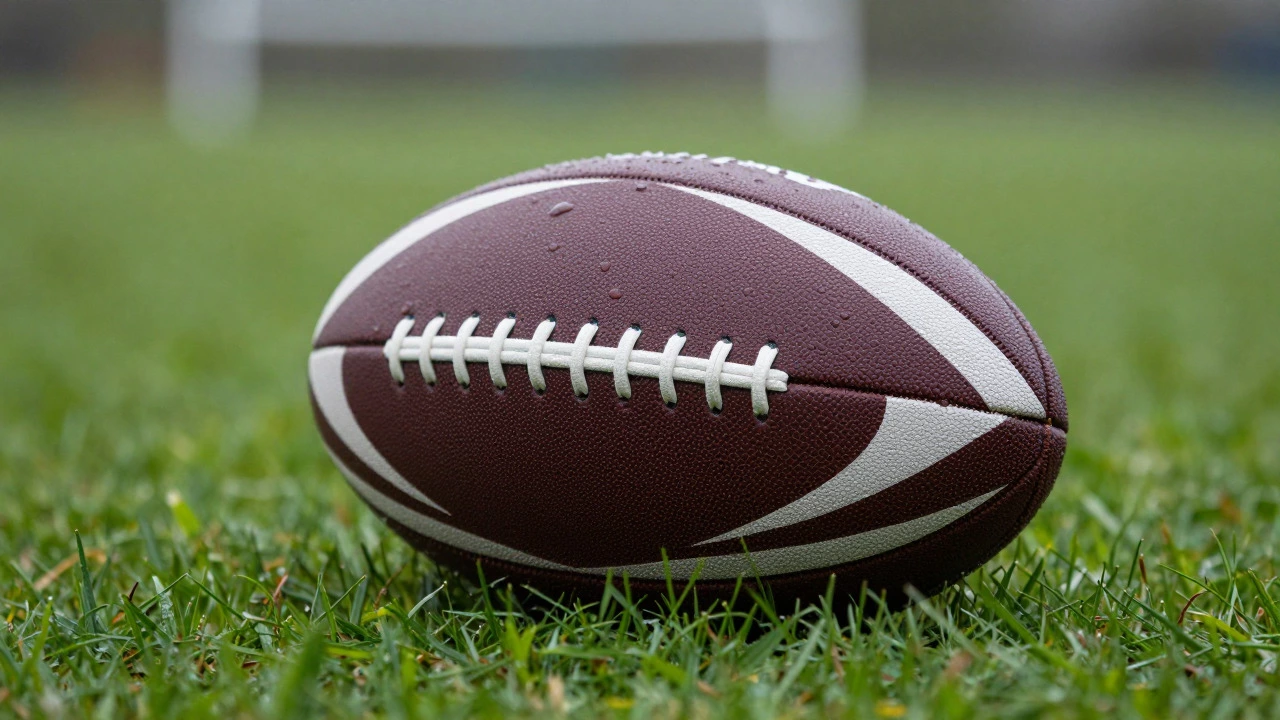
Rugby Ball Size & Specification Finder
Select Player Age Group
Choose the appropriate age category to see recommended ball specifications.
Select an age group
View detailed specifications for the correct rugby ball size.
You pick up the lopsided leather object. It’s heavy, slightly slippery if it’s raining, and definitely not round. You’ve seen it in your hands during pickup games or watched it fly through the air on Sunday afternoons. But when someone asks, what is a rugby ball called, the answer isn’t just "a ball." While most people simply call it a rugby ball, understanding its specific names, origins, and physical properties changes how you see the game. It’s not just an oval shape; it’s a piece of engineering designed for kicking, passing backward, and running into traffic.
In this guide, we’ll break down exactly what this equipment is known as, why it looks the way it does, and how its design dictates the flow of the sport. Whether you’re a new player trying to understand the gear or a fan curious about the history, these details matter.
The Simple Answer: It’s Just a Rugby Ball
If you walk into any sporting goods store or talk to a referee, the official term is simply the Rugby Ball. There is no fancy Latin name or secret code word used in professional leagues like the Six Nations or the World Cup. However, because of its distinctive shape, several descriptive terms are commonly used depending on where you are and who you’re talking to.
- Oval Ball: This is the most common generic term. It describes the geometry accurately. In casual conversation, especially in countries where multiple codes of football exist (like Australia with Rugby League and Union), people might say "the oval" to distinguish it from a soccer ball.
- Pigskin: Borrowed from American Football, this term is sometimes used by rugby players, particularly those who play both sports. Historically, early balls were made from pig bladders covered in leather, so the nickname stuck across the Atlantic.
- The Leather: Older players or traditionalists might refer to the ball as "the leather," referencing the classic cowhide material used before synthetic covers became standard.
It’s important to note that while "football" is the generic term for the sport in many parts of the world, calling the object itself a "football" can be confusing. In the US, that means an American Football. In Europe, it often means a Soccer Ball. Sticking to "Rugby Ball" avoids ambiguity.
Why Is It Shaped Like That?
The shape of the rugby ball is not accidental. It is the result of over 150 years of evolution, starting from something much rounder. The current prolate spheroid shape (an elongated sphere) serves three critical functions in the game.
1. Aerodynamics for Kicking
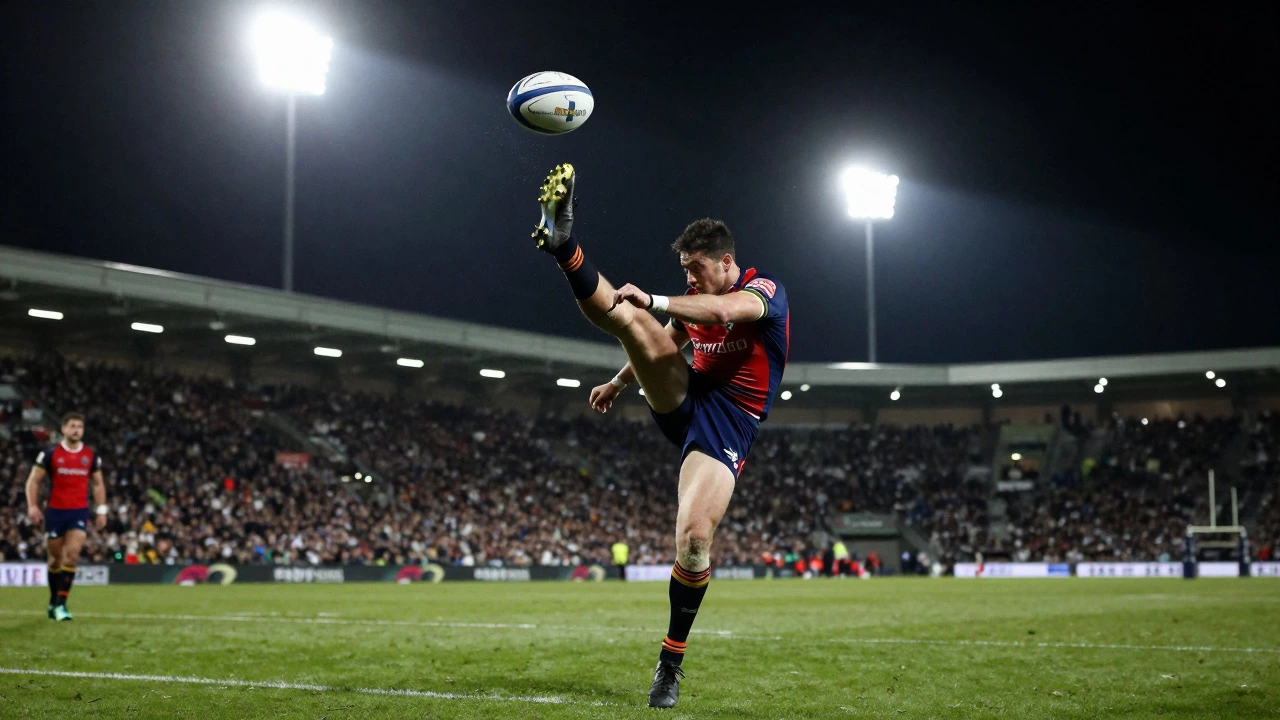
Rugby relies heavily on kicking for territory and points. A round ball is difficult to kick consistently high and far. The pointed ends of the rugby ball allow it to cut through the air more efficiently. When you drop-kick or punt a rugby ball, the aerodynamic profile helps maintain stability and distance. If you try to kick a soccer ball with the same force and technique, it wobbles unpredictably. The rugby ball’s shape enables the precise placement kicks seen in goal attempts.
2. Backward Passing Mechanics
The defining rule of rugby union is that you must pass the ball backward or laterally. Never forward. The oblong shape makes forward passes difficult to control. If you throw a round ball forward, it travels straight and true. If you throw a rugby ball forward, it tends to spiral or wobble, making it easy for defenders to intercept. The shape naturally encourages the sideways, flat pass that keeps the attack alive without breaking the laws of the game.
3. Handling and Grip
Think about holding a basketball versus a rugby ball. With a basketball, you can palm it easily. With a rugby ball, you have to wrap your fingers around the laces and the curve. This grip requirement forces players to use two hands for secure possession, especially in wet conditions. The size and shape mean that if you lose your grip, the ball drops. This adds a layer of skill and tension to every tackle and ruck.
A Brief History: From Pig Bladder to Synthetic
To understand what the ball is called, you have to understand what it was made of. The story begins in the early 19th century at Rugby School in England. Before the standardization of the ball, students used whatever they could find-often inflated animal bladders wrapped in cloth.
The turning point came in 1842. William Gilbert, a local shoemaker in Rugby, decided to make a dedicated ball for the school. He used a pig’s bladder for the inner inflation chamber and covered it with stitched leather panels. This created the first standardized rugby ball. It wasn’t perfectly oval yet-it was more pear-shaped-but it was consistent. Every student had the same ball, which allowed for fairer play.
Over the next few decades, the shape evolved. By the late 1800s, manufacturers began stitching the leather panels tighter, creating the sharper points we recognize today. The transition from round to oval was gradual, driven by the need for better kicking accuracy and handling.
| Period | Material | Shape Characteristics | Key Innovation |
|---|---|---|---|
| Pre-1842 | Animal Bladder & Cloth | Irrregular, Roundish | No standardization |
| 1842-1900 | Leather & Pig Bladder | Pear-shaped, Bulbous | William Gilbert's first commercial ball |
| 1900-1970 | Stitched Leather | Elongated Oval | Standardized panel stitching |
| 1970-Present | Synthetic PU/TPU | Sleek, Pointed Ends | Water resistance, consistent bounce |

Modern Materials: Why Your Ball Isn't Leather Anymore
If you buy a rugby ball today, it won’t be made of leather. Modern balls are constructed from synthetic materials like Polyurethane (PU) or Thermoplastic Polyurethane (TPU). Why the change?
Leather absorbs water. In a rain-soaked match in New Zealand or Scotland, a leather ball would become heavy, slippery, and nearly impossible to handle. Synthetic materials are waterproof. They maintain their weight and grip even in pouring rain. Additionally, synthetics offer a more consistent bounce. Leather stretches over time, changing the ball’s trajectory. Synthetics retain their shape match after match.
Most modern rugby balls feature a butyl bladder inside. Butyl is excellent at retaining air pressure, meaning the ball stays firm longer than older latex alternatives. This consistency is crucial for professional players who rely on precise touch.
Size Matters: Which Ball Do You Use?
Not all rugby balls are the same size. The International Rugby Board (now World Rugby) specifies different sizes based on age and gender. Using the wrong size can affect performance and safety.
- Size 5: This is the standard adult ball. Used in men’s senior rugby, women’s senior rugby, and youth U18+ categories. It has a circumference of approximately 74-77 cm.
- Size 4: Designed for younger players, typically ages 12-16. It’s slightly smaller and lighter, helping developing athletes improve their handling skills without struggling with the weight.
- Size 3: For children under 12. This ball is significantly smaller and softer, reducing the risk of injury and making it easier for small hands to grip.
Using a Size 5 ball for a 10-year-old is like giving a toddler a full-sized baseball bat. They won’t develop proper technique. Coaches should always ensure players are using the correct size for their age group.
Cultural Nicknames and Regional Terms
Language evolves differently in different rugby nations. While "rugby ball" is universal, some regions have unique slang.
In New Zealand, the heartland of rugby, the ball is often just referred to as "the ball" or "the oval." You’ll rarely hear a Kiwi player use a complex term. In South Africa, the Afrikaans influence might lead to terms like "bal" being mixed into English conversation. In the UK, especially among older generations, you might still hear "pigskin" used affectionately.
In Australia, where Rugby League is also popular, distinguishing between the two codes is vital. League balls are slightly narrower and more pointed than Union balls. So, an Australian might specify "Union ball" vs "League ball" to avoid confusion. The difference is subtle but noticeable to experienced players.
Maintaining Your Rugby Ball
Knowing what the ball is called is one thing; keeping it in good shape is another. A well-maintained ball performs better and lasts longer. Here are some practical tips:
- Deflate for Storage: Don’t leave your ball fully inflated for months. Store it at half-pressure to prevent the seams from stretching out permanently.
- Clean After Use: Mud and grass contain acids that can degrade synthetic materials over time. Wipe the ball down with a damp cloth after each session.
- Check Pressure Regularly: A soft ball feels dead and unpredictable. Use a gauge to ensure it’s within the recommended range (usually 0.6-0.8 bar).
- Avoid Extreme Temperatures: Don’t leave the ball in a hot car or freezing cold garage. Temperature changes affect air pressure and material integrity.
Common Misconceptions About the Rugby Ball
There are several myths surrounding the rugby ball that persist among casual fans.
Myth 1: All oval balls are the same. False. As mentioned, Rugby Union and Rugby League balls differ in width and length. American Footballs are even more extreme, with sharper points and laces. Using an American Football for rugby will ruin your passing game.
Myth 2: The ball is heavier than it looks. Actually, a standard Size 5 rugby ball weighs only about 400-440 grams. That’s lighter than a cricket ball and similar to a tennis ball. The perceived weight comes from its awkward shape, not its mass.
Myth 3: You can use any brand interchangeably. While all official balls meet World Rugby standards, brands like Gilbert, Steeden, and Molten have different feel profiles. Some are grippier, some are harder. Players often prefer specific brands for their touch.
Is a rugby ball the same as an American football?
No, they are different. An American football is narrower, has sharper points, and features prominent laces for gripping. A rugby ball is wider, smoother, and lacks external laces. The shapes affect how each ball is kicked and passed.
Why is the rugby ball not round?
The oval shape aids in backward passing and kicking accuracy. It makes forward passes difficult to control, enforcing the core rule of rugby union. It also provides better aerodynamics for long kicks compared to a round ball.
What material is a modern rugby ball made of?
Modern rugby balls are typically made from synthetic materials like Polyurethane (PU) or Thermoplastic Polyurethane (TPU). These materials are waterproof, durable, and provide consistent grip in all weather conditions, unlike traditional leather.
Who invented the rugby ball?
William Gilbert, a shoemaker from Rugby, England, is credited with manufacturing the first standardized rugby ball in 1842. He used a pig’s bladder and leather cover, moving away from irregular homemade balls.
What size rugby ball do adults use?
Adults use a Size 5 rugby ball. This is the standard size for men’s and women’s senior competitions, as well as youth players aged 18 and older. It has a circumference of roughly 74-77 cm.