
Personalized Gym Schedule Generator
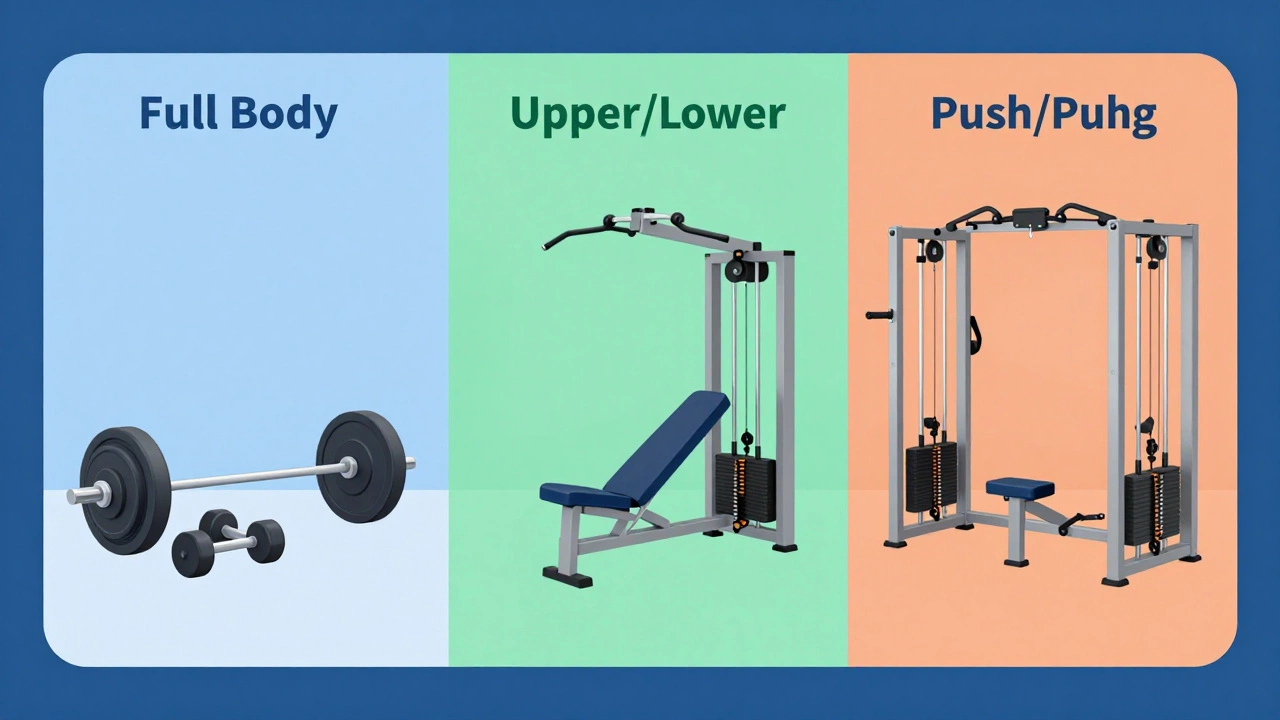
Full Body
Every session hits all musclesUpper/Lower
Alternating upper & lower bodyPush/Pull/Legs
Movement pattern focusedYour Personalized Schedule
You walk into the gym, look around, and feel that familiar knot of confusion in your stomach. Everyone seems to know exactly what they are doing. The guy in the corner is crushing heavy deadlifts while chatting about protein synthesis. The woman on the treadmill has a color-coded spreadsheet on her phone. You, however, just want to get stronger without burning out or injuring yourself. The question isn't just "what exercises should I do?" It is "when should I do them?"
There is no single magic schedule that works for every human being. A good gym schedule is a structured plan that balances training volume with adequate recovery time to maximize physical adaptation. If you train too much, you break down. If you train too little, you stall. The sweet spot lies in understanding your body's limits and your life's demands.
The Foundation: Understanding Recovery and Frequency
Before you pick a day to squat, you need to understand one non-negotiable rule: muscles grow when you rest, not when you work out. Training creates micro-tears in muscle fibers. Sleep and nutrition repair those tears, making the fibers thicker and stronger. This process is called muscle protein synthesis, which typically peaks within 24 to 48 hours after resistance training.
If you hammer your chest every single day, you never give it time to rebuild. You end up with chronic fatigue and poor performance. On the other hand, if you only train once a week, you don't provide enough stimulus to force change. For most people, hitting each major muscle group two times per week is the gold standard for natural lifters. This means your schedule needs to be spread out, not clumped together.
Think about your lifestyle. Do you have a desk job where you sit for eight hours? Do you play soccer on weekends? Are you a parent running after toddlers all day? Your active recovery includes daily movement outside of formal workouts, such as walking, stretching, or light household chores. A good schedule accounts for this. If you are exhausted from work, a high-intensity leg day might lead to injury. Flexibility is part of the structure.
Choosing Your Split: Three Proven Models
Once you accept that consistency beats perfection, you can choose a framework. Here are the three most effective schedules based on how many days you can realistically commit to.
The Full Body Split (3 Days a Week)
This is the best starting point for beginners and busy professionals. You train Monday, Wednesday, and Friday. Each session hits every major muscle group: legs, back, chest, shoulders, and arms. Because you are spreading the workload across three sessions, the intensity per session is manageable.
- Monday: Squats, Bench Press, Rows, Planks
- Wednesday: Deadlifts, Overhead Press, Pull-ups, Lunges
- Friday: Leg Press, Incline Dumbbell Press, Lat Pulldowns, Core
The beauty here is frequency. You hit your quads three times a week. You hit your chest three times a week. This drives rapid learning of movement patterns and consistent growth. If you miss a day, you only lose one-third of your weekly volume, not your entire progress for the week.
The Upper/Lower Split (4 Days a Week)
If you have more time and want to increase volume, this is the next logical step. You alternate between upper body and lower body days. A common rotation is Monday (Upper), Tuesday (Lower), Thursday (Upper), Friday (Lower). This gives each muscle group 48 to 72 hours of rest before being trained again.
This split allows you to focus harder on specific areas. On lower body days, you can go deeper into variations like Romanian deadlifts and leg curls without worrying about your back being fatigued from heavy rows earlier in the day. It’s a favorite among intermediate lifters who want to build size without spending five hours in the gym.
The Push/Pull/Legs Split (6 Days a Week)
This is for the dedicated enthusiast. You group exercises by movement pattern rather than muscle group.
- Push: Chest, Shoulders, Triceps (exercises where you push weight away)
- Pull: Back, Biceps, Rear Delts (exercises where you pull weight toward you)
- Legs: Quads, Hamstrings, Glutes, Calves
You run this cycle twice a week. Push, Pull, Legs, Rest, Repeat. This schedule requires serious discipline. You need to eat well, sleep eight hours, and manage stress. If you skip a meal or stay up late gaming, your performance will drop noticeably. But if you stick to it, the results are undeniable. Just remember: six days of training means one day of mandatory rest. Use it wisely.
Structuring the Individual Workout
A good schedule is useless if the individual sessions are chaotic. Every workout should follow a logical flow to prevent injury and maximize energy use.
- Warm-up (5-10 minutes): Get blood flowing. Dynamic stretches like arm circles, leg swings, or light cardio. Never start cold.
- Compound Movements (First): These are multi-joint exercises like squats, deadlifts, bench presses, and overhead presses. They require the most neural drive and energy. Do them first when you are fresh.
- Isolation Exercises (Middle): Single-joint movements like bicep curls, tricep extensions, or lateral raises. These target specific muscles and cause less systemic fatigue.
- Core and Accessories (Last): Planks, crunches, or machine work. Save these for when your main energy tanks are empty.
- Cool Down (Optional but recommended): Static stretching to improve flexibility and help heart rate return to normal.
Notice the order. If you do bicep curls before your pull-ups, your biceps will fail before your back does. You limit the effectiveness of the bigger, more important movement. Always prioritize compound lifts.
Progressive Overload: The Engine of Growth
Your schedule must include a method for tracking progress. This is called progressive overload, which the gradual increase of stress placed upon the body during exercise training. Without it, your body adapts to the current load and stops changing.
You don't need to add weight every single session. That leads to injury. Instead, aim to improve one variable over time:
- Weight: Add 2.5kg to the bar.
- Reps: Go from 8 reps to 10 reps with the same weight.
- Form: Perform the same weight with better control and depth.
- Rest: Reduce rest time between sets to increase density.
Keep a log. Whether it's a notebook or an app, write down what you did. When you come back to the gym on your scheduled day, look at last week's numbers. Can you beat them slightly? If you aren't tracking, you aren't training; you're just exercising.
Common Mistakes to Avoid
Even with a perfect schedule, small errors can derail your progress. Watch out for these traps.
Too Much Cardio: Cardio is great for heart health, but excessive steady-state cardio can interfere with muscle growth if done immediately before lifting. Keep cardio separate or after weights. Aim for 150 minutes of moderate activity per week, as recommended by health guidelines.
Neglecting Nutrition: You can't out-train a bad diet. If you aren't eating enough protein (aim for 1.6 to 2.2 grams per kilogram of body weight), your muscles won't have the building blocks to repair. Your schedule should include meal prep time. Treat food as fuel, not just pleasure.
Inconsistent Sleep: This is the silent killer of gains. If you sleep five hours a night, your testosterone drops, cortisol rises, and recovery slows. Prioritize sleep hygiene. Dark room, cool temperature, no screens an hour before bed. It’s easier than it sounds once you make it a habit.
Copy-Pasting Influencer Routines: That Instagram model might be using supplements you aren't, or they might have been training for ten years. Their schedule doesn't fit your life. Build your own based on the principles above.

Adjusting for Life Changes
Life happens. You travel. You get sick. You have a crazy week at work. A rigid schedule breaks under pressure. A flexible schedule bends.
If you miss a workout, don't try to "make it up" by doubling the next session. That leads to burnout. Just resume your normal schedule the next day. Consistency over months matters more than perfection over weeks. If you are traveling and can't access a gym, do bodyweight circuits. Push-ups, squats, lunges, and planks keep the habit alive. The goal is to maintain the rhythm, even if the intensity drops.
| Schedule Type | Days Per Week | Best For | Pros | Cons |
|---|---|---|---|---|
| Full Body | 3 | Beginners, Busy People | High frequency, simple structure | Less volume per muscle group |
| Upper/Lower | 4 | Intermediate Lifters | Balanced volume, good recovery | Requires 4 clear days |
| Push/Pull/Legs | 6 | Advanced, Dedicated Athletes | High volume, specialization | High fatigue, hard to sustain |
Getting Started Today
You don't need to overhaul your life overnight. Start with the Full Body split. Commit to three days a week for four weeks. Focus on form. Track your lifts. Eat enough protein. Sleep well. After a month, assess how you feel. If you have energy left over, add a fourth day and switch to Upper/Lower. If you are exhausted, stick with three days but reduce the volume.
The best gym schedule is the one you actually follow. It’s not about looking cool in the mirror; it’s about showing up consistently. Your future self will thank you for the discipline you build today.
How many days a week should I go to the gym?
For most people, 3 to 4 days a week is optimal. This provides enough stimulus for growth while allowing sufficient recovery time. Beginners often benefit from 3 full-body sessions, while intermediates may prefer a 4-day upper/lower split. More than 5 days increases the risk of overtraining unless you are highly experienced.
Is it better to train the same muscle groups every day or split them up?
Splitting them up is generally better for natural lifters. Training a muscle group every day prevents proper recovery. Hitting each muscle group 2 times per week with 48-72 hours of rest in between allows for maximum muscle protein synthesis and strength gains.
Should I do cardio before or after weights?
If your primary goal is building muscle or strength, do weights first. Cardio depletes glycogen stores, which can reduce your performance in heavy lifts. If your goal is endurance or weight loss, the order matters less, but doing weights first still ensures you have maximum energy for complex movements.
What should I do if I miss a workout?
Don't panic and don't double up. Simply resume your regular schedule the next planned day. Missing one workout has negligible impact on long-term progress. Trying to make up lost volume often leads to poor form and injury. Consistency over months is far more important than perfection over days.
How long should each workout session last?
Aim for 45 to 90 minutes. Sessions shorter than 45 minutes may not provide enough volume, while sessions longer than 90 minutes can lead to diminishing returns and increased cortisol levels. Focus on intensity and rest periods rather than just filling time in the gym.
Can I follow the same schedule forever?
No. As you get stronger, your needs change. What works for a beginner will stall an advanced lifter. Periodize your training by changing rep ranges, exercises, or split types every 8 to 12 weeks. This keeps your body adapting and prevents mental burnout.