
5x5 Strength Progression Calculator
Use this tool to plan your linear progression and estimate how long your 5x5 session will take. Enter your current working weights and target timeline.
Enter your details and click Calculate to see your projected strength gains and session time.
Weekly Progression Timeline
| Week | Target Weight (kg) | Total Volume (kg lifted) | Status |
|---|
Walk into any serious powerlifting or strength-focused gym, and you will likely hear the phrase "5 by 5." It is one of the most famous and enduring protocols in weight training. But what exactly is it? In simple terms, the 5 by 5 rule is a training structure where you perform five sets of five repetitions for a specific exercise. It is not just a random number; it is a deliberate method designed to build raw strength and muscle mass efficiently.
If you are new to the gym or looking to break through a plateau, this guide breaks down how the 5x5 protocol works, who it is for, and how to implement it correctly without burning out.
Key Takeaways
- The 5x5 rule involves performing 5 sets of 5 reps per exercise.
- It focuses on heavy compound movements like squats, deadlifts, and bench presses.
- Progressive overload (adding small amounts of weight) is the core driver of results.
- Rest periods are typically longer (2-3 minutes) to allow full recovery between sets.
- It is ideal for beginners and intermediate lifters seeking strength gains over pure hypertrophy.
What Exactly Is the 5x5 Protocol?
The 5x5 Workout is a strength training system that prioritizes low-repetition, high-load sets to maximize neuromuscular efficiency and force production. The logic is straightforward: if you can only do five reps with good form, the weight is challenging enough to stimulate growth. Doing more than five reps often shifts the focus from pure strength to muscular endurance, which requires different physiological adaptations.
This protocol is distinct from bodybuilding-style training, which might use 3 sets of 10-12 reps. By keeping the rep count low, you allow yourself to lift heavier weights. Heavier weights recruit more fast-twitch muscle fibers, which have the greatest potential for strength development.
Why 5 Sets? Why 5 Reps?
You might wonder why not 3 sets of 10 or 4 sets of 8? The number five strikes a balance between volume and intensity.
- Intensity: Five reps allows you to load the bar significantly heavier than higher-rep schemes.
- Volume: Five sets provide enough total work to stimulate adaptation without causing excessive systemic fatigue.
- Manageability: For a busy person, 5x5 keeps workouts relatively short compared to high-volume bodybuilding splits.
Research in exercise physiology suggests that the 5-6 rep range is optimal for maximal strength gains when paired with adequate rest. This is why powerlifters and Olympic weightlifters often incorporate similar rep schemes in their off-season or base building phases.
The Core Exercises: Compound Movements Only
The 5x5 rule is not meant for isolation exercises like bicep curls or lateral raises. Those movements are too joint-specific and don't require the same level of systemic stability as heavy multi-joint lifts. Instead, the protocol relies on the "Big Three" plus a few others:
- Squat: The king of lower-body exercises. Targets quads, glutes, hamstrings, and core.
- Bench Press: Primary upper-body push movement. Targets chest, shoulders, and triceps.
- Deadlift: Full-body posterior chain developer. Targets back, glutes, hamstrings, and grip.
- Overhead Press: Often included in programs like StrongLifts 5x5. Targets shoulders and triceps.
- Barbell Row: Sometimes added to balance pulling vs. pushing volume.
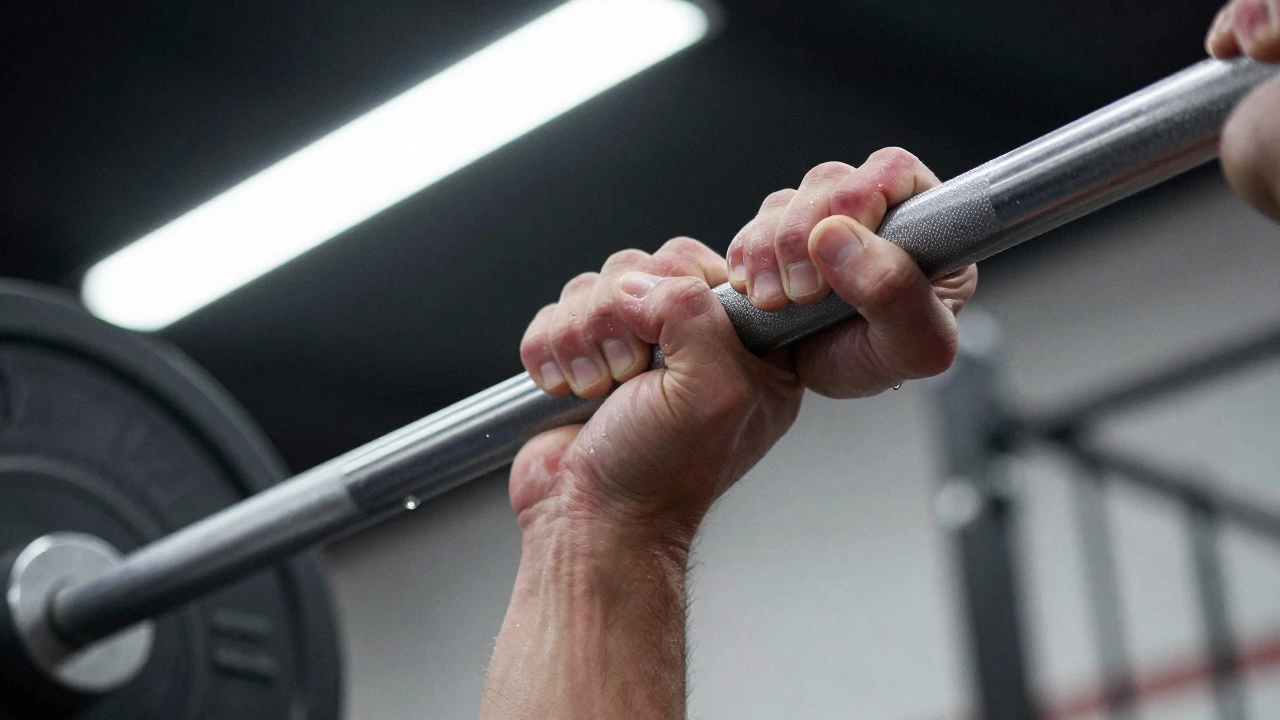
These movements are called compound exercises because they involve multiple joints and muscle groups working together. They place a high demand on your central nervous system, making them perfect candidates for the low-rep, high-weight approach of 5x5.
How to Structure Your 5x5 Program
There are two main ways people apply the 5x5 rule: the daily undulating periodization approach and the linear progression approach. For most beginners, linear progression is the gold standard.
Sample Weekly Split (A/B Rotation)
A common structure alternates between Push/Pull/Legs or Upper/Lower days. Here is a classic A/B split used by many programs like StrongLifts 5x5 is a popular beginner strength program that utilizes a rotating schedule of Squat, Bench, Deadlift, Overhead Press, and Barbell Row.:
- Day A: Squat, Bench Press, Deadlift (5x5 each)
- Day B: Squat, Overhead Press, Barbell Row (5x5 each)
You alternate these days. For example:
- Monday: Day A
- Tuesday: Rest
- Wednesday: Day B
- Thursday: Rest
- Friday: Day A
- Saturday/Sunday: Rest
The Secret Sauce: Progressive Overload
Doing 5x5 forever with the same weight will get you nowhere. The magic of this protocol lies in Progressive Overload is the gradual increase of stress placed upon the musculoskeletal system during resistance training to drive continuous adaptation. In a 5x5 context, this usually means adding a small amount of weight every week.
- Upper Body Lifts (Bench, OHP): Add 2.5 kg (5 lbs) to the bar each week.
- Lower Body Lifts (Squat, Deadlift): Add 2.5 kg (5 lbs) to the bar each week, or sometimes 1.25 kg (2.5 lbs) if progress stalls.
If you fail to complete all five reps on all five sets, you repeat the same weight the next session until you succeed. This ensures you are always training near your limit without risking injury from ego-lifting.
Rest Periods: Don't Rush
One mistake beginners make is rushing between sets. Because you are lifting heavy weights, your heart rate and breathing need time to normalize.
- Recommended Rest: 2 to 3 minutes between sets.
- Between Exercises: 3 to 5 minutes.
Use this time to hydrate, fix your shoes, and mentally prepare for the next set. If you rest too little, your performance drops, and you may not be able to hit those final reps with good form. Quality over quantity is key here.

Who Should Use the 5x5 Rule?
This protocol is highly effective for specific types of lifters:
- Beginners: You have "newbie gains" available. Your nervous system is learning to fire muscles efficiently, so heavy weights yield rapid strength jumps.
- Intermediate Lifters: If you have stalled on a higher-rep program, switching to 5x5 can provide a fresh stimulus.
- Time-Crunched Individuals: A 5x5 session can be completed in 45-60 minutes including warm-up.
However, it might not be the best fit for advanced bodybuilders whose primary goal is maximum muscle size (hypertrophy) rather than strength. They often benefit more from higher volumes and shorter rest periods.
Common Mistakes to Avoid
Even with a simple structure, errors can creep in. Watch out for these pitfalls:
- Ego Lifting: Adding too much weight too quickly leads to poor form and injury. Stick to the incremental increases.
- Neglecting Warm-ups: Always do light dynamic stretching and ramp-up sets before your first heavy set. Jumping straight into 5x5 with cold muscles is a recipe for trouble.
- Inconsistent Tracking: Keep a logbook or app. If you don't track your weights, you won't know if you're progressing.
- Ignoring Recovery: Sleep and nutrition matter. If you are under-recovered, you will stall faster.
Comparison: 5x5 vs. Other Protocols
| Protocol | Reps per Set | Sets | Primary Goal | Best For |
|---|---|---|---|---|
| 5x5 | 5 | 5 | Strength & Power | Beginners/Intermediates |
| 3x10 | 10 | 3 | Hypertrophy (Muscle Size) | Bodybuilders |
| 5x5 (Powerlifting) | 1-5 | 5 | Maximal Strength | Advanced Lifters |
| Circuit Training | 12-15 | 3-4 | Endurance & Fat Loss | General Fitness |
Frequently Asked Questions
Is 5x5 better than 3x10 for building muscle?
Both build muscle, but they emphasize different qualities. 5x5 builds strength and dense, functional muscle. 3x10 builds muscular endurance and visual size (pump). For most natural lifters, a mix of both is ideal, but 5x5 is superior for foundational strength.
How long should I stick to the 5x5 program?
Most beginners can follow a linear 5x5 program for 3 to 6 months before hitting a significant plateau. After that, you may need to deload or switch to a more complex periodization model.
Can I do 5x5 at home?
Yes, if you have a pull-up bar, dumbbells, and space for bodyweight squats. However, the traditional 5x5 relies on barbells for easy weight increments. At home, you might adapt it to 5x5 pull-ups, dips, and goblet squats.
What should I eat while doing 5x5?
Focus on adequate protein (1.6-2.2g per kg of body weight) and sufficient calories to support recovery. Since 5x5 is intense, ensure you are eating enough carbohydrates to fuel your workouts.
Do I need to superset my 5x5 sets?
Generally, no. Supersets reduce rest time, which can compromise your ability to lift heavy weights with good form. Stick to straight sets with full rest unless you are specifically training for conditioning.