
Rugby Slang Decoder Quiz
Think you know the lingo? From "jackals" to "jerry," test your ability to decode the secret handshake of the oval ball.
Question 1 of 5
Loading question...
You’re watching a match from your couch in Sydney, and suddenly the commentator yells, "He’s got a heavy pack!" or "Watch out for that blindside flanker!" If you’re new to the sport, it sounds like they’re speaking a different language. But here’s the thing: rugby slang isn’t just random noise. It’s the secret handshake of the game, built over a century of mud, tackles, and team spirit. Understanding this lingo doesn’t just make you sound smart at the pub; it helps you actually see what’s happening on the field. From the scrum-half barking orders to the winger sprinting down the touchline, every position and play has its own nickname.
Why does rugby have so much slang? Well, the game is fast, physical, and complex. Players need shorthand to communicate quickly when lungs are burning and adrenaline is pumping. Coaches use specific terms to signal plays without giving away secrets to the opposition. Fans adopt these terms to show they belong to the tribe. Whether you’re into Union or League, knowing the difference between a "ruck" and a "maul," or why we call a bad tackle a "chop," changes how you experience the game. Let’s break down the most common terms you’ll hear, why they exist, and how to use them correctly.
The Front Line: Scrum and Pack Terminology
If you want to understand rugby, start with the scrum. This is where eight forwards bind together and push against the other team’s eight. It’s brutal, technical, and full of slang. The front row consists of two props and a hooker. Props are often called "anchors" because their job is to stop the scrum from collapsing backward. They wear reinforced boots and have ears that look like cauliflower-proof of years spent grinding against opponents.
The player in the middle, the hooker, is responsible for "hooking" the ball back with their foot. If they miss, commentators might say they "missed the ball." The rest of the forwards are collectively known as the "pack." When the pack works well, they’re "tight." When they’re sloppy, they’re "loose." You’ll also hear about the "bind," which is how players grip each other’s jerseys. A "weak bind" leads to penalties. It’s all about stability. If you’re watching a fixture and the scrum keeps collapsing, look for the prop who’s pushing too early-that’s a "pre-push," and it’s illegal.
Backs and Handling: The Art of Passing
While forwards do the grunt work, backs create the magic. Their movements are fluid, and their slang reflects speed. The most basic term is "pass," but you’ll rarely hear that alone. Instead, listen for "spin pass," which is a standard lateral throw, or "pop pass," a short, quick hand-off used to evade a defender.
A "dummy" is a fake pass designed to fool the defense. If a player fakes a pass and then runs, they’ve "sold the dummy." On the other side, if a player drops the ball forward, it’s a "knock-on." This stops play and results in a scrum. If the ball goes out of bounds, it’s "into touch." The lineout is then set up where the ball crossed the boundary. Players will shout "touch!" to alert teammates.
One of the coolest terms is "offload." This happens when a tackled player passes the ball while still on the ground or mid-tackle. It keeps the attack alive. If an offload is successful, the next player might "break the gain line," meaning they run past the imaginary line where the last ruck formed. Breaking the gain line is crucial for momentum. Without it, you’re just pushing uphill.
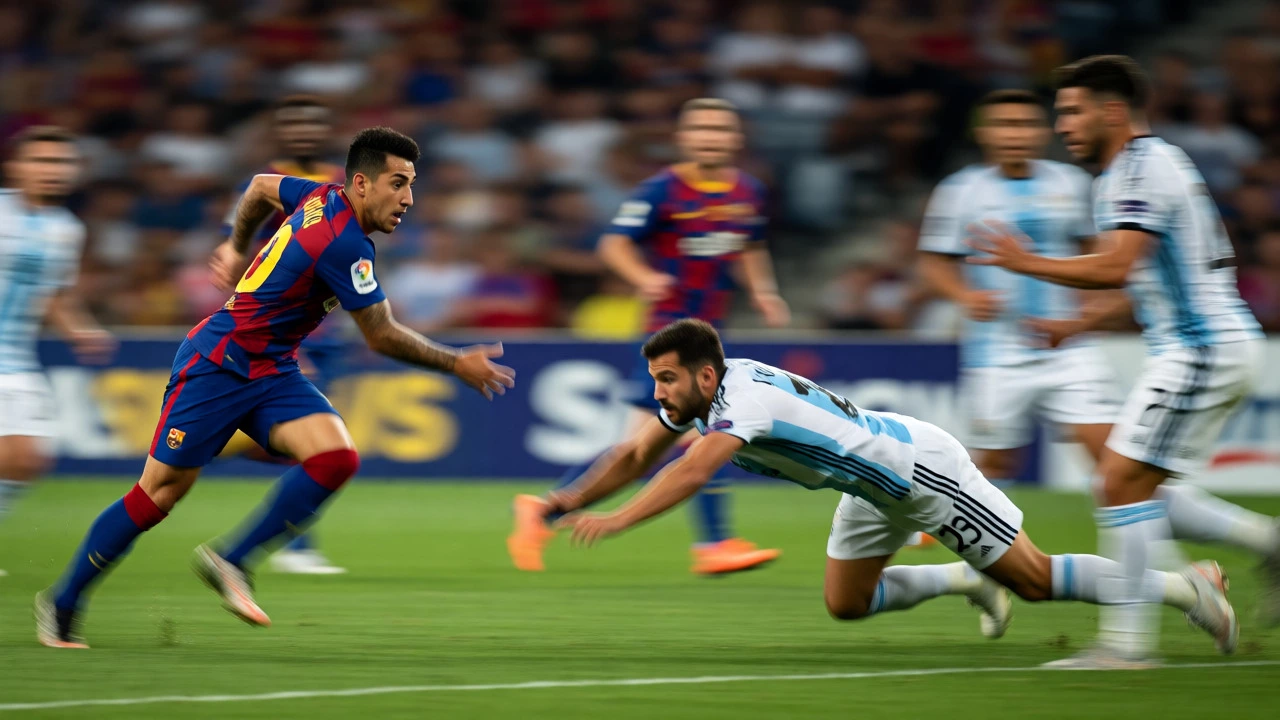
Tackling and Defense: Physical Play
Rugby is defined by contact. Tackling has its own vocabulary. A "tackle" is obvious, but not all tackles are equal. A "choke tackle" (or jackal) is when a defender grabs the ball carrier and tries to steal the ball before they hit the ground. If the tackler gets the ball, it’s a "turnover." This is huge for morale.
Look for the "hit." A big, powerful tackle is often called a "huge hit" or a "smasher." Conversely, a "wrap" refers to wrapping your arms around the opponent’s legs to bring them down safely and legally. If a player tackles high, above the shoulders, it’s a "high tackle" and usually penalized. Referees are strict about this now for safety reasons.
You’ll also hear "drain." This describes a player who runs straight at a group of defenders and gets stuck there, draining resources from both teams. It’s not always flashy, but it’s effective. Another term is "fend" or "hand-off," where a runner pushes a defender away with one arm to keep moving. Think of Jonah Lomu doing this-it’s iconic.
Set Pieces and Strategy: Lineouts and Kicks
When the ball goes out of play, teams restart via lineouts or scrums. In a lineout, players lift teammates into the air to catch the ball. These lifts are called "lifts," and the catcher is the "jumper." Teams have coded calls for different moves. For example, "Blue 42" might mean a specific drive pattern. If the lift fails, it’s a "drop." If the ball is intercepted, it’s a "steal."
Kicking strategy is another area rich in slang. A "kick-off" starts the half. A "drop-out" restarts play after a try or knock-on behind the goal line. Teams use "grubbers"-low kicks that bounce along the ground-to chase territory. A "chip" is a short kick over a defender’s head, followed by a chase. If the kicker aims for the corner, it’s a "kick to touch." Precision matters here. A "mis-hit" sends the ball wide, wasting possession.
Penalties can be taken quickly or kicked for points. If a player taps the ball and runs, it’s a "quick tap." If they aim for the posts, it’s a "penalty attempt." Missing three in a row might lead to commentary saying they’re "cold." Temperature affects kicking distance, so weather reports matter more than fans realize.
| Slang Term | Formal Term/Action | Context |
|---|---|---|
| Pack | Forwards | The first eight players, focused on strength and set pieces. |
| Jerry | Jersey | The shirt worn by players. Often used in phrases like "pulling his Jerry." |
| Jackal | Choke Tackle | Defender competing for the ball at the breakdown. |
| Goon | Brawler | A player known for fighting rather than skill. |
| Shoe | Boot/Kick | Refers to the act of kicking or the boot itself. |
| Maul | Bound Group | Players moving together with the ball, feet on the ground. |
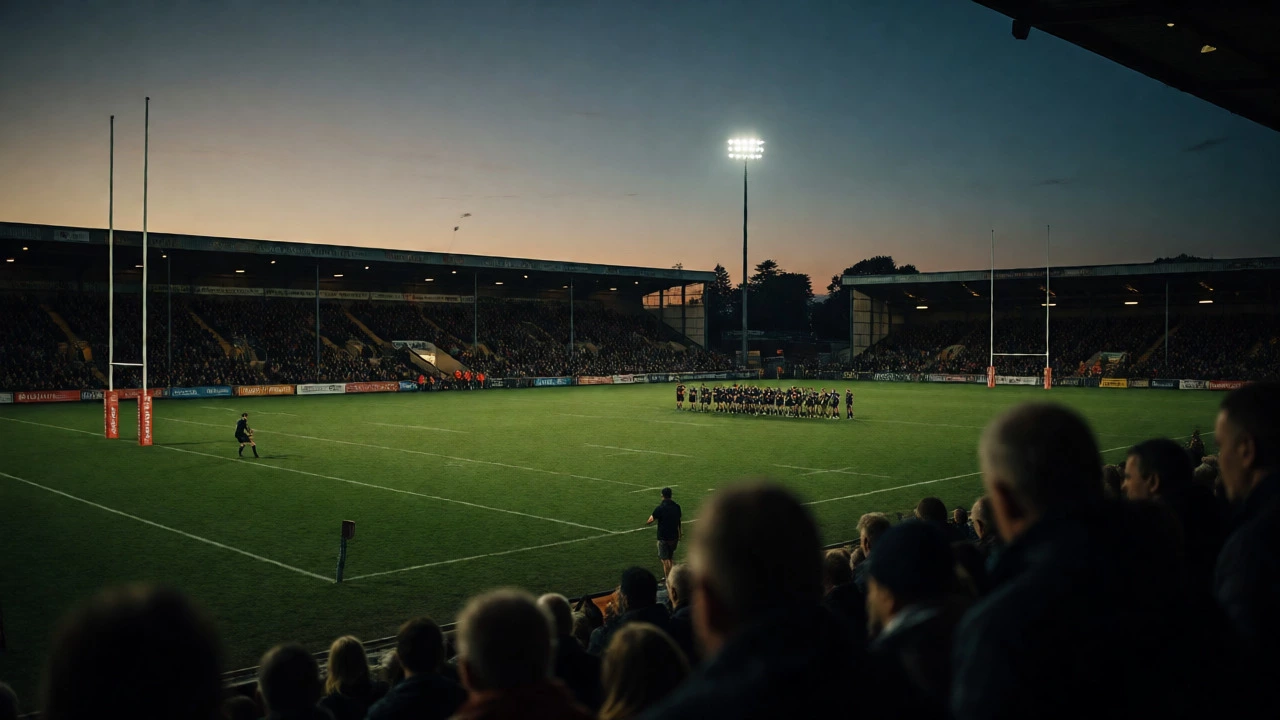
Regional Differences: Union vs. League
Not all rugby slang is universal. Rugby Union and Rugby League share roots but diverged in 1895. Their languages reflect this split. In League, the game is faster, with fewer phases. You’ll hear terms like "six-again," where the referee signals a penalty advantage, allowing the attacking team six more tackles. This rule changed the flow of the game dramatically.
In Union, the emphasis is on structure. Terms like "phase play" describe repeated attacks through multiple rucks. League fans might call a scrum-half a "halfback," while Union purists stick to "scrum-half" or "nine." Position numbers differ too. In League, the fullback is number 15, same as Union, but the roles vary. League fullbacks are often defensive anchors, while Union fullbacks launch attacks.
Australian slang adds another layer. Here, we might call a poor referee decision a "robbery." We talk about "bunkers" for video referees. The term "try" is universal, but celebrating it varies. In some cultures, it’s reserved; in others, it’s explosive. Knowing these nuances helps you connect with local fans. If you’re in Sydney, expect plenty of banter about the Wallabies’ performance versus international rivals.
How to Use Rugby Slang Naturally
Don’t force it. Using slang incorrectly marks you as an outsider immediately. Start with the basics. Call the forwards "the pack." Refer to the jersey as a "Jerry." Talk about "breaking the line" instead of "running past defenders." These small shifts make you sound informed.
Listen to live commentary. Commentators use slang naturally. Notice when they switch from formal terms to casual ones. They’ll say "he’s under pressure" during tense moments, but "he’s cooked" when someone is clearly beaten. Context is key. Also, read post-match analyses. Journalists love using colorful language to describe dull games. Phrases like "attritional battle" or "clinical finishing" become part of your mental dictionary.
Finally, engage with communities. Reddit threads, Twitter/X discussions, and local club forums are goldmines for emerging slang. New terms pop up constantly. For instance, "TMO" (Television Match Official) was once niche; now everyone knows it. Stay curious. Ask questions if you don’t know a term. Most rugby fans love explaining the lore behind the words. It’s part of the culture.
What is the most common rugby insult?
While insults vary, calling someone a "goon" implies they lack skill and rely on brute force. Another common jab is saying a player has no "game," meaning they contribute nothing tactically beyond hitting people hard. It’s harsh but typical in heated matches.
Why do players call the ball a 'pill'?
"Pill" is an old-fashioned term for the ball, likely stemming from its oval shape resembling certain pills or capsules in early slang dictionaries. While less common today, older players and traditionalists still use it affectionately. Most modern players just say "ball" or "it."
Is 'Jerry' offensive?
No, "Jerry" is simply Australian and British slang for "jersey." It’s widely accepted and used by commentators and players alike. Saying "he pulled his Jerry" means he grabbed an opponent’s shirt illegally. It’s neutral, not derogatory.
What does 'blindside' mean in rugby?
The blindside is the shorter side of the pitch relative to a scrum or lineout. The blindside flanker (number 6) operates there, often focusing on defense and tackling close-quarters. It’s called blindside because the view is restricted compared to the openside.
Do referees use slang during games?
Rarely. Referees must remain clear and authoritative. They use standardized commands like "play on," "advantage," or "penalty." However, they might use brief cues like "jackal!" to warn players about contesting the ball. Clarity prevents disputes.