
Rugby vs American Football: Injury Risk Comparison
Rugby Union
Continuous flow game. No helmets. Lower impact velocity but higher joint stress due to slippery surfaces and rucks.
- Risk Profile: Musculoskeletal (Joints/Bones)
- Primary Threat: Ankle sprains, ACL tears
- Brain Impact: Moderate (Strict high-tackle laws)
American Football
Discrete plays. Maximum acceleration before impact. High velocity collisions with armor protection.
- Risk Profile: Neurological (Brain/Head)
- Primary Threat: Concussions, CTE, Skull fractures
- Brain Impact: High (Risk compensation)
Injury Frequency Index
Based on per 1,000 player-hours exposure data
There is a persistent myth that Rugby is a chaotic brawl while American Football is a calculated science. If you watch both sports on television, the visual evidence seems to support this. In American football, players wear armor and collide at full speed. In rugby, they throw their bodies into each other with nothing but skin and muscle for protection. But does looking more violent mean it actually is?
The answer is not as simple as "yes" or "no." Violence in sport can be measured in different ways: the frequency of collisions, the severity of injuries, the long-term neurological damage, and even the rules governing physical contact. When we strip away the helmets and pads, the data reveals a surprising reality about which sport carries higher risks for athletes.
Defining Violence in Contact Sports
Before comparing statistics, we need to define what we mean by "violent." In sports medicine, we usually look at two metrics: injury incidence (how often injuries happen) and injury severity (how bad those injuries are). There is also the concept of "controlled aggression."
American Football is a sport characterized by discrete plays separated by breaks, allowing players to accelerate to maximum velocity before impact. This structure creates high-velocity collisions. Rugby Union, on the other hand, is a continuous flow game where physical engagement is constant but generally occurs at lower speeds. The difference in pace changes the physics of the impact entirely.
In American football, the helmet allows players to lead with their head because they believe they are protected. This psychological factor leads to dangerous tackling techniques that might not occur in rugby, where leading with the head results in immediate pain and potential concussion. So, is the sport with the armor more violent because it encourages harder hits?
The Helmet Paradox: Protection vs. Risk Compensation
This is perhaps the most critical distinction between the two codes. In Rugby League and Rugby Union, players do not wear hard helmets. They may wear soft scrum caps, but these offer minimal protection against impact. Consequently, players are taught to tackle with their shoulders and wrap their arms, keeping their heads out of the collision zone. It is a survival mechanism.
In contrast, NFL Players wear advanced composite helmets designed to dissipate force. While these helmets have improved significantly over the last decade, reducing skull fractures and facial lacerations, they introduce a phenomenon known as risk compensation. Because players feel safe, they hit harder. Studies from the CDC (Centers for Disease Control and Prevention) have shown that despite better equipment, concussion rates in football remain stubbornly high because the forces involved are simply greater.
When a linebacker hits a running back at 20 miles per hour, the deceleration force is immense. Even with a helmet, the brain sloshes inside the skull. In rugby, tackles rarely exceed 15 miles per hour because the defender has to slow down slightly to make legal contact without driving the opponent into the ground illegally. The lack of a helmet forces technique; the presence of a helmet enables power.
Concussion Rates and CTE Risks
If we measure violence by its effect on the brain, American football currently holds the darker record. Chronic Traumatic Encephalopathy (CTE is a progressive degenerative brain disease found in individuals with a history of repetitive brain trauma) was first identified in boxers but gained prominence through studies of deceased NFL players. The Boston University CTE Center has examined hundreds of brains, finding CTE pathology in a significant majority of former professional football players.
Rugby is not immune to this issue. The World Rugby organization has acknowledged rising concussion concerns. However, the rate of concussions per 1,000 player-hours is generally lower in rugby than in American football. According to data from the NCAA (National Collegiate Athletic Association), football players suffer concussions at a rate roughly three times higher than rugby players at the collegiate level.
Why? Partly because rugby has strict laws regarding head contact. A high tackle in rugby is penalized heavily, and repeated offenders face suspensions. In American football, while rules have tightened (illegal hits to the head are flagged), the sheer volume of sub-concussive hits-hits that don't cause an immediate loss of consciousness but still shake the brain-accumulates faster in football due to the number of plays per game.
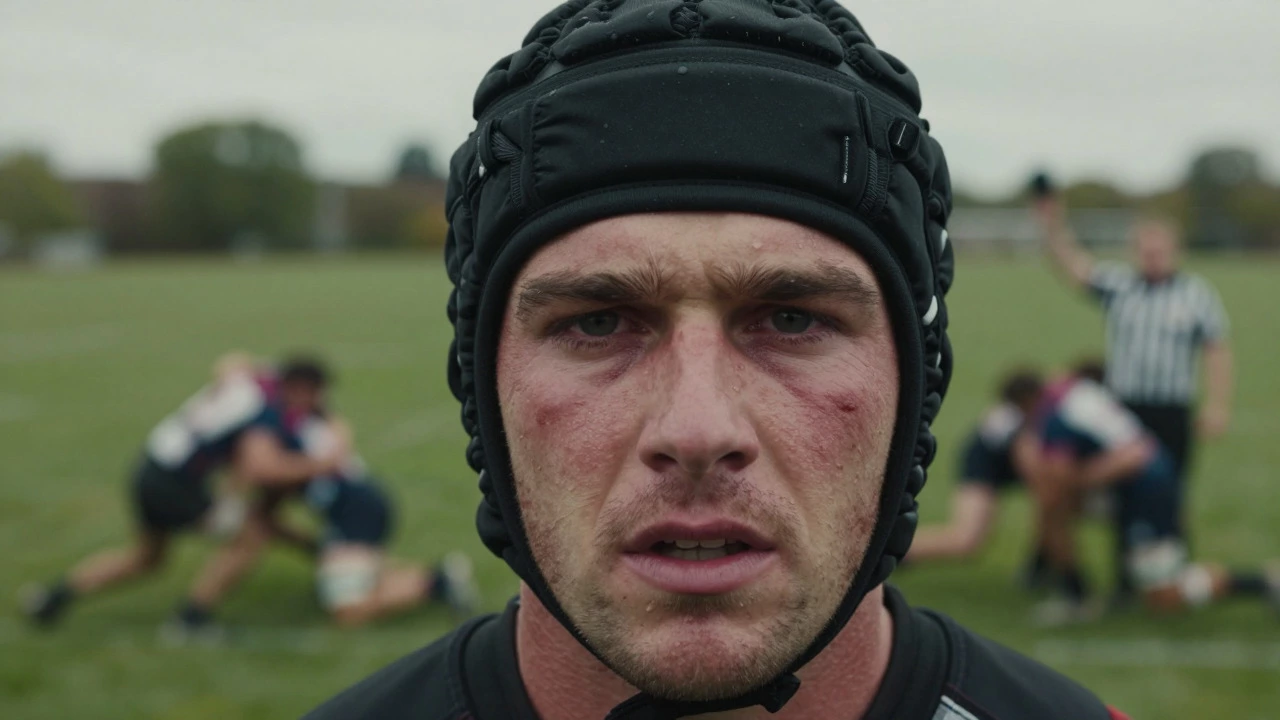
Musculoskeletal Injuries: Joints and Bones
While football wins the battle for brain trauma, rugby often comes out ahead in terms of joint and bone injuries. Specifically, ankle sprains and knee ligament tears (like ACL ruptures) are more common in rugby. Why? Because rugby is played on grass, often in wet conditions, and involves sudden changes of direction without the cleat traction optimization seen in football.
Furthermore, the nature of the ruck in rugby-a contest for possession after a tackle-involves players jumping onto each other. This dynamic loading on the spine and limbs can lead to stress fractures and disc issues. In American football, the play stops immediately after a tackle. The ball carrier is down, and everyone resets. There is no pile-up. This stop-start nature reduces certain types of cumulative musculoskeletal stress but increases acute impact injuries like shoulder separations and broken collarbones.
| Injury Type | Rugby (Union/League) | American Football |
|---|---|---|
| Concussions | Moderate Frequency | High Frequency |
| ACL Tears | Higher Rate | Moderate Rate |
| Ankle Sprains | Very High Rate | Low Rate |
| Shoulder Separations | Moderate Rate | High Rate |
| Long-term Brain Damage (CTE) | Emerging Concern | Well-Documented Epidemic |
The Role of Rules and Refereeing
Violence is also defined by what is allowed. International Rugby Board (IRB) regulations are strict about forward passes and offside lines, but physical engagement is encouraged within bounds. You cannot trip an opponent with your feet in rugby (it’s a penalty), whereas in American football, tripping is a standard defensive tactic if done legally below the waist.
In American football, holding is illegal for defenders, but offensive linemen spend the entire game pushing and shoving. It is a war of attrition in the trenches. In rugby, there is no dedicated line of scrimmage. The contest is fluid. This means rugby players must be physically dominant in open space, whereas football players specialize in specific zones of contact.
Refereeing standards have shifted dramatically in both sports. In rugby, the introduction of the Video Assistant Referee (VAR) system has reduced dangerous play penalties. In the NFL, the "Protect the Player" initiative has led to massive fines for helmet-to-helmet hits. Yet, because football is structured around isolated bursts of maximum effort, the intent to disable the opponent is often more explicit in the coaching schemes than in rugby, where the goal is to dispossess rather than incapacitate.

Youth Participation and Safety Trends
For parents deciding whether to let their children play either sport, the landscape is changing. Youth tackle football participation in the US has declined since 2013, largely due to fear of concussions. Many programs have switched to flag football or modified tackle versions with stricter age limits for contact.
In Australia and New Zealand, rugby remains a cornerstone of youth development. However, World Rugby has introduced "Rugby Ready" programs and limited full-contact training hours for under-18s. The focus is on skill acquisition before heavy physical engagement. Interestingly, some experts argue that learning proper tackling technique early in rugby is safer than starting late, as bad habits formed without supervision are harder to break.
Looking at Rugby Fixtures for local clubs, you will notice a growing emphasis on medical staff presence at every match. This cultural shift towards health monitoring is happening in both sports, but rugby's community-based structure often means closer oversight of amateur players compared to the fragmented high school football systems in the US.
Which Sport Is Actually More Dangerous?
If you define violence as the likelihood of suffering a severe traumatic brain injury, American football is more dangerous. The combination of high-speed impacts, helmet-induced risk compensation, and the accumulation of sub-concussive hits creates a perfect storm for long-term neurological issues.
If you define violence as the likelihood of missing time due to joint sprains, strains, or minor fractures, rugby is more punishing. The continuous nature of the game, the slippery surfaces, and the unstructured nature of rucks and mauls place immense strain on the body's connective tissues.
However, when considering the overall "violence" metric-encompassing intent, frequency, and severity-the consensus among sports scientists leans towards American football being the more violent code. The armor allows for a level of physical destruction that is self-limiting in rugby. In rugby, if you hit too hard or too dangerously, you hurt yourself. In football, the equipment absorbs much of that feedback loop.
Future Outlook: Technology and Rule Changes
Both sports are evolving. In American football, sensor technology embedded in helmets (like the Head Impact Telemetry system) is helping teams monitor real-time g-force exposure. In rugby, the law changes regarding the height of tackles and the entry into rucks aim to reduce spinal and neck injuries.
We may see a convergence in safety protocols. Rugby could adopt more mandatory rest periods for concussed players, while football might experiment with softer padding or rule changes that limit the speed of collisions. Until then, fans watching Six Nations matches or Super Rugby games should appreciate the skill and bravery involved, knowing that the lack of helmets makes every tackle a calculated risk.
Do rugby players get concussions less often than football players?
Yes, statistically. Studies show that American football players suffer concussions at a higher rate per 1,000 player-hours than rugby players. This is largely due to the higher velocity of impacts in football and the accumulation of sub-concussive hits throughout a game.
Why is American football considered more dangerous for the brain?
The primary reason is the helmet. Helmets allow players to hit with greater force and sometimes lead with their heads, believing they are protected. This leads to higher acceleration-deceleration forces on the brain, increasing the risk of Concussion and long-term CTE.
What are the most common injuries in rugby?
The most common injuries in rugby are ankle sprains, knee ligament tears (such as ACL and MCL), and hamstring strains. These occur due to the continuous nature of the game, playing on grass, and the physical demands of rucks and tackles.
Can you play rugby without any protective gear?
Yes. The only mandatory protective equipment in rugby is a mouthguard. Players often choose to wear soft scrum caps, shin guards, or shoulder pads made of foam, but these are optional and do not provide hard-shell protection like football helmets.
Are rugby fixtures safer now than they were 10 years ago?
Safety protocols have improved significantly. World Rugby has implemented stricter laws on high tackles and head contact. Additionally, concussion substitution rules and mandatory return-to-play protocols have reduced the risk of second-impact syndrome during matches.