
Boxing Terminology Challenge
Test your understanding of when to use Fight, Match, or Bout. Select the most appropriate term for each scenario.
You walk into an arena in Sydney, or maybe you're just scrolling through highlights on your phone. Two fighters step into the ring. The bell rings. They start swinging. But what exactly is this event called? Is it a boxing fight? A boxing match? Or something else entirely?
If you've ever tried to explain boxing to a friend who doesn't follow the sport, you might have stumbled over this exact question. It seems trivial, but language matters in sports. It shapes how we understand the competition, the stakes, and the history behind it. So, let's clear up the confusion once and for all. Yes, a boxing fight is commonly called a match, but there are nuances that separate casual talk from official terminology.
The Short Answer: Match vs. Fight
Here is the deal. In everyday conversation, "fight" and "match" are often used interchangeably. If you tell someone you watched a great boxing fight last night, they will know exactly what you mean. However, if you look at official records, rulebooks, and broadcast graphics, the word Bout or Match is preferred.
Why the distinction? It comes down to context. "Fight" implies violence and conflict. It describes the action happening inside the ropes. "Match" describes the structured contest itself. Think of it like tennis. You play a "tennis match," not a "tennis fight," even though players hit each other with balls (metaphorically). In boxing, the structure-the rounds, the judges, the weight classes-makes it a match. The raw exchange of punches makes it a fight.
What Exactly Is a Boxing Bout?
In the professional world, the term Bout is the standard technical term. You will see it on fight posters, in contracts, and in regulatory documents. A bout is a scheduled contest between two boxers under specific rules set by a commission, such as the Association of Boxing Commissions in the US or similar bodies elsewhere.
A bout has distinct attributes that define it:
- Duration: Typically 10 to 12 rounds for championship fights, or 4 to 8 rounds for non-title bouts.
- Scoring: Judges score each round based on clean punching, effective aggression, ring generalship, and defense.
- Outcome: Ends via knockout (KO), technical knockout (TKO), decision (unanimous, split, or majority), draw, or disqualification.
When commentators say, "That was a tough bout," they are referring to the entire event structure. When they say, "He won the fight," they are focusing on the result of the physical struggle. Both are correct, but "bout" is the neutral, administrative term.
Why Do We Say "Match"? The Amateur Connection
The term "match" has deep roots in amateur boxing and Olympic-style competitions. In the Olympics, for example, contests are officially referred to as matches. This aligns with other combat sports like judo or wrestling, where the focus is on points and technique rather than pure destruction.
Amateur boxing emphasizes scoring speed and accuracy over power. Because the intent is less about knocking the opponent out and more about accumulating points, the term "match" feels more appropriate. It signals a test of skill within a regulated framework. Many gyms still use this terminology when sparring partners compete in controlled scenarios. If you join a local club in Australia, you might hear coaches refer to "scrimmage matches" rather than "fights."
Professional vs. Amateur Terminology
The divide between pro and amateur boxing isn't just about paychecks; it's reflected in the language. Professional promoters want drama. They sell tickets by highlighting the danger. Hence, marketing materials often lean heavily on words like "war," "clash," and "fight." The goal is to evoke emotion.
Amateur associations, however, prioritize safety and development. Their documentation uses softer terms. Here is a quick comparison to help you navigate the different contexts:
| Context | Preferred Term | Reasoning |
|---|---|---|
| Official Records | Bout | Neutral, administrative, precise. |
| Media & Commentary | Fight / Match | Engaging for audiences; interchangeable. |
| Amateur/Olympics | Match | Emphasizes sport and points over violence. |
| Promotional Marketing | Fight / Clash | Highlights drama and intensity. |
| Legal Contracts | Bout | Defines the contractual obligation clearly. |
Notice how the same event changes names depending on who is talking. A lawyer reads about a "bout." A promoter sells a "fight." An Olympic coach schedules a "match." None are wrong, but using the right one shows you understand the culture of the room you are in.
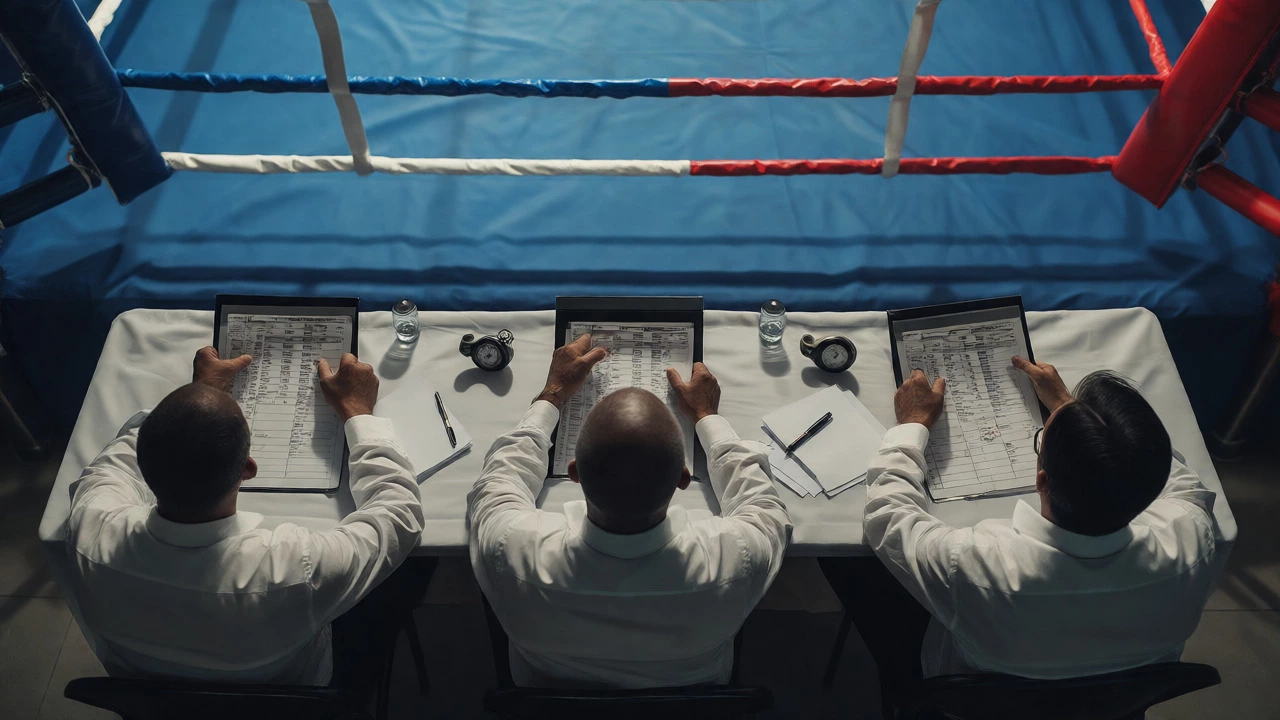
Is There Such Thing as a "Draw" in a Match?
This brings us to outcomes. Since we are discussing terminology, it helps to understand how results are labeled. If neither fighter wins, the result is a Draw. This can happen in three ways:
- Unanimous Draw: All three judges score the bout even.
- Split Draw: One judge scores it for Fighter A, one for Fighter B, and one sees it even.
- Majority Draw: Two judges score it even, while the third favors one fighter.
In a true "fight" mentality, fans hate draws. They feel nothing was settled. But in a "match" mindset, a draw is a valid competitive outcome where skills were evenly matched. Understanding this difference helps you appreciate why some purists defend controversial decisions that end in ties.
Regional Differences: UK, USA, and Australia
Language varies by region, too. In the United States, "Bout" is dominant in legal and commission paperwork. In the UK, you might hear "contest" more frequently in older literature, though "fight" remains common in media. In Australia, where I live, the culture is relaxed. People will call it a fight at the pub and a match on the TV. The British influence means "boxer" and "boxing match" are standard phrases in news reports, while American streaming services bring the heavy use of "bout" and "pay-per-view fight night."
Don't worry too much about regional slang unless you are writing for a specific audience. The core meaning stays consistent: two people, gloves, rules, and a winner.
Common Misconceptions About Boxing Terms
Let's bust a few myths that trip up new fans.
Misconception 1: A "Scratch Bout" is a serious title fight. Nope. A scratch bout usually refers to an exhibition or a non-sanctioned fight, often for charity or practice. It lacks the official record status of a sanctioned bout.
Misconception 2: "Main Event" means it's the longest fight. Not necessarily. The main event is simply the highest-profile fight on the card. It could be 12 rounds, or it could be 10. Sometimes, the co-main event is actually longer if it's a mandatory challenger situation.
Misconception 3: All rounds are scored equally in every organization. While the 10-point must system is global, judging criteria can vary slightly. Some commissions emphasize volume, others impact. This affects whether you view the event as a tactical match or a brutal fight.

How to Use These Terms Correctly
So, how should you speak about boxing? Here is a simple guide:
- Use "Fight" when: Talking to friends, describing the action, emphasizing drama, or discussing the physical toll.
- Use "Match" when: Discussing amateur boxing, Olympic events, or comparing it to other sports like tennis or football.
- Use "Bout" when: Writing formally, analyzing records, discussing contracts, or trying to sound technically accurate.
For example, instead of saying, "The referee stopped the match," which sounds odd, say, "The referee stopped the fight." Instead of saying, "I signed up for a boxing fight," which sounds aggressive, say, "I signed up for a boxing match" or "a bout" if you are joining a league.
The Evolution of Boxing Language
Boxing terminology evolves with the sport. As mixed martial arts (MMA) grew, boxing had to differentiate itself. MMA events are often called "cards" or "shows," with individual contests called "bouts." Boxing retained its traditional terms to preserve its identity. This linguistic boundary helps fans distinguish between the gloved art of boxing and the cage-based chaos of MMA.
Furthermore, social media has shortened terms. Hashtags like #BoxingMatch or #TitleFight trend differently. Algorithms favor high-engagement words. "Fight" generates more clicks than "Bout." This reinforces the popular usage of "fight" despite the technical preference for "bout" in official circles.
Final Thoughts on Boxing Nomenclature
At the end of the day, does it matter? For the average fan, no. Call it whatever helps you connect with the sport. But if you want to dive deeper into the history, rules, and business of boxing, knowing the difference adds a layer of sophistication. It shows you respect the structure behind the spectacle.
Next time you watch a championship in Las Vegas or London, listen to the announcers. Notice when they switch from "fight" to "bout." You'll hear it most when they discuss the purse, the sanctioning body, or the historical significance. That shift marks the transition from entertainment to administration. And that, my friend, is the subtle power of language in sports.
Is a boxing match the same as a boxing fight?
Yes, they refer to the same event. "Fight" is colloquial and emphasizes the physical combat, while "match" is more formal and emphasizes the sporting contest. In official records, "bout" is often used.
Why do officials call it a bout?
Officials use "bout" because it is a neutral, technical term that defines the scheduled contest under specific rules and regulations, avoiding the emotional connotations of "fight" or the generic nature of "match."
Do Olympic boxers participate in fights or matches?
In the Olympics and amateur boxing, contests are typically referred to as matches. This reflects the emphasis on point-scoring and technique rather than knockouts and professional promotion.
What is the difference between a bout and a spar?
A bout is a sanctioned, judged competition with official results recorded. A spar is a training exercise between partners to practice skills, usually without official scoring or public attendance.
Can a boxing match end in a tie?
Yes, a boxing match can end in a draw. This occurs when judges score the bout evenly, either unanimously, by split, or by majority decision.