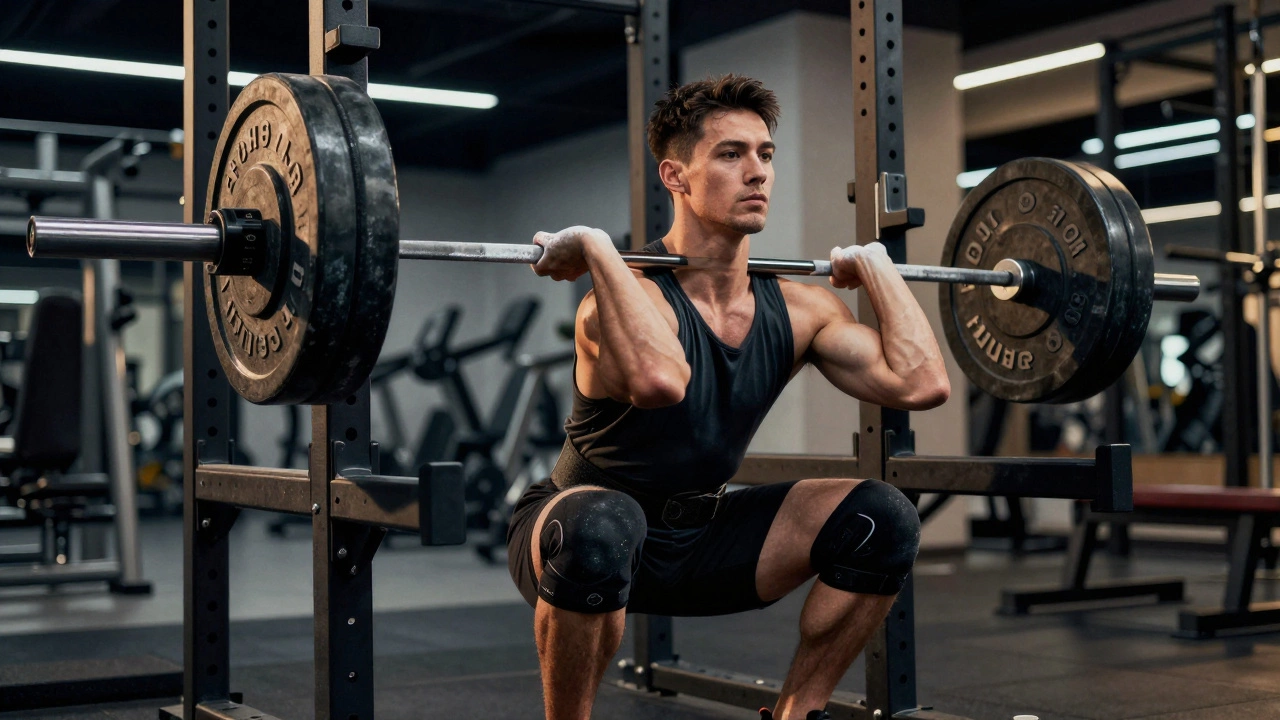
Squat Volume & Frequency Calculator
Your Recommended Squat Protocol
Key Guidelines:
You walk into the gym, look at your legs, and think: "I need more squats." It’s a common impulse. Squats are the king of lower-body exercises for a reason-they hit your quads, hamstrings, glutes, core, and even your back. But here’s the trap: doing them every single day isn’t always the answer. In fact, for most people, it’s a recipe for burnout or injury.
The question how many squats per day you should do depends entirely on your goal. Are you trying to build massive thighs? Improve athletic performance? Or just stay mobile as you age? The number changes drastically based on that target. There is no magic universal number like "100 squats daily" that works for everyone. Instead, we need to look at intensity, recovery, and progressive overload.
Key Takeaways
- For General Health: 3-5 sets of 10-15 bodyweight squats, 3-4 times a week is sufficient.
- For Muscle Growth (Hypertrophy): 10-20 hard sets per week with added weight, split across 2 sessions.
- Daily Bodyweight Squats: Safe if kept low-intensity (e.g., 50 reps total), but not optimal for strength gains.
- Recovery is Key: Muscles grow when you rest, not when you train. Daily heavy lifting leads to overtraining.
- Form Over Frequency: Perfecting your squat depth and knee alignment matters more than the rep count.
Why "Every Day" Is Usually the Wrong Answer
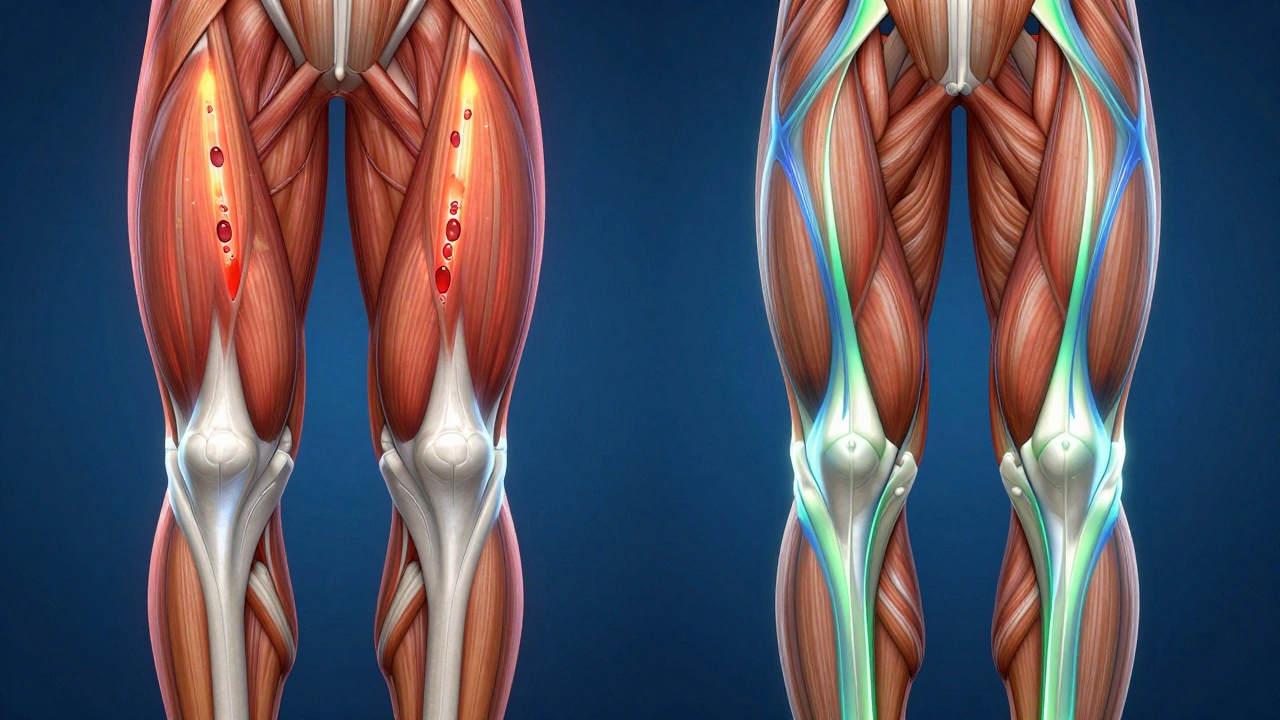
We love the idea of consistency. Doing something every day feels productive. But biology doesn't work on a calendar; it works on recovery cycles. When you squat, especially with resistance, you create microscopic tears in your muscle fibers. These repairs happen during rest, making the muscle stronger and larger. If you squat heavily every day, you never give those fibers time to repair. You’re essentially tearing down the house before you’ve finished building the walls.
Research in exercise physiology consistently shows that muscle protein synthesis-the process where muscles rebuild-peaks about 24-48 hours after a resistance session. This means your legs are still recovering two days after a hard squat session. Hitting them again on day three might be okay if the intensity is low, but hitting them with the same load is counterproductive.
Think of it like this: If you punched a wall every day, your hand would heal faster if you gave it a break. Same with your quads. For most lifters, training legs twice a week allows for higher quality sessions with better focus and energy than grinding out mediocre reps seven days a week.
Squat Volume by Goal: What Should You Aim For?
To figure out your number, we have to define what you want. Here is how the volume breaks down for different objectives.
1. General Fitness & Mobility
If you are an office worker who sits all day, your primary goal is likely joint health and basic toning. You don’t need to go to failure. In this case, daily movement is beneficial.
Bodyweight Squats are a functional movement pattern that mimics sitting and standing, requiring no equipment. They improve blood flow and keep hips loose.
- Frequency: Daily or every other day.
- Volume: 3 sets of 10-15 reps.
- Intensity: Low. You should feel energized, not sore.
2. Muscle Growth (Hypertrophy)
This is where most gym-goers fall. You want bigger, stronger legs. To stimulate growth, you need mechanical tension and metabolic stress. This usually requires adding weight-barbells, dumbbells, or kettlebells.
Studies suggest that the sweet spot for hypertrophy is between 10 and 20 hard sets per muscle group per week. Since squats primarily target the quadriceps and glutes, you can aim for this range. However, because squats are systemic (they tax your whole body), you rarely go to absolute failure on every set.
- Frequency: 2 times per week (e.g., Monday and Thursday).
- Volume: 3-4 sets of 8-12 reps per session.
- Total Weekly Sets: 6-8 working sets.
3. Strength & Power
If you are an athlete or powerlifter, your goal is moving maximum weight. High-frequency training (daily) is sometimes used by elite athletes, but it involves varying intensities. One day might be heavy (90% of max), the next day light technique work (50% of max). This is called undulating periodization. For the average person, this is too complex and risky without coaching.
- Frequency: 2-3 times per week.
- Volume: 3-5 sets of 3-6 reps.
- Rest: 3-5 minutes between sets to allow full ATP recovery.
| Goal | Frequency | Sets x Reps | Intensity |
|---|---|---|---|
| General Health | Daily / EOD | 3 x 10-15 | Low (Bodyweight) |
| Muscle Growth | 2x Week | 3-4 x 8-12 | High (Weighted) |
| Strength | 2-3x Week | 3-5 x 3-6 | Very High (Heavy Weight) |
| Athletic Power | 2x Week | 4-6 x 3-5 | Explosive (Moderate Weight) |
The "100 Squats a Day" Challenge: Does It Work?
You’ve seen the social media challenges. "Do 100 squats every day for 30 days." People post videos of their progress. Some see results; others quit after three days with knee pain. Why the difference?
Doing 100 bodyweight squats daily is safe for most healthy adults. It builds muscular endurance, not size. It won’t turn you into a bodybuilder, but it will tone your legs and improve your stamina. The problem arises when people interpret "squats" as "heavy barbell squats." Doing 100 weighted squats daily is unsustainable and dangerous for the lower back and knees.
If you want to try a daily challenge, stick to bodyweight or light dumbbells. Break it up: 25 squats in the morning, 25 at lunch, 50 in the evening. This keeps the stimulus fresh and prevents fatigue-induced poor form. Remember, the goal of a daily habit is consistency, not exhaustion.
Signs You Are Squatting Too Much
Your body talks to you. If you ignore it, it will scream. Here are the red flags that you’ve crossed the line from dedicated to overtrained.
- Persistent Joint Pain: Sharp pain in the knees or lower back during or after squats. Note: Muscle soreness (DOMS) is normal; joint pain is not.
- Performance Plateaus: Your weights aren’t going up, or you’re getting weaker. This suggests your central nervous system is fried.
- Sleep Disturbances: Overtraining raises cortisol levels, which can disrupt sleep patterns.
- Mood Changes: Irritability, lack of motivation, or anxiety around workouts.
If you experience these symptoms, cut your squat volume by 50% for a week. Focus on mobility work, walking, and upper-body training. Let your legs recover. You’ll come back stronger.
Proper Form: The Foundation of Frequency
No matter how many squats you do, bad form will limit your progress and increase injury risk. You can’t rush through 100 reps if each one is technically flawed. Focus on these cues:
- Feet Placement: Shoulder-width apart, toes slightly turned out (15-30 degrees). This aligns your hips and knees.
- Chest Up: Keep your chest proud. Don’t round your back. Imagine a string pulling your sternum toward the ceiling.
- Knees Track Toes: As you descend, your knees should move in line with your toes. Avoid letting them cave inward (valgus collapse).
- Depth: Aim for parallel (hip crease below knee cap) or deeper if your mobility allows. Going partial limits muscle engagement.
- Breathing: Inhale on the way down, hold briefly at the bottom, exhale on the way up. Brace your core throughout.
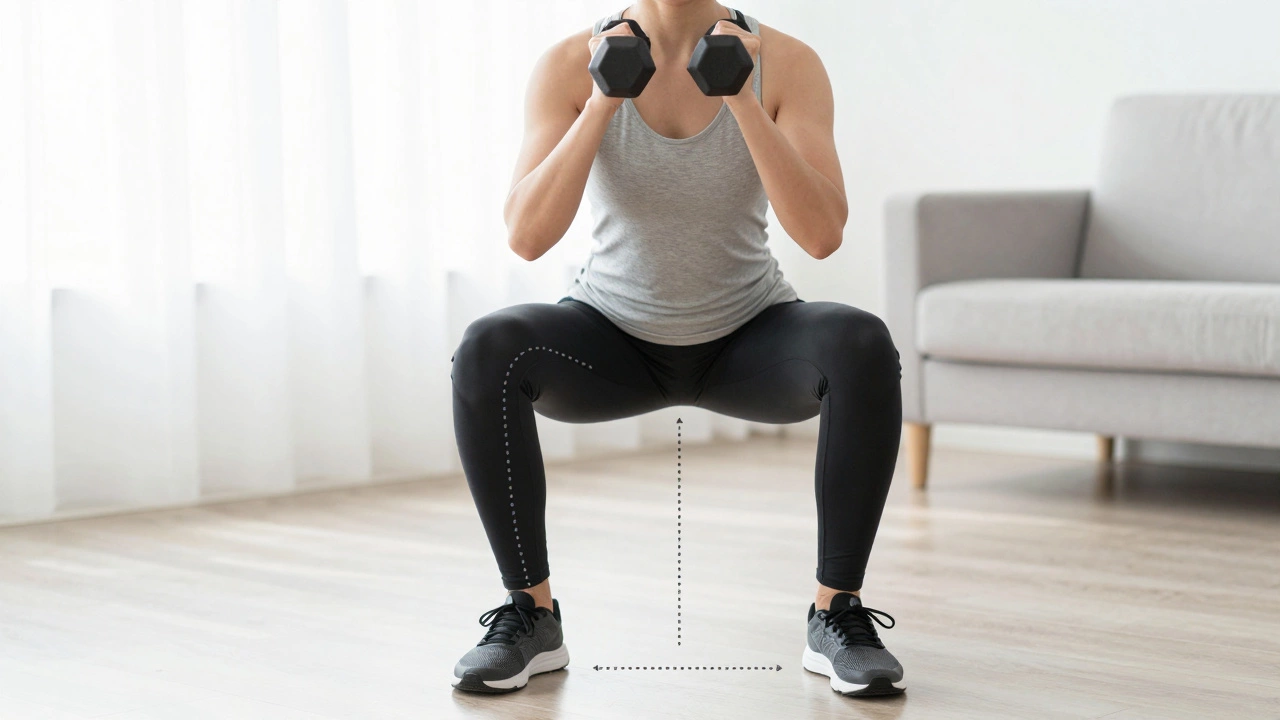
If you are new to squats, start with goblet squats (holding a dumbbell at chest height). This forces an upright torso and teaches proper depth without loading the spine heavily.
Integrating Squats Into Your Weekly Routine
Let’s put this into practice. Here are two sample weekly schedules depending on your lifestyle.
The Busy Professional (3 Days/Week)
You have limited time. Efficiency is key. Combine squats with other compound movements.
- Monday: Full Body A - Barbell Squats (3x8), Push-ups, Rows.
- Wednesday: Active Recovery - Walking, Stretching, Light Core Work.
- Friday: Full Body B - Goblet Squats (3x12), Lunges, Overhead Press.
The Dedicated Lifter (4-5 Days/Week)
You want to maximize gains. Split your routine to allow for higher volume per session.
- Monday: Lower Body Focus - Heavy Barbell Squats (4x5), Romanian Deadlifts, Leg Curls.
- Tuesday: Upper Body Push/Pull.
- Thursday: Lower Body Hypertrophy - Front Squats (3x10), Bulgarian Split Squats, Leg Extensions.
- Friday: Upper Body Push/Pull.
- Weekend: Rest or Light Cardio.
Common Mistakes to Avoid
Even experienced lifters make these errors. Check yourself against this list.
- Ignoring Warm-ups: Jumping straight into heavy squats cold is a fast track to injury. Spend 5-10 minutes on dynamic stretches (leg swings, hip circles) and light warm-up sets.
- Ego Lifting: Adding weight before mastering form. If your butt winks (posterior pelvic tilt) at the bottom, drop the weight.
- Neglecting Antagonists: Strong quads with weak hamstrings lead to knee instability. Always include hamstring work (deadlifts, curls) in your routine.
- Skipping Progressive Overload: Doing the same 50 squats for months yields diminishing returns. Add weight, add reps, or slow down the tempo periodically.
Final Thoughts on Squat Frequency
So, how many squats per day should you do? If you are looking for a simple rule of thumb: **Don’t do heavy squats every day.** Aim for 2-3 high-quality sessions per week. On off-days, you can do light bodyweight squats for mobility, but treat them as active recovery, not training.
Consistency beats intensity in the long run. It’s better to squat moderately well three times a week for a year than to crush it once a week and get injured. Listen to your body, prioritize form, and let your muscles recover. That’s how you build lasting strength and resilience.
Can I do squats every day if I use bodyweight only?
Yes, you can perform bodyweight squats daily. Because the intensity is low, your muscles recover quickly. This is great for maintaining mobility and cardiovascular health. However, for significant muscle growth, you will eventually need to add resistance or increase the difficulty (e.g., single-leg squats).
Is it better to squat heavy or light for fat loss?
Fat loss is primarily driven by a calorie deficit, not the type of exercise. However, heavy squats help preserve muscle mass while you lose fat, keeping your metabolism high. Light, high-rep squats burn fewer calories per minute and may not provide enough stimulus to maintain muscle. Aim for moderate-to-heavy loads with controlled reps.
How long should I rest between squat sets?
Rest periods depend on your goal. For strength (1-5 reps), rest 3-5 minutes to fully replenish ATP stores. For muscle growth (8-12 reps), rest 60-90 seconds. For endurance (15+ reps), rest 30-60 seconds. Adequate rest ensures you can maintain good form and intensity throughout the set.
Do squats help with lower back pain?
Properly performed squats can strengthen the core and posterior chain, which supports the lower back and may reduce pain. However, if you already have acute lower back pain, heavy squats can aggravate it. Start with bodyweight or goblet squats to ensure neutral spine alignment. Consult a physical therapist if pain persists.
What is the best age to start squatting?
There is no minimum age to start learning proper squat mechanics, provided supervision is present. Children can benefit from bodyweight squats for motor development. Older adults also benefit significantly for balance and independence. The key is starting light and focusing on form regardless of age.