Hoka Fit Finder
Don't guess your size. Use this guide to find the perfect fit for popular Hoka models, avoiding common mistakes like buying too big due to visual bulk.
Your Foot Profile
Recommended Action
Why This Recommendation?
Select a model and enter your details to get personalized sizing advice.
You try on a pair of Hoka maximalist running shoes known for thick midsoles and lightweight construction, and your foot feels like it’s floating. You lace them up, take two steps, and panic sets in. Is this normal? Do they feel too long? Too roomy? You’re not alone. This is the number one question I get from runners who are new to the brand or switching from traditional thin-soled racers.
The short answer: No, Hokas do not run big in length. In fact, many models run true to size or even slightly narrow. However, they often feel bigger because of their massive stack height and unique toe-box shape. If you order a half-size up out of fear, you might end up with blisters. Let’s break down exactly how these shoes fit so you don’t waste money on returns.
Why People Think They Run Big
It’s an optical illusion combined with sensory feedback. When you put on a standard Nike Pegasus or an Adidas Adizero, the sole is thin. Your foot sits close to the ground. The shoe feels compact around your foot.
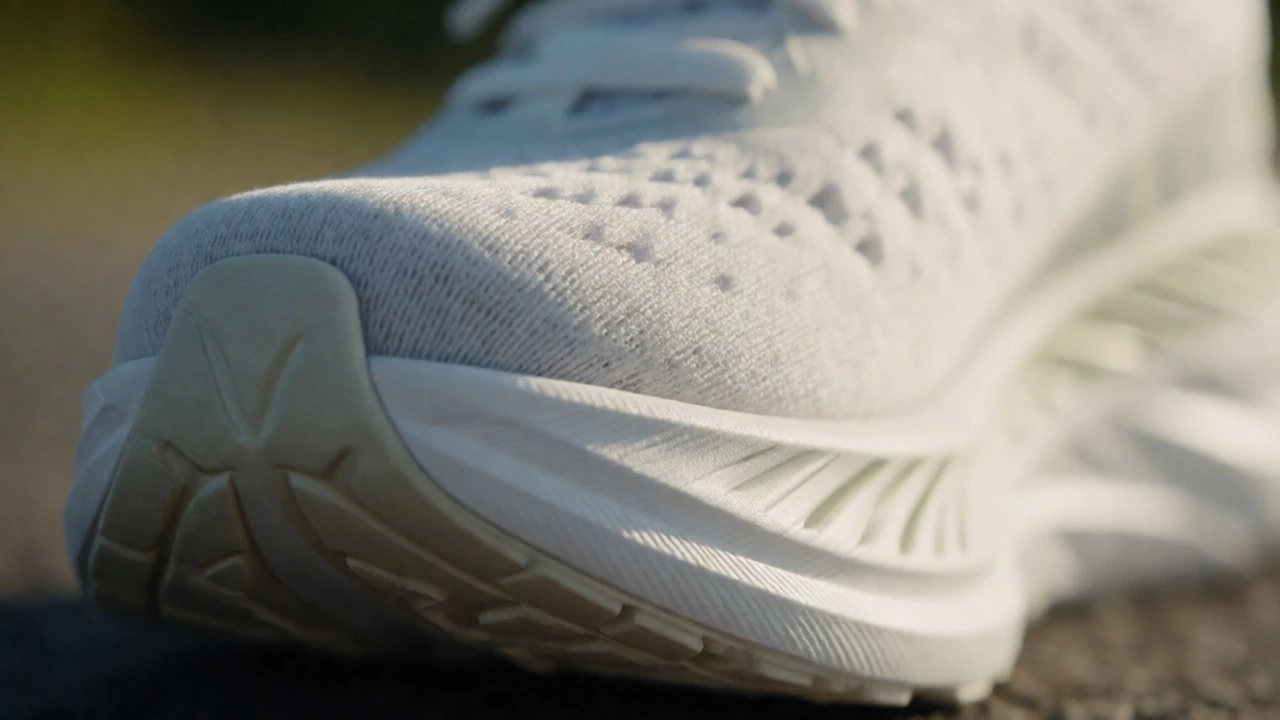
With a Hoka, specifically popular models like the Hoka Clifton or Hoka Bondi, the midsole foam is huge. It extends far beyond the perimeter of your foot. This creates a visual impression that the shoe is "larger" than necessary. But here is the critical distinction: the internal volume (the space where your foot lives) is not necessarily larger.
Your brain interprets the extra material under your arch as extra room inside the shoe. It isn’t. The foam is solid structure, not empty air. If you size up based on the external bulk, you will have dead space at the front of the shoe. That leads to heel slip, which causes blisters. And nobody wants blisters on mile 10.
The Truth About Length vs. Width
This is where things get tricky. While the length is usually true-to-size, the width varies significantly by model. Some Hokas run notoriously narrow, while others are built for wide feet. If you have average-width feet, you might find certain models feel tight across the metatarsals (the ball of your foot), even if there is plenty of length.
Conversely, if you have very narrow feet, some of the wider platform models might feel sloppy. You might feel like your foot is sliding side-to-side inside the shoe. This contributes to the "running big" perception. It’s not that the shoe is too long; it’s that the chassis is too wide for your specific anatomy.
| Model Name | Fit Type | Best For | Sizing Recommendation |
|---|---|---|---|
| Clifton 9 | True to Size / Slightly Narrow | Daily training, neutral runners | Stick to your usual size. Go half-size up only if you wear thick socks. |
| Bondi 8 | True to Size / Wide Base | Max cushion, standing all day, recovery runs | True to size. Available in Wide (2E) options. |
| Mach 6 | Snug / Performance Fit | Speed work, tempo runs | Consider half-size up if between sizes due to tighter upper mesh. |
| Arahi 7 | True to Size / Structured | Mild overpronation, stability needs | True to size. The J-Frame adds structure but doesn't change length. |
| Speedgoat 5 | True to Size / Technical Fit | Trail running, rugged terrain | True to size. Trail runners often prefer a snugger fit to prevent foot movement downhill. |
How to Measure Your Feet Correctly
Before you click "buy," stop guessing. Most people wear the wrong shoe size. Studies suggest up to 70% of adults wear shoes that don’t fit properly. Here is how to measure accurately at home, especially since Hoka uses US sizing conventions globally.
- Time of Day Matters: Measure your feet in the afternoon or evening. Your feet swell throughout the day. A shoe that fits at 8 AM might be too tight by 6 PM.
- Wear Running Socks: Don’t measure barefoot if you plan to run in technical synthetic socks. Put on the exact pair you intend to train in.
- Trace Both Feet: Stand on a piece of paper against a wall. Mark the longest point of your heel and the tip of your longest toe. Repeat for the other foot. Most people have one foot slightly longer than the other. Always size for the larger foot.
- Check the Brand Chart: Compare your measurement in centimeters or inches to the official Hoka size chart. Do not rely solely on what you wear in Nike or Adidas. Brands vary. A US Men’s 10 in Nike might be a 10.5 in Hoka depending on the specific last used.
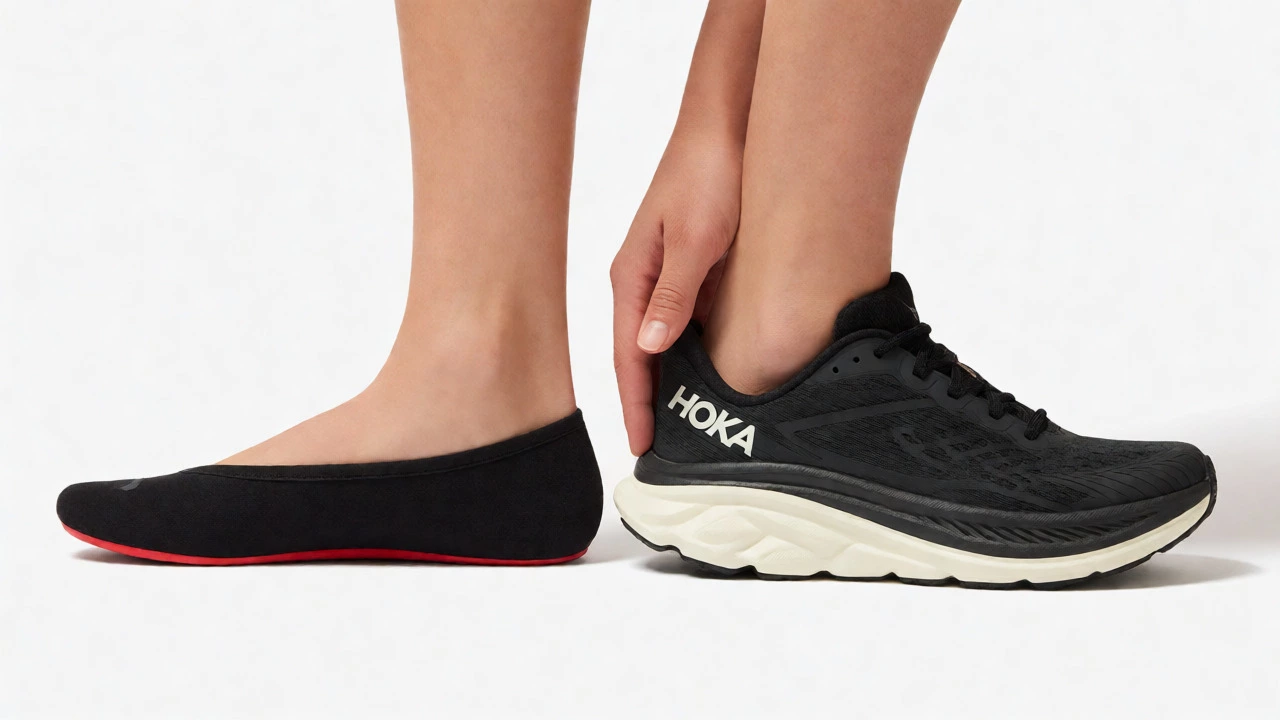
Trial Strategy: The "Thumb Test" Isn’t Enough
You’ve probably heard the rule: leave a thumb’s width of space between your longest toe and the end of the shoe. For Hokas, this rule still applies, but you need to modify it for the rocker geometry.
Hoka shoes use a Meta-Rocker design. This means the sole curves upward at the toe and heel. This curvature helps roll your foot forward during the gait cycle. Because of this curve, your toes might naturally lift off the insole earlier than in a flat shoe. Don’t mistake this lift for bad fit.
Here is a better test. Lace the shoe up completely. Stand up. Walk around the house for five minutes. Do not just stand still. Static fitting is misleading. Your foot spreads when you bear weight. If your heel lifts more than 2-3 millimeters when you walk, the shoe is too long. If you feel pressure points on the sides of your little toe, it’s too narrow. Ignore the visual bulk of the sole. Focus entirely on the contact points inside the shoe.
Dealing with Specific Foot Issues
If you have bunions, plantar fasciitis, or high arches, the "do they run big" question changes. Hoka’s soft EVA foam can compress differently depending on your weight and gait.
For runners with bunions: The upper mesh on models like the Clifton is flexible. It stretches. If you buy a size too big to accommodate a bunion, you lose lockdown elsewhere. Try a wide version first before going up in length. The wide versions add volume in the toe box without adding length.
For runners with plantar fasciitis: The thick cushioning provides relief, but the drop (heel-to-toe offset) matters. Most daily trainers have an 8mm drop. If you are used to zero-drop minimalist shoes, the transition can cause calf strain. This isn’t a sizing issue, but it affects comfort. Ensure your Achilles tendons are ready for the elevated heel.
For narrow heels: Some users report heel slippage in Hokas despite correct length. This happens because the heel counter (the stiff back part) is sometimes softer to prioritize comfort. If you experience this, try the "runner’s loop" lacing technique. It locks the ankle in place without tightening the forefoot.

Breaking In Period
Do not expect a Hoka to feel perfect out of the box. Unlike leather boots, they don’t require a long break-in, but the foam does settle. After about 20-30 miles, the midsole compresses slightly to match your footprint. If they feel slightly loose initially, give them two weeks. If they feel painfully tight, return them immediately. Foam stretches minimally compared to fabric uppers.
Also, consider your orthotics. If you use custom insoles, remove the factory sock liner. These liners take up significant vertical volume. Adding an orthotic on top of the stock liner will make almost any shoe feel too small. Remove the liner, insert the orthotic, and re-evaluate the fit.
Frequently Asked Questions
Do Hoka Cliftons run big or small?
The Hoka Clifton generally runs true to size in length. However, many runners find the toe box slightly narrow. If you have wide feet, consider ordering the 'Wide' version rather than sizing up in length. If you are between sizes, sticking to your smaller size is usually safer to avoid heel slip.
Should I buy a half size up in Hokas?
Not automatically. Only buy a half size up if you typically wear thicker socks for running or if you have particularly wide feet that cannot fit into the standard 'Wide' option. For most runners, the standard size provides the best balance of security and comfort. Buying up often results in poor lockdown.
Are Hokas good for wide feet?
Yes, Hoka offers many of their core models in 'Wide' (2E) and 'Extra Wide' (4E) widths. These options increase the internal volume in the forefoot and midfoot without changing the overall length of the shoe. This is a better solution than buying a larger size, which would create excess length.
Why do my Hokas feel like my foot is sliding forward?
This is common if the shoe is too long or if the laces are not secured properly. Check your heel lock. If your heel slips up and down when you walk, the shoe is likely too big. Try using the top eyelet for a runner's knot. If the problem persists, try a half size down.
Do trail Hokas fit differently than road Hokas?
Yes. Trail models like the Speedgoat often have a more aggressive outsole and a stiffer upper for protection. They may feel slightly tighter initially due to reinforced materials. Many trail runners prefer a snugger fit to prevent foot movement on uneven terrain, so they rarely size up for trail shoes unless wearing heavy wool socks.
Final Verdict: Trust the Internal Volume
Don’t let the chunky exterior scare you. Hoka shoes are engineered for performance, not just aesthetics. The bulk is there for impact absorption and energy return, not to swallow your foot whole.
Start with your regular street shoe size. Try them on in the evening. Wear your running socks. Walk, jog, and jump in them. If your heel stays locked and your toes have a thumb’s width of space, you’ve found the right fit. Ignore the friends who say they "run big." They probably bought the wrong width. Get the fit right, and those maximalist clouds will feel like second skin.