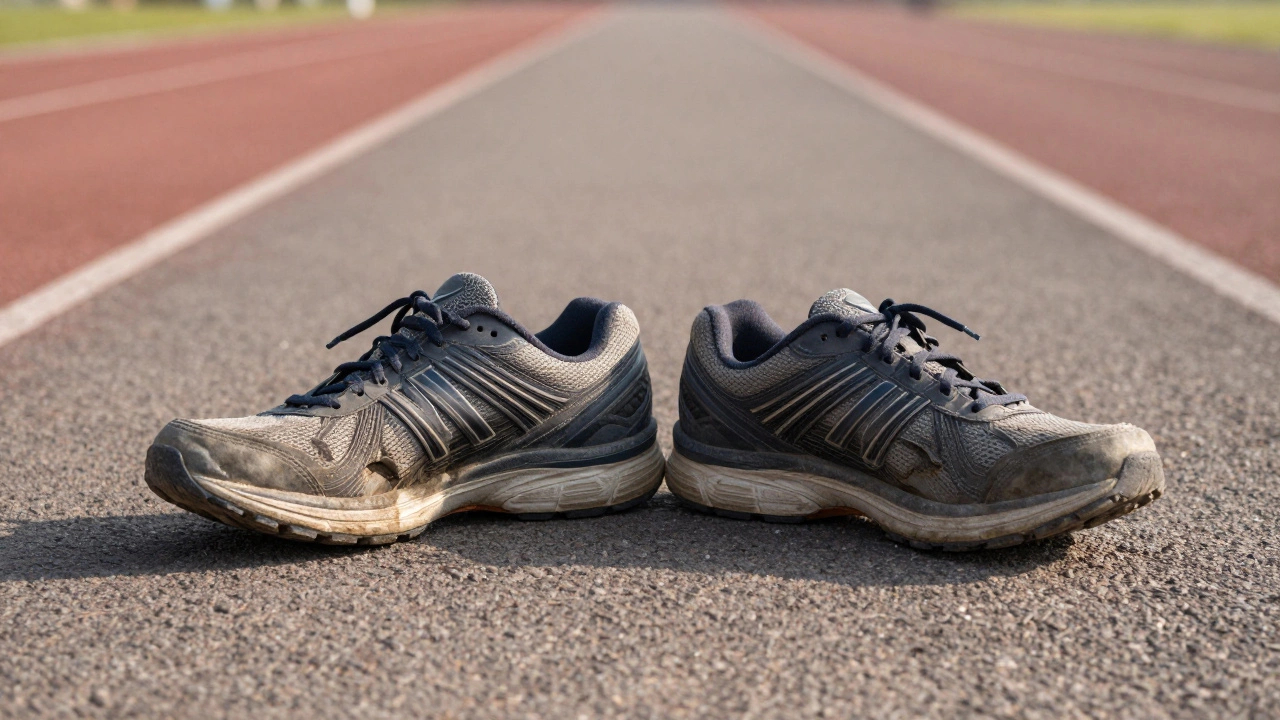
Most runners don’t realize their shoes are doing more harm than good long before they fall apart. You’re not lazy for running in old shoes-you’re just unaware. By the time your knees start aching or your arches feel like they’re sinking, it’s already too late. Running shoes aren’t meant to last years. They’re designed to cushion, support, and propel you for a few hundred miles. After that, the foam collapses, the outsole wears thin, and your body pays the price.
How Many Miles Before You Need New Shoes?
The standard rule is 300 to 500 miles. That’s not a guess-it’s backed by studies from the American College of Sports Medicine and shoe manufacturers like Brooks and Asics. If you run 20 miles a week, you’ll hit that limit in 15 to 25 weeks. That’s about 4 to 6 months. Most people run 10 to 15 miles a week, so replace them every 6 to 9 months.
But mileage isn’t the only factor. Your weight, running style, and the surfaces you run on change the math. A heavier runner or someone who lands hard on pavement will wear shoes out faster. A light runner who sticks to trails might get 600 miles out of the same pair. Track your miles using a running app like Strava or Garmin. If you don’t track, assume 400 miles and be ready to check your shoes every 6 months.
Visual Signs Your Shoes Are Done
You don’t need a GPS to know your shoes are dead. Look at them. Lay them flat on the ground. Do they lean to one side? That’s a sign the midsole has broken down unevenly. It’s not just cosmetic-it means your foot is tilting, which stresses your ankles and knees.
Check the outsole. If the rubber is worn down to the foam underneath, especially on the heel or ball of the foot, you’ve lost traction and shock absorption. You’re running on a slab of foam with no grip. That’s how you get slips on wet pavement or sudden twists on uneven trails.
Pinch the heel counter-the firm part behind your heel. If you can squeeze it easily with your fingers, it’s lost its structure. That part keeps your heel stable. Without it, your foot wobbles inside the shoe, increasing your risk of plantar fasciitis or Achilles tendon pain.
How Your Body Tells You It’s Time
Your body doesn’t lie. If you start getting new aches-hips, knees, shins, arches-that weren’t there before, your shoes are likely the culprit. No, it’s not just getting older. It’s not your form. It’s the foam that’s turned to mush.
Runners often blame their knees for pain, but the real issue is often the shoes. A 2021 study in the Journal of Orthopaedic & Sports Physical Therapy found that runners who replaced shoes after 500 miles had 30% fewer overuse injuries than those who ran longer. That’s not a small number. That’s a real difference in how often you’re sidelined.
Here’s what to watch for:
- New shin splints or calf tightness
- Heel pain that feels like a bruise
- Arch pain that doesn’t go away with stretching
- Knees that click or ache after short runs
- Feeling like you’re running on rocks, even on smooth paths
If you notice any of these after 300 miles, don’t wait. Swap them out.

What Happens When You Run in Worn-Out Shoes?
It’s not just about comfort. It’s about injury risk. Worn-out shoes lose their ability to absorb impact. That means every foot strike sends shock straight up your legs. Your joints take the hit. Your muscles compensate. Your tendons get overstressed.
Studies show that after 500 miles, cushioning materials like EVA foam lose up to 70% of their rebound. That’s not a little softening-it’s a collapse. The shoe becomes a flat, unresponsive platform. You’re not running on shoes anymore. You’re running on cardboard with rubber on the bottom.
And here’s the sneaky part: your brain adapts. You don’t notice the change because your body adjusts. You think you’re fine. But your stride is shorter, your landings are harsher, and your muscles are working harder just to keep you upright. That’s why you feel more tired after the same run.
Don’t Trust the ‘One More Run’ Mentality
‘I’ll just do one more long run.’ ‘I’ll wait until after the race.’ ‘It still looks okay.’ Sound familiar? That’s how injuries happen. You’re not saving money by dragging out old shoes. You’re risking physical therapy bills, missed training, and months off the road.
One runner in Sydney replaced her shoes at 600 miles because they looked fine. Two weeks later, she developed stress fractures in her metatarsals. Her shoes had lost their support but still had rubber on the bottom. She thought she was fine. She wasn’t.
Replace shoes before they hurt you. Not after.
When to Buy New Ones
Don’t wait until your current pair is completely dead. Buy your next pair before you need it. Keep your old pair for light days or walking. Use your new pair for key workouts and long runs. That way, you’re never caught off guard.
Most running stores offer shoe replacement programs. Brooks, Nike, and Saucony all have loyalty programs that give you discounts when you trade in old shoes. Some even let you track your mileage through their apps and send you alerts when it’s time.
And don’t assume your next pair will be the same. Your feet change. Your gait changes. Your weight changes. What worked at 25 might not work at 35. Get fitted every time. Even if you’ve worn the same model for years, go in. A good store will check your arch, your stride, and your wear pattern.
What to Do With Old Shoes
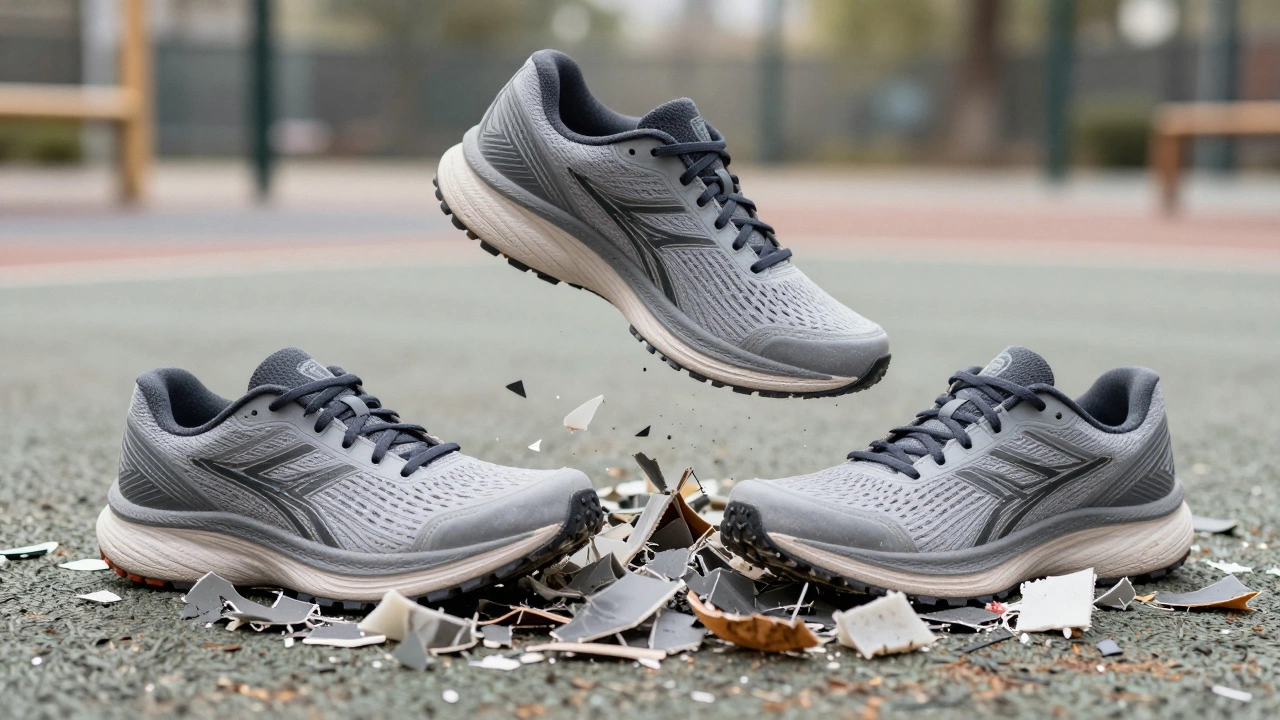
Don’t toss them in the bin. Most running shoes are 70% recyclable. Brands like Nike and Adidas have take-back programs. In Australia, Runners’ World partners with recycling centers in Sydney and Melbourne to turn old shoes into playground surfaces and gym floors.
Or donate them. Organizations like Soles4Souls and ShoeBank collect worn shoes and send them to communities in need. Even if they’re past their running life, they’re still useful for walking.
Just don’t let them sit in the garage for years. They’re not keepsakes. They’re tools. And tools wear out.
Quick Checklist: Is It Time to Replace?
- Have you run 300-500 miles? Yes → Replace
- Do the soles look uneven or worn through? Yes → Replace
- Is the heel counter soft or collapsing? Yes → Replace
- Do you feel new pain after runs? Yes → Replace
- Are the midsoles compressed and no longer springy? Yes → Replace
If you checked even two boxes, it’s time.
Can I still run in shoes with holes in the upper?
Holes in the upper aren’t the main issue-it’s what’s inside. If the midsole is still firm and the outsole is intact, you might be okay for short, easy runs. But if the upper is torn enough that your foot moves around inside, you’re losing stability. That’s a risk for blisters, twists, and ankle rolls. Replace them if the upper is compromised and you’re running more than 3 miles at a time.
Do running shoes expire even if I don’t run in them?
Yes. Foam degrades over time, even if it’s sitting in the closet. After 2 to 3 years, the cushioning loses its resilience, no matter how little you’ve used them. If you bought a pair on sale and stored them for a year, don’t expect them to perform like new. Use them for walking, not running.
Is it better to buy shoes online or in-store?
If you’re replacing the same model you’ve worn for years, online is fine. But if you’re switching brands, changing your gait, or have foot issues like flat feet or high arches, get fitted in person. Stores like Runners Need in Sydney or Run Repeat in Melbourne use pressure plates and video gait analysis. That kind of insight is worth the trip.
Can I extend the life of my running shoes?
Not much. Rotating two pairs helps-gives the foam time to bounce back between runs. Don’t wash them in the machine. Don’t leave them in the sun. Dry them naturally. But no amount of care can reverse foam breakdown. The clock is ticking from day one.
What if I only run once a week?
Time still matters. Even if you’ve only run 100 miles in two years, the foam has aged. Replace them every 2 to 3 years. Your joints still take the same impact. Your body doesn’t care how often you run-it just cares how much cushioning you’re giving it.
Final Thought: Your Shoes Are a Tool, Not a Trophy
Running shoes aren’t meant to be kept. They’re meant to be used and replaced. Holding onto them because they’re comfortable or sentimental doesn’t make you a loyal runner. It makes you vulnerable. The best runners know when to let go. They don’t wait for pain. They don’t wait for holes. They replace them before the damage starts. And that’s how they stay on the road-longer, faster, and injury-free.