Sports Equipment Selector
Find Your Perfect Sports Equipment
This interactive tool helps you identify the most suitable sports equipment based on your specific needs and conditions. Answer the questions below to get personalized recommendations that align with the key characteristics discussed in the article.
Not all sports equipment is created equal. A basketball that bounces wrong, cleats that slip on wet grass, or a helmet that doesn’t fit right-these aren’t just inconveniences. They’re safety risks and performance killers. So what actually makes sports equipment work the way it’s supposed to? It’s not just brand names or flashy colors. It’s a mix of physics, materials science, and human movement. Understanding the core characteristics of sports equipment helps you choose the right gear, avoid injury, and get the most out of your training or game.
Performance-Driven Design
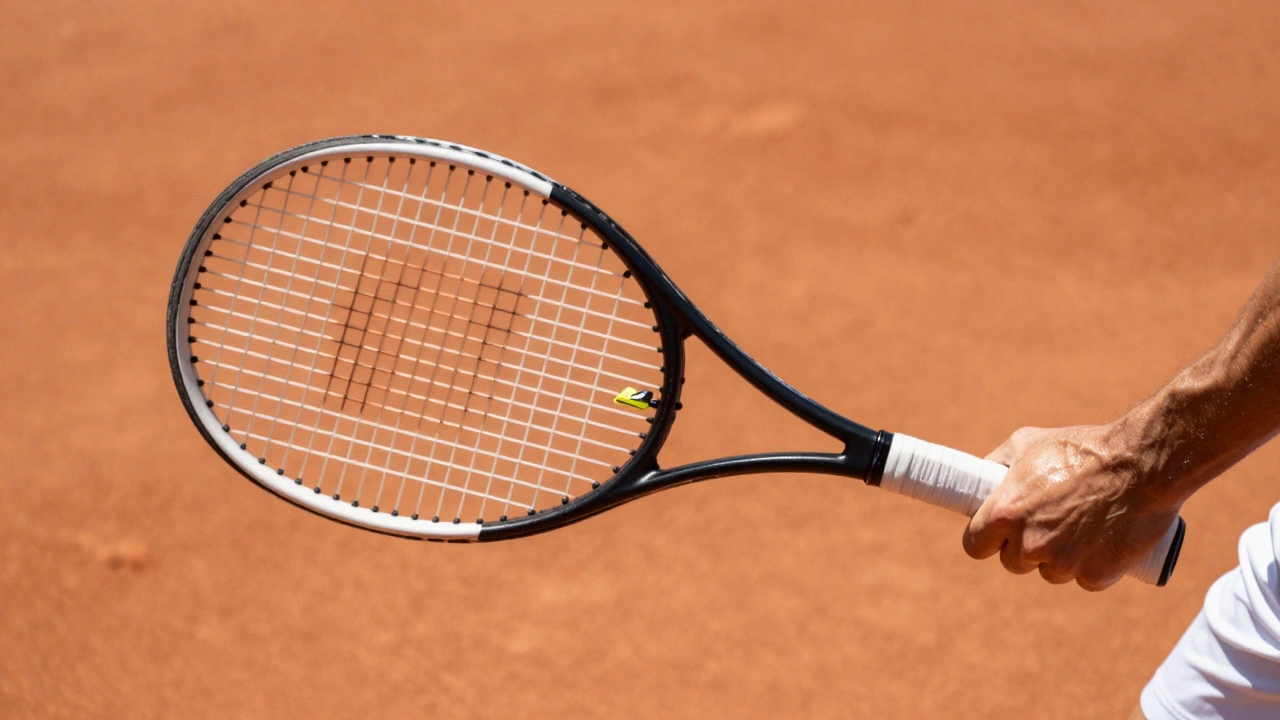
Sports equipment is built to enhance performance, not just protect you. Take a tennis racket: the balance point, string tension, and frame stiffness all affect how much power and control you get on each shot. A racket designed for power will be heavier in the head and have a larger sweet spot. One made for control will be lighter overall and have tighter string patterns. These aren’t random choices-they’re engineered trade-offs.
In running shoes, the midsole foam isn’t just soft cushioning. Modern foams like Nike’s ZoomX or Adidas’ Lightstrike are engineered to return energy with every step. Studies show some foams can return over 80% of the energy you put in. That’s why elite runners don’t just buy the most cushioned shoe-they pick the one that matches their stride and body weight.
Material Science Matters
The materials used in sports gear have changed more in the last 20 years than in the previous century. Carbon fiber, for example, isn’t just for high-end bikes anymore. It’s in hockey sticks, tennis rackets, and even soccer balls. Why? Because it’s stiff, lightweight, and durable. A carbon fiber hockey stick transfers energy from your swing to the puck faster than aluminum, giving you more power with less effort.
Moisture-wicking fabrics replaced cotton in jerseys and shorts because cotton holds sweat. That’s not just uncomfortable-it adds weight and can cause chafing. Modern polyester blends pull sweat away from your skin and dry fast. In cold weather, thermal layers use merino wool or synthetic insulation that keeps you warm without bulk. Even the seams in athletic clothing are designed to lie flat so they don’t rub against your skin during long runs or matches.
Safety Standards Are Non-Negotiable
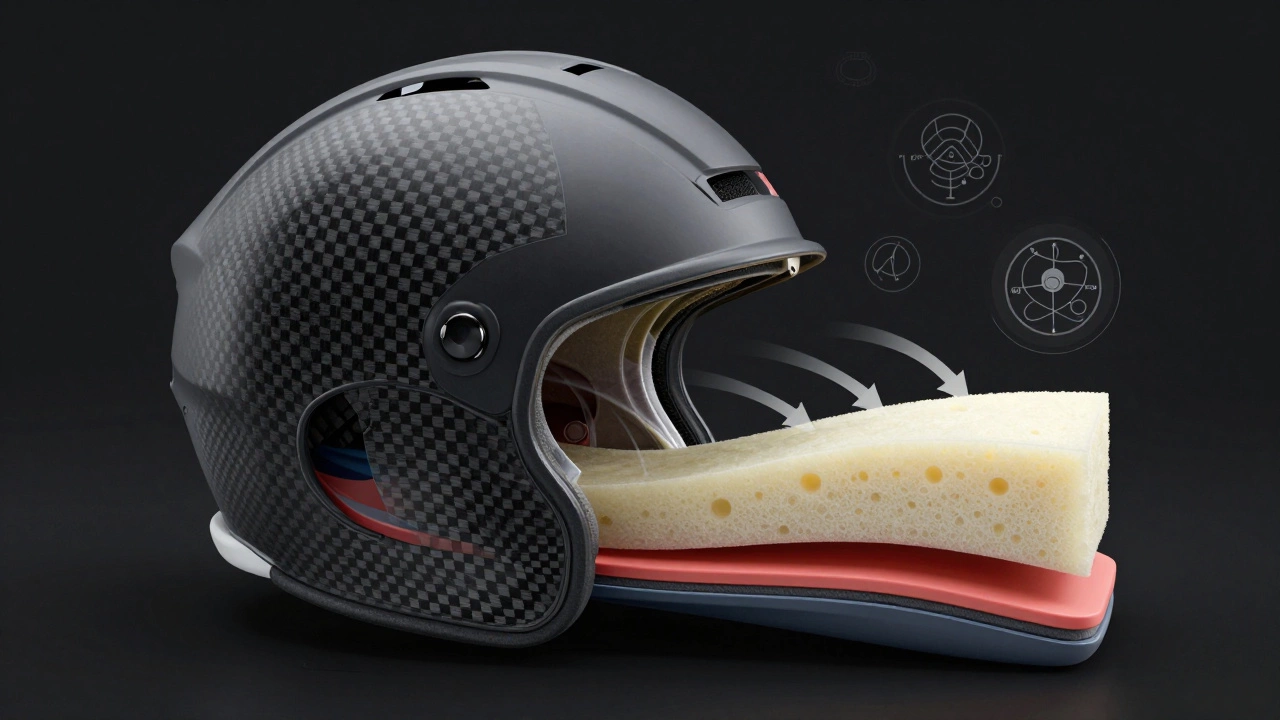
Sports equipment doesn’t just need to perform-it needs to protect. Helmets in football, hockey, and cycling aren’t just plastic shells. They’re layered systems: hard outer shell, energy-absorbing foam liner, and a retention system that keeps it locked in place. The MIPS system in many modern helmets adds a low-friction layer that lets the helmet rotate slightly on impact, reducing rotational forces on the brain.
In rugby, mouthguards aren’t optional. They’re custom-molded to fit your teeth and jaw. A poorly fitted one won’t protect your teeth or reduce concussion risk. The same goes for shin guards in soccer-they must cover the full length of the shinbone and be secured with straps, not just slipped on loosely.
Every major sport has governing bodies that set safety standards. FIFA, NCAA, and USA Hockey all test gear for impact resistance, durability, and fit. Look for certifications like CE, ASTM, or NOCSAE on the product. These aren’t marketing buzzwords-they’re proof the gear passed real-world tests.
Fit and Ergonomics Are Everything
Even the best gear fails if it doesn’t fit. A basketball glove with too much slack won’t help you control the ball. Cycling shorts with a poorly placed chamois pad will cause pain after 30 minutes. A baseball glove that’s too big slows your reaction time. Fit isn’t about size-it’s about how the gear interacts with your body’s movement.
Consider ski boots. They’re rigid, but the fit has to be precise. A boot that’s too loose lets your foot slide, reducing control. Too tight, and you lose circulation and feel. Professional skiers get their boots heat-molded to their feet. Even recreational players benefit from getting fitted by a specialist.
Same goes for gloves. Baseball catchers’ mitts have deep pockets and reinforced webbing. First basemen’s mitts are longer to help scoop throws. The shape and padding aren’t arbitrary-they match the specific motion and impact of the position.
Weight and Balance Influence Control
Weight might seem simple-lighter is better, right? Not always. A lighter golf club might feel easier to swing, but if it’s too light, you lose stability and accuracy. The ideal weight balances power with control. That’s why pros don’t just buy the lightest driver-they test dozens to find the one that feels right in their hands.
Balance is even more critical. A baseball bat with too much weight in the barrel (end-loaded) gives more power on contact but is harder to swing quickly. A balanced bat is easier to control and better for contact hitters. The same applies to tennis rackets and badminton racquets. The balance point is measured in millimeters from the handle end. A difference of 5mm can change how the racket feels in your wrist.
Even the grip size matters. A grip that’s too thick forces you to squeeze harder, leading to fatigue and injury. Too thin, and you lose control. Most manufacturers offer multiple grip sizes-don’t just grab the standard one.
Durability Under Stress
Sports gear takes punishment. A soccer ball kicked 50 times a day, a tennis racket smashed against the ground, or a hockey stick hitting the ice at 80 km/h-all need to survive. Durability isn’t about looking new after a year. It’s about holding up under repeated stress without failing.
High-end soccer balls use thermally bonded panels instead of stitched ones. Stitched balls can unravel after heavy use, especially in wet conditions. Thermally bonded balls are more water-resistant and maintain their shape better. That’s why FIFA only approves thermally bonded balls for official matches.
Even the stitching matters. Double-stitched seams in basketballs and volleyballs handle more impact. Reinforced toe boxes in cleats prevent breakdown from constant kicking. If a piece of gear starts to crack, fray, or lose shape after a few months, it’s not built for real use.
Environmental Adaptability
Sports don’t happen in perfect conditions. Rain, heat, snow, wind-they all change how gear performs. A running shoe designed for dry tracks will slip on wet pavement. That’s why trail runners have deep lugs and waterproof membranes like Gore-Tex. Winter sports gear uses insulation rated for specific temperatures. A ski jacket rated for -10°C won’t cut it in -25°C.
Even the color of gear can matter. Light-colored uniforms reflect heat in hot climates. Dark colors absorb it, which can help in cold weather. Some cycling jerseys now have UV-blocking fabric to protect skin during long rides. The best gear doesn’t just work in ideal conditions-it adapts to the real world.

Specialization by Sport and Position
There’s no such thing as one-size-fits-all sports equipment. A basketball used in the NBA isn’t the same as the one sold in a discount store. It’s made of composite leather, has a precise 7.5 psi inflation, and is tested for bounce consistency. Even the seams are designed to be smooth for better grip.
Within sports, gear varies by position. In football, a quarterback’s glove has sticky palm material but flexible fingers for throwing. A linebacker’s glove is thicker for blocking and tackling. In baseball, a catcher’s mitt is huge and padded. A shortstop’s glove is smaller and shallower for quick transfers.
Even the same sport in different leagues uses different gear. NCAA basketballs are slightly smaller than NBA ones. International soccer balls have different panel designs for better aerodynamics. Understanding these differences helps you pick gear that matches your level and style.
How to Choose the Right Gear
So how do you sort through all this? Start by asking yourself three questions:
- What’s the main movement or impact? Is it a high-impact collision, a rapid twist, or a long-distance repetitive motion?
- What environment will you use it in? Rain? Heat? Indoor court? Outdoor field?
- What’s your skill level and body type? A beginner doesn’t need a pro-level racket. A heavier athlete needs more cushioning in shoes.
Try gear before you buy. If you can’t test it, read reviews from athletes with similar builds and play styles. Don’t trust influencers who don’t mention fit, weight, or durability. Look for comments like “broke after 3 months” or “felt too stiff at first but improved over time.”
And don’t overspend on features you won’t use. A $300 running shoe won’t make you faster if you’re jogging twice a week. A $50 pair with good arch support and cushioning will do just fine.
What to Avoid
Steer clear of gear that promises “miracle performance” or “revolutionary tech” without proof. If it sounds too good to be true, it usually is. Also avoid gear that doesn’t list materials, certifications, or sizing specs. Legitimate brands are transparent.
And never reuse damaged gear. A cracked helmet, worn-out cleats, or frayed straps can fail without warning. Replace gear when it shows signs of wear-even if it still looks okay.
Sports equipment is more than just tools. It’s an extension of your body. When the design, materials, fit, and purpose all align, you don’t notice it. That’s when you know you’ve got the right gear.
What are the most important characteristics of sports equipment?
The most important characteristics are performance design, material quality, safety standards, proper fit, balanced weight, durability, and environmental adaptability. These factors work together to ensure the equipment enhances performance while protecting the user. For example, a basketball’s grip and bounce must be consistent, while a helmet must absorb impact without shifting during a collision.
Why does fit matter so much in sports gear?
Fit directly affects control, comfort, and safety. A glove that’s too loose reduces your grip on the ball. Shoes that don’t support your arch can cause knee or foot pain. A helmet that moves during impact won’t protect your head properly. Even small gaps or pressure points can lead to injury over time, especially in long-duration sports like cycling or running.
Are expensive sports items always better?
Not always. High-end gear often has advanced materials or precision engineering, but that doesn’t mean it’s right for you. A $400 running shoe might be overkill if you only run twice a week. A $80 pair with good cushioning and arch support will serve you better. Focus on features that match your activity level, body type, and sport-not brand names or marketing.
How do I know if sports equipment is safe?
Look for safety certifications like ASTM, CE, NOCSAE, or FIFA Quality Pro. These mean the gear was tested for impact, durability, and fit under real conditions. For helmets, check for MIPS or similar rotational impact protection. If the product doesn’t list certifications, assume it hasn’t been properly tested. Don’t risk your safety on unverified gear.
Can I use the same equipment for multiple sports?
Generally, no. Each sport has unique demands. A soccer cleat won’t give you the lateral support needed for tennis. A basketball isn’t designed for the air pressure or bounce height of volleyball. Even similar-looking gear, like gloves, are built differently for each sport. Using the wrong equipment reduces performance and increases injury risk. Stick to gear made for your specific sport.