Boxing Round Scorer
The 10-point must system determines round winners:
- Round winner gets 10 points
- Round loser gets 9 or less
- Knockdowns deduct 1 point (10-9 becomes 10-8)
- Effective aggression, defense, and ring control matter
Note: Only clean punches count. A round is typically 10-9 unless a knockdown occurs.
Red Fighter
Blue Fighter
Ever watched a boxing match and wondered why the fighters don’t just keep swinging until one falls? Or why the referee steps in after a punch that looks like it should’ve ended the fight? Boxing isn’t just brute force-it’s a tightly structured sport with clear rules, timing, and scoring. If you’ve ever been confused by the bell ringing, the judges’ scores, or why a fighter gets a point for a punch that didn’t knock anyone out, this breaks it all down-no fluff, no jargon, just how it actually works.
The Ring and the Fighters
A boxing match takes place in a square ring, usually 16 to 20 feet across, surrounded by four ropes. Fighters wear 8- to 10-ounce gloves (depending on weight class), hand wraps underneath, and a mouthguard. They don’t wear shirts or shoes. The ring floor is covered with a taut canvas over padding. There are two corners-red and blue-where each boxer’s team waits between rounds.
Boxers are grouped by weight classes to make fights fair. There are 17 official divisions, from strawweight (105 lbs) all the way up to heavyweight (200+ lbs). No fighter can compete outside their class unless they’re moving up after a win. This keeps mismatches rare. A 160-pound fighter won’t face someone who weighs 220. It’s not about size-it’s about matching skill and strength levels.
How a Match Starts and Ends
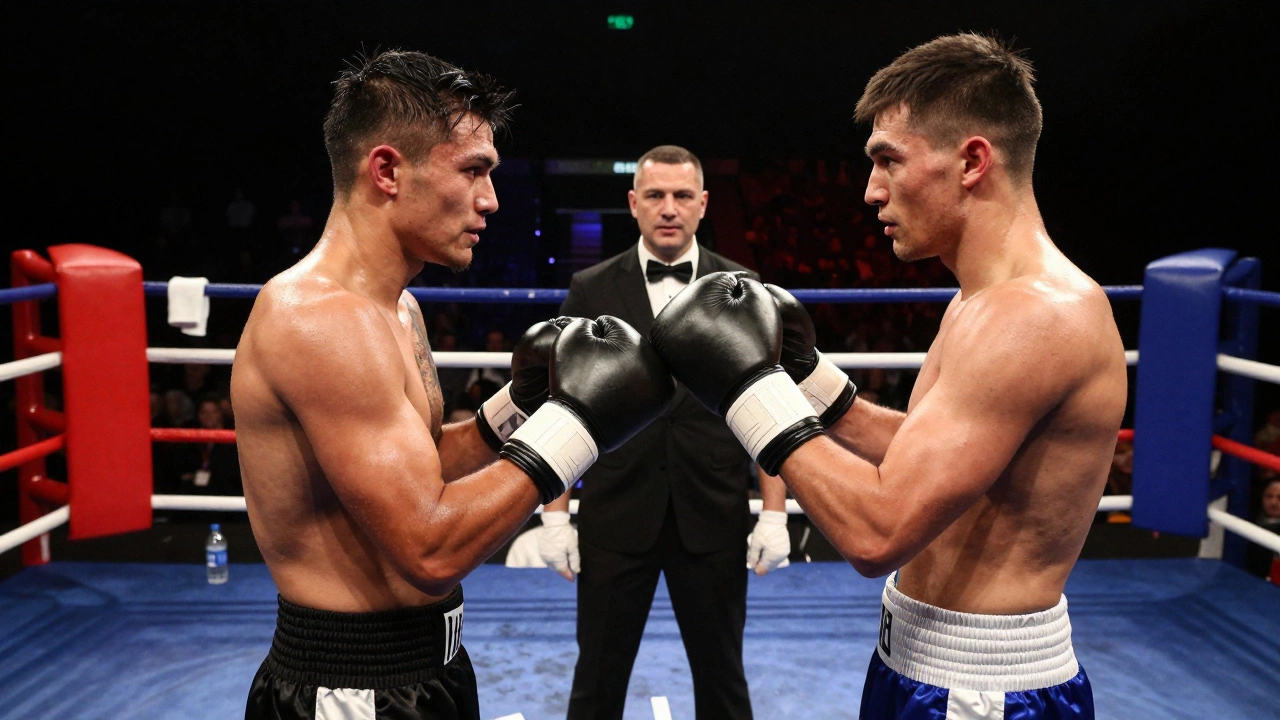
Every bout begins with the referee calling both fighters to the center of the ring. They touch gloves-a tradition more than a rule-and then the bell rings. That’s it. The fight is on.
A match can end in six ways:
- Knockout (KO): One fighter is knocked down and can’t get up before the referee counts to ten.
- Technical Knockout (TKO): The referee stops the fight because one fighter is taking too much punishment, can’t defend themselves, or their corner throws in the towel.
- Decision: The fight goes the full distance, and three judges score it based on punches landed, ring control, and defense.
- Disqualification (DQ): A fighter breaks the rules too many times-hitting low, holding, or headbutting-and the ref ends the fight.
- Forfeit: A fighter or their team decides not to continue before or during the bout.
- No Contest: Something outside the fighters’ control ends the match-like an accidental headbutt that leaves one unable to continue early on.
Most professional fights last 10 to 12 rounds. Title fights are usually 12 rounds. Lower-level bouts might be 4, 6, or 8 rounds. Each round is three minutes long, with a one-minute rest between rounds.
How Points Are Scored
Boxing doesn’t work like soccer or basketball. You don’t score by hitting a target-you score by landing clean, effective punches. Three judges sit around the ring and score each round independently.
The 10-point must system is used: the winner of a round gets 10 points, the loser gets 9 or fewer. If a round is even, both get 10. But here’s what actually matters:
- Effective aggression: Moving forward and landing clean shots, not just swinging wildly.
- Defense: Blocking, slipping, and moving out of the way without getting hit.
- Ring generalship: Controlling the pace, dictating where the fight happens, and forcing your opponent to react.
Power punches don’t automatically win rounds. A fighter who lands 20 light jabs cleanly and avoids all counters will often beat someone who throws 10 heavy hooks but gets hit every time they miss. It’s about precision, not power.
Knockdowns are huge. If a fighter goes down-even if they get up right away-they lose a point for that round. So if the round was 10-9, it becomes 10-8. Two knockdowns? 10-7. That’s how fights get decided by wide margins.
What’s Allowed and What’s Not
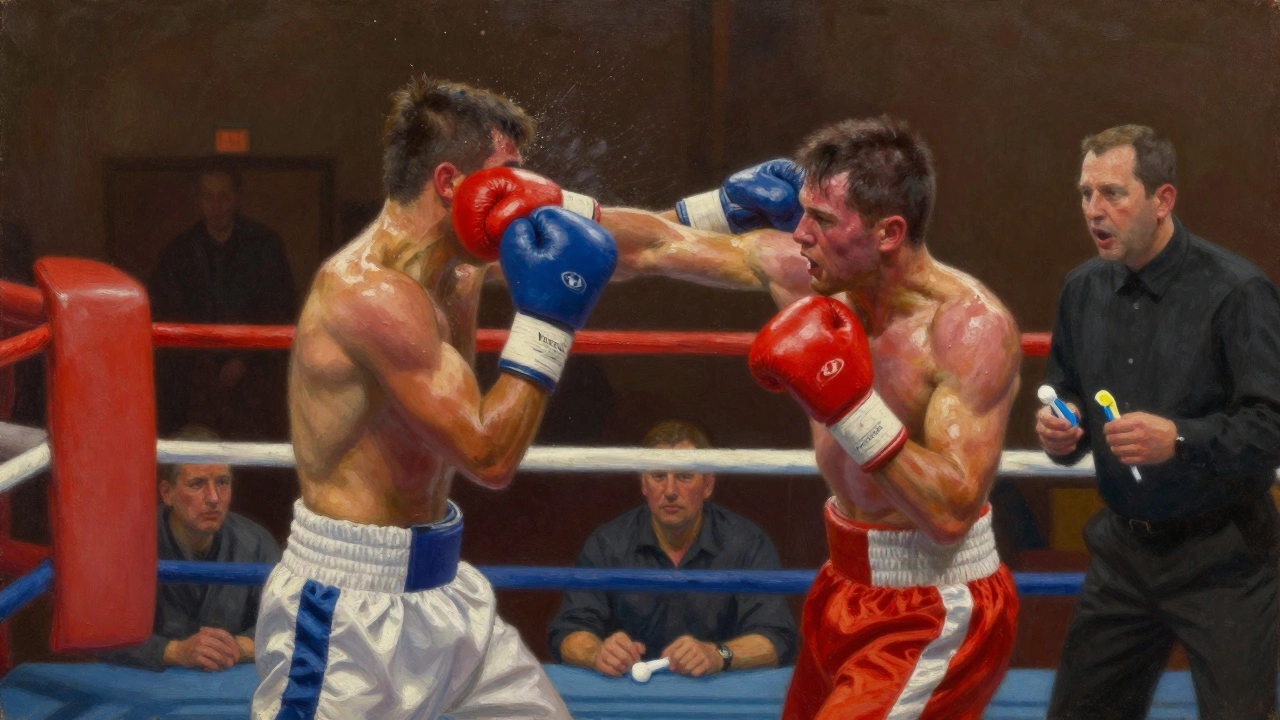
Boxing has strict rules. You can only hit with the knuckle part of the glove. No elbows, no headbutts, no hitting below the belt. No holding the ropes to gain leverage. No hitting the back of the head or the neck. No rabbit punches. No low kicks.
Referees watch closely. If a fighter does something illegal, they get a warning. Second offense? Point deduction. Third? Disqualification. Fighters often get fined or suspended after a DQ, especially if it’s intentional.
There’s also the “10-second rule” for illegal blows. If a fighter is hurt by an accidental foul-like a headbutt-and can’t continue, the fight goes to the scorecards. If they can continue after a short break, it continues. But if it was a deliberate foul, it’s a DQ.
What Happens Between Rounds
Those 60 seconds between rounds are critical. A fighter’s corner team-trainer, cutman, second-rushes in. The cutman uses Vaseline and cotton swabs to stop swelling. The trainer gives quick advice: “Stay outside,” “Use the jab,” “Don’t let him corner you.”
Hydration matters. Fighters sip water or electrolyte drinks. No food. No time to rest fully-just reset. The bell rings, and they’re back in. No extra breaks. No timeouts. No challenges. It’s pure, unfiltered pressure.

Amateur vs. Professional Boxing
Amateur boxing-like Olympic fights-works differently. Rounds are only two minutes long. Fighters wear headgear (though not in pro fights). Scoring is electronic: sensors in the gloves trigger points when a punch lands cleanly. This system tries to remove bias, but it’s still controversial. Some say it rewards volume over power, leading to fights where fighters just tap each other repeatedly.
Professional boxing is more about damage, control, and drama. No headgear. No sensors. Just human judges watching what they see. That’s why pro fights feel more intense. The scoring is subjective, which means a fighter can win even if they got hit more-if they made their opponent miss, controlled the center, and landed the cleaner shots.
Why Some Fights Go the Distance and Others Don’t
It’s not always about who hits harder. Sometimes, it’s about who’s smarter. A fighter with great footwork and timing can win without ever knocking their opponent down. They make the other guy tired, frustrate him, and land counters when he overcommits.
Take Mike Tyson’s early career: he won most fights by KO because he overwhelmed opponents with speed and power. But Floyd Mayweather won by outboxing everyone-he moved, blocked, and countered. Neither was “better.” They just fought differently.
That’s the beauty of boxing. Two fighters, same rules, completely different paths to victory.
What You’ll See in a Real Match
If you go to a live fight, here’s what happens:
- Boxers walk out to their music. The crowd reacts. The atmosphere is electric.
- The bell rings. They circle each other, testing distance.
- One lands a clean jab. The crowd cheers.
- Five minutes in, a fighter slips a hook and lands a flush uppercut. The ref checks if the guy is okay.
- Round ends. The corner rushes in.
- Round 5: the fighter who was behind starts landing combinations. The judges lean forward.
- Final bell. Everyone waits. The judges raise hands. One fighter smiles. The other looks stunned.
It’s not chaotic. It’s controlled chaos. Every punch has meaning. Every movement is calculated. And every round matters.
How many rounds are in a boxing match?
Most professional boxing matches are 10 to 12 rounds, with each round lasting three minutes. Championship fights are always 12 rounds. Non-title fights can be shorter-4, 6, or 8 rounds-especially for up-and-coming fighters. Amateur bouts, like in the Olympics, are three rounds of two minutes each.
What happens if both fighters are knocked down in the same round?
If both fighters are knocked down in the same round, each gets a point deducted. So if Fighter A gets knocked down once and Fighter B gets knocked down twice, the round is scored 10-8 in favor of Fighter A. The knockdowns are counted individually, regardless of who landed them.
Can a boxing match end before the first round?
Yes. If a fighter is injured before the bell rings-say, from a pre-fight accident or medical issue-the bout can be canceled as a no contest. If a fighter refuses to fight after the bell, it’s a forfeit. In rare cases, a fighter might be disqualified for illegal behavior during the walkout, like spitting or shoving.
Why do boxers touch gloves before the fight?
Touching gloves is a tradition that shows mutual respect. It’s not required by the rules, but it’s universally done. It signals that the fight is about skill, not hatred. Some fighters skip it if there’s bad blood, but it’s rare. In professional bouts, it’s part of the ritual.
Do punches to the body count in scoring?
Yes, body punches count just as much as head punches-if they’re clean and landed with force. Judges look for impact: does the punch make the opponent flinch? Do they slow down after taking a liver shot? A well-placed body punch can wear a fighter down over time and win rounds, even if it doesn’t look flashy.